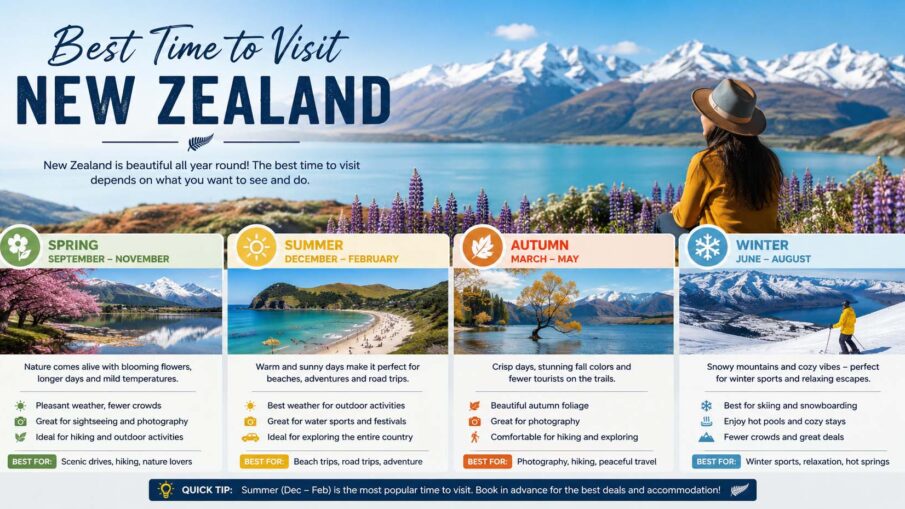
New Zealand is one of the world’s most breathtaking travel destinations, known for its stunning mountains, pristine beaches, vibrant cities, and unforgettable outdoor adventures. Whether you’re planning to hike through national parks, explore filming locations from famous movies, or relax in scenic coastal towns, choosing the best time to visit New Zealand can significantly improve your travel experience.
The country experiences four distinct seasons, and each offers something unique for visitors. The ideal time depends on your travel goals, budget, and preferred activities.
In this guide, you’ll discover weather patterns, seasonal highlights, the cheapest time to travel, and expert tips to help you plan the perfect New Zealand vacation in 2026 and beyond.
New Zealand Climate and Weather Overview
Located in the Southern Hemisphere, New Zealand experiences opposite seasons compared to North America and Europe.
| Season | Months | Average Temperature |
|---|---|---|
| Summer | December – February | 20°C–30°C |
| Autumn | March – May | 10°C–25°C |
| Winter | June – August | 1°C–15°C |
| Spring | September – November | 10°C–20°C |
The North Island generally enjoys warmer temperatures, while the South Island experiences cooler weather and snowfall in mountainous regions.
Because of New Zealand’s varied geography, weather conditions can change quickly, especially in alpine areas.
Best Time of Year to Visit New Zealand
For most travelers, the best time of year to visit New Zealand is during the summer months from December through February.
During this period:
- Days are long and sunny
- Beaches are at their best
- Hiking trails are fully accessible
- Outdoor festivals take place nationwide
- Water activities become more enjoyable
Popular destinations such as Queenstown, Auckland, Rotorua, and Christchurch experience excellent weather conditions.
However, summer is also the busiest travel season, meaning higher hotel prices and larger crowds.
When Is the Best Time to Visit New Zealand for Sightseeing?
If your primary goal is sightseeing, March and April are often considered ideal.
Autumn offers:
- Comfortable temperatures
- Fewer tourists
- Beautiful fall colors
- Better accommodation availability
- Lower travel costs compared to peak summer
Photographers particularly love autumn because the landscapes become vibrant with red, orange, and golden foliage.
Many travelers consider March one of the most balanced months for weather, affordability, and overall travel experience.
Seasonal Breakdown
Summer (December to February)
Summer is the peak tourist season.
Popular activities include:
- Beach vacations
- Road trips
- Hiking
- Kayaking
- Wine tours
- Wildlife cruises
Temperatures are warm and pleasant throughout most regions.
If you’re planning to visit famous attractions like Milford Sound or Lake Tekapo, summer provides excellent visibility and comfortable conditions.
Autumn (March to May)
Autumn is a favorite among experienced travelers.
Benefits include:
- Smaller crowds
- Mild weather
- Lower accommodation prices
- Beautiful landscapes
March and April are especially attractive for travelers seeking a quieter experience while still enjoying favorable weather.
Winter (June to August)
Winter transforms New Zealand into a skiing and snowboarding destination.
Top winter destinations include:
- Queenstown
- Wanaka
- Mount Hutt
- Cardrona
The South Island receives significant snowfall, attracting winter sports enthusiasts from around the world.
While some outdoor activities become limited, winter offers excellent value for budget-conscious travelers outside ski regions.
Spring (September to November)
Spring brings blooming flowers, green landscapes, and warming temperatures.
Advantages include:
- Fewer tourists
- Moderate prices
- Excellent hiking conditions
- Wildlife viewing opportunities
Spring is ideal for travelers seeking a balance between affordability and pleasant weather.
Monthly Travel Guide
January
Perfect for beaches, camping, and outdoor adventures.
February
Excellent weather with slightly fewer crowds than January.
Ideal for road trips and sightseeing.
March
Often considered one of the best overall months to visit.
Comfortable temperatures and reduced tourist numbers.
April
Beautiful autumn colors and pleasant weather.
Great for photography and hiking.
May
Cooler temperatures arrive, and tourism slows significantly.
June
Beginning of ski season.
July
Peak winter sports season.
August
Snow conditions remain excellent.
September
Spring flowers start appearing across the country.
October
Mild weather and fewer crowds.
November
One of the best shoulder-season months.
December
Beginning of summer and holiday travel season.
Cheapest Time to Visit New Zealand
Travelers looking to save money should consider visiting between May and September.
During these months:
- Airfare is often lower
- Hotels offer discounts
- Tourist attractions are less crowded
- Rental vehicle prices may decrease
The cheapest period is usually late May through early June, before the ski season reaches full capacity.
Although temperatures are cooler, many attractions remain open year-round.
Best Time to Visit Australia and New Zealand
Many international travelers combine Australia and New Zealand into one trip.
The best time to visit Australia and New Zealand together is typically between February and April.
During this period:
- Australia remains warm
- New Zealand enjoys pleasant autumn weather
- Tourist crowds begin to decrease
- Flight availability improves
This timing allows visitors to experience favorable conditions across both countries.
New Zealand Best Time to Visit for Different Activities
Hiking and Trekking
Best months:
- November
- December
- January
- February
- March
Popular trails become more accessible during these months.
Skiing and Snowboarding
Best months:
- July
- August
These months provide the most reliable snow conditions.
Wildlife Viewing
Best months:
- October
- November
- December
Many wildlife species become more active during spring and early summer.
Road Trips
Best months:
- February
- March
- April
Road conditions are excellent, and traffic levels are more manageable.
Things to Avoid When Visiting New Zealand
Booking Too Late During Summer
Accommodation can sell out quickly in popular destinations.
Reserve hotels and rental vehicles well in advance.
Underestimating Weather Changes
New Zealand weather can change rapidly, particularly in mountain regions.
Always pack layers.
Ignoring Regional Differences
The North and South Islands often experience very different weather conditions.
Research destinations individually before traveling.
Overpacking Your Itinerary
Many travelers underestimate driving times.
Allow flexibility for unexpected stops and weather changes.
Essential Travel Tips
Pack for Multiple Seasons
Even during summer, evenings can become cool.
Book Popular Attractions Early
Activities such as Milford Sound cruises and Hobbiton tours often sell out.
Rent a Vehicle
A rental car provides the best way to explore New Zealand’s diverse landscapes.
Purchase Travel Insurance
Outdoor adventure activities make insurance highly recommended.
Allow Extra Time
New Zealand offers countless scenic detours worth exploring.
FAQ
For most travelers, December through February offers the best weather and outdoor conditions.
When is the best time to visit New Zealand with fewer crowds?
March, April, October, and November provide excellent weather with fewer tourists.
May and June are often among the most affordable months.
Is New Zealand worth visiting in winter?
Yes. Winter is ideal for skiing, snowboarding, and experiencing alpine landscapes.
A minimum of 10–14 days is recommended to explore both islands comfortably.
Conclusion
The best time to visit New Zealand depends on your travel style and priorities. Summer delivers warm weather and outdoor adventures, while autumn offers fewer crowds and stunning scenery. Winter attracts ski enthusiasts, and spring provides beautiful landscapes and affordable travel opportunities.
For most visitors, March stands out as one of the most balanced months, combining excellent weather, lower crowds, and great sightseeing conditions. Whether you’re planning a road trip, hiking adventure, wildlife tour, or a combined Australia-New Zealand vacation, choosing the right season will help you make the most of your journey.