
Iceland is one of the world’s most unique travel destinations, known for its glaciers, volcanoes, waterfalls, black sand beaches, and incredible northern lights displays. However, choosing the best time to go to Iceland depends on the type of experience you want because every season offers something different.
Some travelers visit Iceland for long summer days and scenic road trips, while others prefer winter adventures and aurora hunting. Additionally, weather conditions, daylight hours, prices, and tourist crowds can all change dramatically throughout the year.
Therefore, this guide explains when is the best time to go to Iceland, what weather to expect, the cheapest months to travel, and how to plan the perfect Iceland adventure.
What Is the Best Time to Go to Iceland?
Many travelers ask what is the best time to go to Iceland because the answer depends on personal travel goals.
Generally:
- Summer is best for sightseeing and road trips
- Winter is ideal for northern lights
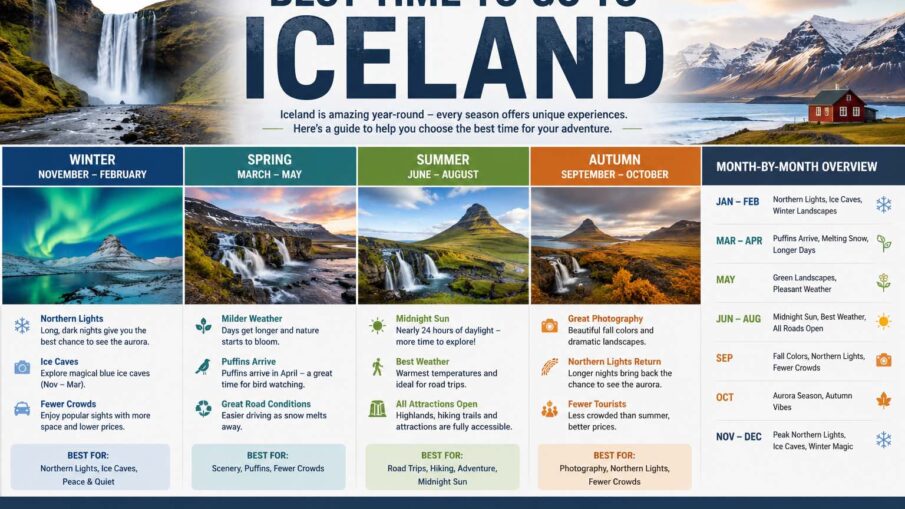
The most popular months to visit Iceland are June, July, and August because of mild weather and nearly 24 hours of daylight.
However, September through March is the best period for seeing the aurora borealis.
As a result, each season in Iceland creates a completely different travel experience.
Best Time of Year to Go to Iceland
The best time of year to go to Iceland depends on the activities you want to enjoy.
Summer in Iceland (June to August)
Average temperatures range from 10°C to 15°C, making it the warmest time of the year.
Benefits of visiting during summer include:
- Midnight sun experiences
- Easier road travel
- Open hiking trails
- Whale watching opportunities
- Better weather for sightseeing
In addition, the Ring Road becomes much easier to drive during this season, making summer ideal for self-drive adventures.
However, summer also means:
- Higher hotel prices
- Larger crowds
- Earlier accommodation bookings
Therefore, travelers planning summer trips should book hotels and rental cars early.
Autumn in Iceland (September to October)
Autumn offers a balance between mild weather and fewer tourists.
In particular, September is especially popular because visitors can still enjoy road trips while also having a chance to see the northern lights.
Benefits of autumn travel include:
- Beautiful fall scenery
- Lower tourist crowds
- Reduced hotel prices
- Better photography conditions
Meanwhile, temperatures begin to cool, and daylight hours become shorter compared to summer.
Therefore, this is an excellent time for travelers wanting a quieter Iceland experience.
Best Time to Go to Iceland for Northern Lights
One of the biggest travel reasons people visit Iceland is to see the aurora borealis.
The best time to see northern lights in Iceland is from late September to early April.
Northern lights visibility depends on:
- Dark skies
- Clear weather
- Solar activity
- Minimal light pollution
The best months for aurora viewing are usually:
- October
- November
- February
- March
For example, winter tours outside Reykjavik offer the best viewing opportunities, making Iceland one of the best places to see northern lights.
Additionally, many travelers combine northern lights tours with glacier hikes, ice cave visits, and geothermal spa experiences.
Winter in Iceland (November to March)
Winter transforms Iceland into a dramatic snowy landscape.
Average temperatures typically stay between -1°C and 4°C in many regions.
Popular winter activities include:
- Northern lights tours
- Ice cave exploration
- Snowmobiling
- Glacier hiking
- Hot spring visits
Therefore, winter is perfect for travelers deciding where to travel in winter and seeking unique Arctic scenery.
However, road conditions can become difficult due to snowstorms and icy weather.
As a result, travelers should monitor weather updates regularly and drive carefully.
Spring in Iceland (April to May)
Spring is one of Iceland’s underrated travel seasons.
Meanwhile, snow begins melting, wildlife becomes more active, and tourism crowds remain manageable.
Benefits of spring travel include:
- Lower travel costs
- Longer daylight hours
- Fewer tourists
- Emerging green landscapes
However, spring weather can still change quickly, so travelers should prepare for rain, wind, and occasional snow.
Cheapest Time to Visit Iceland
Iceland is known for being an expensive destination, but some months are more affordable than others.
- November
- January
- February
- Early spring
These periods often have:
- Lower hotel prices
- Cheaper flights
- Reduced tourist demand
Travelers can save money by:
- Booking early
- Staying in guesthouses
- Renting apartments
- Cooking meals
- Traveling outside peak summer season
In addition, winter travelers may also find discounted tour packages.
Iceland Weather and Climate
Iceland’s weather is highly unpredictable.
Even during summer, travelers may experience:
- Rain
- Strong winds
- Sudden temperature drops
However, the Gulf Stream helps keep Iceland warmer than many people expect, despite its northern location.
Average Seasonal Weather
| Season | Average Temperature | Daylight Hours |
|---|---|---|
| Summer | 10°C to 15°C | Up to 24 hours |
| Autumn | 3°C to 10°C | Moderate daylight |
| Winter | -1°C to 4°C | Very short days |
| Spring | 0°C to 10°C | Increasing daylight |
Therefore, layered clothing is essential year-round.
Things to Avoid When Visiting Iceland
Planning carefully can help travelers avoid common mistakes.
Ignoring Weather Forecasts
Icelandic weather changes rapidly.
Therefore, always check road and weather conditions before driving long distances.
Underestimating Costs
Food, accommodations, and transportation can be expensive.
As a result, budget travelers should plan carefully and book in advance.
Driving Without Experience
Winter driving conditions can be dangerous for inexperienced drivers.
Therefore, travelers unfamiliar with snow and ice should consider guided tours instead of self-driving.
Packing Incorrectly
Even summer weather can feel cold and windy.
Knowing how to pack a suitcase for changing weather can help travelers prepare.
Bring:
- Waterproof jackets
- Thermal layers
- Hiking shoes
- Gloves and hats
Therefore, proper clothing improves comfort significantly.
Iceland Travel Tips
Book Early During Summer
Summer accommodations sell out quickly, especially around popular tourist routes.
Rent a Car for Flexibility
Self-driving gives travelers access to waterfalls, glaciers, and remote landscapes.
Visit Beyond Reykjavik
While Reykjavik is beautiful, Iceland’s natural attractions are the true highlight.
Popular destinations include:
- Golden Circle
- South Coast
- Blue Lagoon
- Diamond Beach
- Jökulsárlón Glacier Lagoon
Respect Nature
Iceland has fragile ecosystems.
Therefore, travelers should stay on marked paths and follow environmental guidelines.
FAQ About the Best Time to Go to Iceland
When is the best time to go to Iceland?
Summer is best for sightseeing and road trips, while winter is ideal for northern lights and ice cave adventures.
What is the cheapest month to visit Iceland?
January and February are often among the cheapest months for flights and accommodations.
Can you see northern lights in summer?
No. Summer has too much daylight for northern lights visibility.
Is Iceland cold year-round?
Iceland stays cool throughout the year, but temperatures are milder than many people expect.
How many days are enough for Iceland?
Most travelers spend 5 to 10 days exploring Iceland comfortably.
Is Iceland expensive for tourists?
Yes, Iceland can be expensive, but budgeting carefully helps reduce costs.
Conclusion
Choosing the best time to go to Iceland depends on your travel style, budget, and preferred activities. Summer offers incredible road trips, midnight sun experiences, and easier sightseeing, while winter provides unforgettable northern lights adventures and snowy landscapes.