
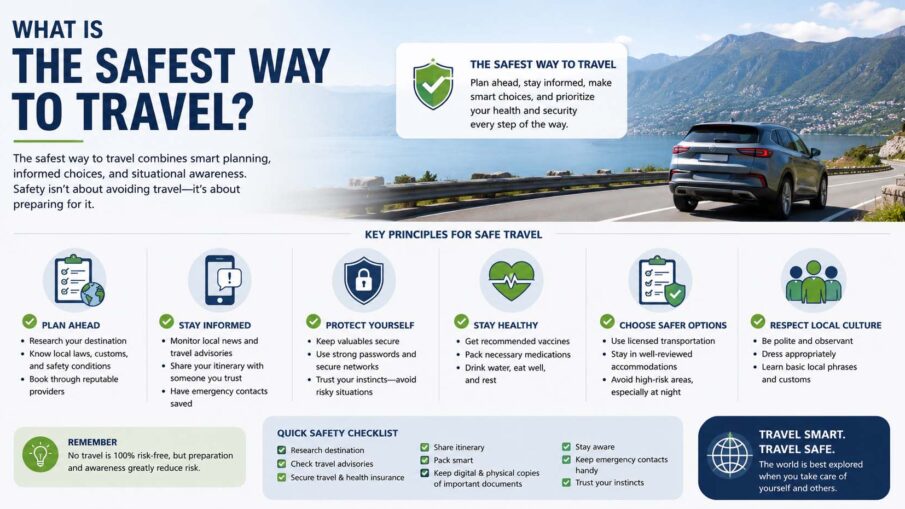
Whether people travel for business, vacations, education, or family visits, safety always remains a top concern. Many travelers often ask the question, “what is the safest way to travel?. However, statistics and transportation studies consistently show that air travel is considered one of the safest methods of transportation in the world.
Modern travel systems are designed with advanced technology and strict safety standards. Airlines, railways, and public transport services spend billions of dollars every year to improve safety measures and reduce accidents. While every form of travel has risks, understanding which options are statistically safer can help travelers make smarter decisions.
What Is the Second Safest Way to Travel?
After air travel, many experts believe that train travel is what is the second safest way to travel. Rail transportation has a strong safety record due to controlled tracks, professional operators, and strict monitoring systems. Unlike road traffic, trains operate on dedicated pathways that reduce the risk of collisions with other vehicles.
Countries with advanced railway systems, such as Japan and many parts of Europe, have incredibly low accident rates. High-speed trains are equipped with automatic braking systems, real-time communication technology, and constant monitoring to maintain passenger safety. In addition, train stations follow strict regulations to protect travelers during boarding and departures.
Another reason train travel is considered highly safe is that passengers are not responsible for operating the vehicle. Human error is one of the leading causes of accidents on roads, but trains minimize this risk because they are controlled by trained professionals using automated systems.
Many travelers prefer trains because they offer a comfortable and relaxing experience while maintaining high safety standards. In addition to being safe, trains are environmentally friendly and often more affordable than air travel for shorter distances. Developments in bahan bakar kereta api also show how railway systems continue improving efficiency.
What Is the Least Safest Way to Travel?
When discussing travel safety, many studies identify motorcycles as what is the least safest way to travel. Motorcycles provide little physical protection compared to cars, trains, or airplanes. As a result, riders are more exposed to injuries during accidents, especially at high speeds or in poor weather conditions.
Motorcycle accidents often result in severe injuries because there are no seat belts, airbags, or protective structures surrounding the rider. Even though helmets and safety gear reduce risks, the danger level remains significantly higher compared to other transportation methods.
Driving cars can also be risky, especially when drivers ignore traffic laws, use mobile phones while driving, or drive under the influence of alcohol. Road travel accounts for millions of accidents worldwide every year. Poor road conditions, speeding, and distracted driving continue to be major causes of fatalities.
Despite these risks, many people still choose motorcycles and cars because they offer flexibility and convenience. However, practicing defensive driving, wearing protective equipment, and following safety guidelines can greatly reduce travel-related dangers.
What Is the Safest Way to Travel?
” According to global transportation statistics, commercial air travel remains the safest option. Airplanes are designed with multiple layers of safety systems, highly trained pilots, and continuous maintenance procedures.
Before every flight, aircraft undergo detailed inspections to ensure all systems function correctly. Pilots receive extensive training and must follow strict aviation protocols. In addition, air traffic controllers play a critical role by managing flight paths and preventing collisions.
Although airplane accidents receive widespread media attention, they are extremely rare compared to road accidents. Millions of flights operate safely every year across the globe. Therefore, statistical data consistently shows that the chances of being involved in a fatal airplane accident are incredibly low.
Statistically, What Is the Safest Way to Travel?
When experts analyze transportation data, the answer to statistically what is the safest way to travel becomes very clear. Air travel consistently ranks as the safest form of transportation based on fatalities per mile traveled. The number of deaths associated with commercial flights is significantly lower than those linked to cars, motorcycles, or even walking in some situations.
Statistics show that road accidents are far more common because roads are used daily by millions of drivers with different skill levels and behaviors. In contrast, pilots undergo years of professional training, and airplanes are maintained according to strict international standards.
Factors That Influence Safe Travel
Several factors affect how safe a trip can be. Weather conditions play a major role, especially during storms, heavy rain, snow, or fog. Therefore, transportation companies often delay flights or train departures during dangerous weather to protect passengers.
Infrastructure quality also impacts travel safety. Countries with well-maintained roads, modern airports, and advanced railway systems usually experience fewer accidents. In addition, government regulations and transportation laws help ensure operators follow safety standards.
Tips for Safe Traveling
Travelers can take several steps to improve their safety during trips. Researching destinations, checking weather forecasts, and understanding local transportation systems can help avoid unexpected risks.
For example, travelers asking is Puerto Rico safe can review destination-specific conditions before departure.
Choosing reputable transportation companies is equally important. Airlines, train operators, and taxi services with strong safety records are generally more reliable. Travelers should also keep emergency contacts, travel insurance, and important documents easily accessible.
Knowing how to pack a suitcase can help travelers organize important documents and essential supplies.
Travelers considering which item is a benefit of using the travel card? may also find secure payments, fraud protection, and emergency assistance useful during trips.
Conclusion
Understanding what is the safest way to travel helps people make informed decisions when planning trips. Based on global statistics, commercial air travel remains the safest transportation method due to strict regulations, advanced technology, and professional training. Train travel is often considered the second safest option because of its controlled operating systems and strong safety standards.