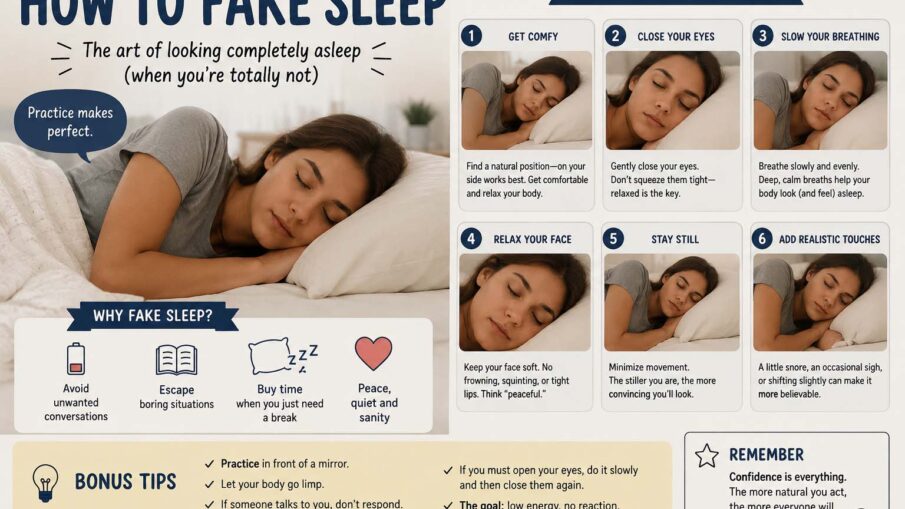
People have pretended to be asleep for countless reasons. Some want to avoid an awkward conversation, others want privacy during travel, and some simply enjoy a few moments of peace and quiet. Whatever the reason, many people wonder how to fake sleep in a way that appears natural and believable.
While pretending to sleep may sound simple, convincing others can be surprisingly difficult. Natural sleeping behavior involves body language, breathing patterns, and facial expressions that are not always easy to imitate.
This guide explains common techniques, mistakes to avoid, and practical situations where people may pretend to be asleep.
Why Do People Fake Sleep?
There are many reasons why someone might pretend to be asleep.
Common examples include:
- Avoiding interruptions
- Escaping uncomfortable conversations
- Getting privacy during travel
- Avoiding being disturbed on public transportation
- Playing harmless jokes
- Relaxing without social interaction
Most situations are harmless, but understanding realistic sleeping behavior can help make the act more convincing.
Understanding Natural Sleep Behavior
Before learning how to fake sleep, it helps to understand how people behave when genuinely asleep.
Most sleeping individuals:
- Breathe slowly and consistently
- Keep facial muscles relaxed
- Remain relatively still
- Avoid sudden reactions
- Have naturally closed eyes
Observing these habits can help create a more believable appearance.
How to Fake Sleep Naturally
If you want to appear asleep, focus on natural body language rather than overacting.
Lie or sit comfortably in a relaxed position.
Keep your breathing steady and avoid exaggerated snoring unless it would be realistic in the situation.
Relax your shoulders, jaw, and facial muscles. Tension can make it obvious that you are awake.
Avoid frequently changing positions, checking your surroundings, or reacting immediately to noises.
The more relaxed you appear, the more convincing the illusion becomes.
How to Fake Sleep Without Smiling
A common concern is how to fake sleep without smiling.
People often struggle to keep a straight face when others are talking nearby or trying to wake them up.
To avoid smiling:
Focus on keeping facial muscles relaxed.
Avoid thinking about humorous situations.
Keep your jaw loose and your lips in a neutral position.
If you feel yourself smiling, take a slow breath and relax your expression.
Remember that sleeping faces are generally calm and expressionless.
Common Situations Where People Pretend to Sleep
Pretending to sleep often occurs in everyday situations.
During Travel
Many travelers pretend to sleep on airplanes, trains, or buses to avoid unwanted conversations.
At Home
Some people pretend to sleep when they want a few extra minutes of quiet time.
During Long Journeys
Passengers may appear asleep to discourage interruptions during lengthy trips.
Entertainment and Pranks
Pretending to sleep is also commonly used in harmless practical jokes and social media videos.
Body Language Tips
Good body language is often more important than keeping your eyes closed.
A convincing sleeping posture includes:
- Relaxed shoulders
- Slightly lowered head
- Calm breathing
- Minimal movement
- Natural resting position
Avoid appearing stiff or overly dramatic.
Natural sleep is usually subtle rather than theatrical.
Breathing Techniques
Try to maintain:
- Slow breaths
- Consistent rhythm
- Gentle chest movement
Rapid breathing or obvious breath control can appear unnatural.
The goal is to imitate relaxed rest rather than deep unconscious sleep.
Mistakes to Avoid
Many people unintentionally reveal that they are awake.
Common mistakes include:
Moving Too Often
Frequent adjustments make it appear that you are paying attention.
Reacting Immediately
Responding instantly to sounds or conversations can expose the act.
Forced Snoring
Exaggerated snoring often sounds unrealistic.
Tense Muscles
A rigid body position can suggest alertness rather than sleep.
Avoiding these mistakes can make your behavior appear more natural.
Can People Tell When You’re Faking Sleep?
Sometimes yes.
People who know you well may notice unusual behavior, facial expressions, or breathing patterns.
However, in casual situations such as public transportation, most people are not paying close attention.
The key is consistency. The more naturally you behave, the less likely others are to question whether you are sleeping.
Travel and Public Transportation Tips
Pretending to sleep is particularly common while traveling.
If using this approach on a plane, train, or bus:
Wear headphones if appropriate.
Choose a comfortable resting position.
Avoid constantly opening your eyes.
Keep movements minimal.
Many travelers use these methods simply to enjoy a quiet and uninterrupted journey.
Frequently Asked Questions
How do you fake sleep convincingly?
Focus on relaxed body language, steady breathing, and minimal movement.
How to fake sleep without smiling?
Relax your facial muscles, avoid humorous thoughts, and maintain a neutral expression.
Is pretending to sleep difficult?
It can be challenging if you frequently react to sounds or conversations around you.
Can people tell if you’re faking sleep?
Sometimes, especially if they know you well or observe unusual behavior.
Why do people pretend to sleep during travel?
Many travelers do it to avoid interruptions and enjoy a peaceful journey.
Conclusion
Learning how to fake sleep is mostly about understanding natural sleeping behavior. Relaxed posture, steady breathing, and minimal reactions are often more convincing than dramatic acting. Whether you’re looking for privacy during travel, avoiding interruptions, or simply curious about the topic, small details make the biggest difference.
If you’re specifically wondering how to fake sleep without smiling, remember that a relaxed face and calm breathing are usually enough. By avoiding common mistakes and keeping your behavior natural, you can create a much more believable appearance of being asleep.