Seeing the Northern Lights, also known as the Aurora Borealis, is one of the most unforgettable travel experiences in the world. These colorful lights dancing across the night sky attract travelers from every corner of the globe.
However, witnessing the aurora is not guaranteed. Timing, weather, location, and solar activity all play important roles. Understanding the best time to see northern lights can significantly improve your chances of experiencing this natural phenomenon.
This guide covers the ideal seasons, top destinations, monthly breakdowns, weather considerations, travel tips, and everything else you need to plan an unforgettable Northern Lights adventure.
What Are the Northern Lights?
This interaction creates colorful displays that often appear as:
- Green ribbons
- Purple waves
- Pink streaks
- White arcs
- Multi-colored curtains
The phenomenon is most commonly visible in regions located near the Arctic Circle.
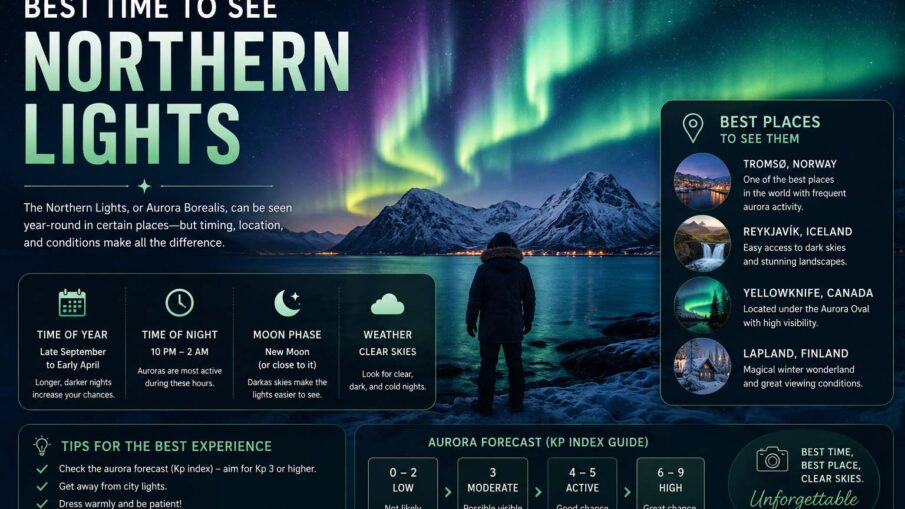
Best Time to See Northern Lights Overall
September and March
During these months:
- Nights are longest
- Skies are darker
- Aurora activity is easier to observe
- Popular viewing locations operate tours
Although auroras occur year-round, they cannot be seen during bright summer nights in many northern regions.
Quick Northern Lights Season Overview
| Season | Viewing Conditions |
|---|---|
| Spring (March–April) | Good |
| Summer (May–August) | Poor |
| Fall (September–October) | Excellent |
| Winter (November–February) | Excellent |
| Early Spring (March) | Very Good |
Most travelers target fall and winter for the highest chances of success.
Why Darkness Matters
Many first-time travelers focus only on solar activity.
However, darkness is equally important.
To see the aurora clearly, you need:
- Dark skies
- Minimal light pollution
- Clear weather
- Aurora activity
Even a strong aurora can be difficult to see if cloud cover is heavy.
Monthly Breakdown: Best Time to See Northern Lights
September
Advantages:
- Mild temperatures
- Increasing darkness
- Lower crowds than winter
Many experienced travelers consider September underrated.
October
October offers:
- Comfortable weather
- Long nights
- Beautiful autumn scenery
This month combines good viewing conditions with easier travel compared to deep winter.
November
Darkness increases significantly.
Benefits include:
- Strong viewing opportunities
- Early winter landscapes
- Growing aurora tourism season
Cloud cover may become more frequent in some locations.
December to February
These months represent peak Northern Lights season.
Advantages:
- Longest nights
- Maximum darkness
- Winter activities available
Challenges include:
- Extremely cold temperatures
- Higher travel costs
- Increased tourist demand
March
March is often considered one of the hidden gems for aurora travel.
Benefits include:
- Longer daylight hours
- Better weather in some regions
- Continued aurora visibility
Many photographers favor March conditions.
Best Time to Visit for Northern Lights Travel
If your primary goal is seeing the aurora, the best overall travel window is:
September Through March
Within that period:
- September–October offers milder weather.
- December–February offers maximum darkness.
- March provides a balance between conditions and comfort.
Your ideal timing depends on personal preferences and budget.
Best Time to See Northern Lights in Iceland
One of the most searched topics is the best time to see northern lights in Iceland.
Iceland remains one of the world’s most popular aurora destinations.
Best Months
- September
- October
- November
- February
- March
Advantages of Iceland include:
- Easy accessibility
- Stunning landscapes
- Aurora tours
- Additional attractions
Popular viewing areas include:
- Thingvellir National Park
- Vik
- Snaefellsnes Peninsula
- Northern Iceland
The combination of volcanoes, glaciers, and auroras creates incredible photography opportunities.
Best Time to See Northern Lights in Alaska
Another popular question concerns the best time to see northern lights in Alaska.
Alaska is one of North America’s premier aurora destinations.
Best Months
- September
- October
- November
- February
- March
The city of Fairbanks is particularly famous because it sits directly beneath the auroral oval.
Benefits include:
- Frequent aurora activity
- Aurora lodges
- Winter tourism infrastructure
- Less light pollution
Best Time to See Northern Lights Tonight
Many travelers search for the best time to see northern lights tonight.
While long-term planning is important, daily conditions matter just as much.
For the best chances:
Check Aurora Forecasts
Monitor:
- KP Index
- Solar activity forecasts
- Local aurora predictions
Monitor Cloud Cover
Even strong auroras can be hidden behind clouds.
Go Outside Late
The best viewing window is often:
- 10 PM to 2 AM
This period frequently offers the darkest skies and strongest visibility.
Weather and Climate Considerations
Weather significantly affects aurora viewing success.
Ideal Conditions
- Clear skies
- Low humidity
- Minimal moonlight
- Dark surroundings
Common Challenges
- Cloud cover
- Snowstorms
- Fog
- Rain
Always build flexibility into your itinerary.
Multiple viewing nights increase your chances considerably.
Cheapest Time to Visit for Northern Lights
Travelers on a budget often ask when aurora trips are most affordable.
Cheapest Months
- September
- Early October
- Late March
These shoulder-season periods often feature:
- Lower hotel rates
- Cheaper flights
- Fewer tourists
At the same time, aurora visibility remains strong.
Things to Avoid When Chasing Northern Lights
Avoid these common mistakes.
Booking Only One Night
Aurora sightings are never guaranteed.
Multiple nights improve your odds significantly.
Ignoring Weather Forecasts
Clouds can ruin viewing opportunities.
Always monitor local conditions.
Staying in Bright Cities
Light pollution reduces visibility.
Travel away from urban areas when possible.
Forgetting Warm Clothing
Aurora viewing often involves standing outside for long periods.
Travel Tips for Northern Lights Success
Stay at Least Three Nights
More nights mean better chances.
Bring a Camera
Auroras can appear more vibrant in photographs.
Join Guided Tours
Local guides understand weather patterns and viewing locations.
Learn Basic Aurora Forecasting
Understanding solar activity can improve planning.
Choose Dark Locations
National parks and rural areas generally provide better visibility.
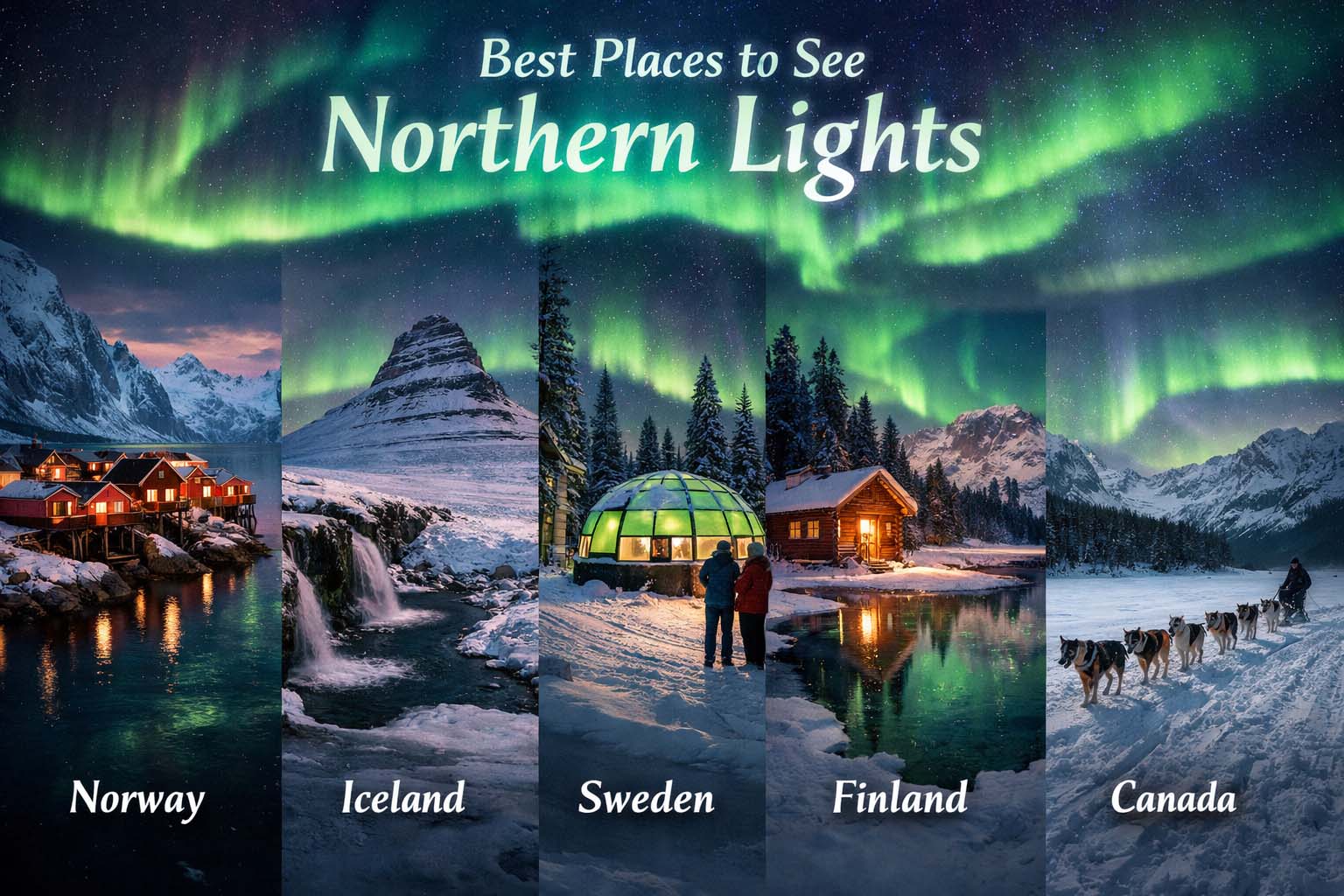
Top Northern Lights Destinations
Popular destinations include:
- Iceland
- Alaska
- Norway
- Finland
- Sweden
- Canada
- Greenland
Each location offers unique scenery and viewing experiences.
FAQ
Generally, September through March offers the highest chances of seeing the Aurora Borealis.
What is the best time to see northern lights in Iceland?
September through March, with October and March often providing excellent conditions.
What is the best time to see northern lights in Alaska?
September through March, especially around Fairbanks.
Can I see the Northern Lights in summer?
Auroras still occur, but bright summer nights often make them invisible.
What time of night is best for viewing?
Many sightings occur between 10 PM and 2 AM.
How many nights should I plan?
At least three nights is recommended for better chances of success.
Conclusion
align to create optimal viewing opportunities. Whether you’re planning a trip to Iceland, Alaska, Norway, or another Arctic destination, careful timing can dramatically improve your chances of witnessing this incredible natural phenomenon.