
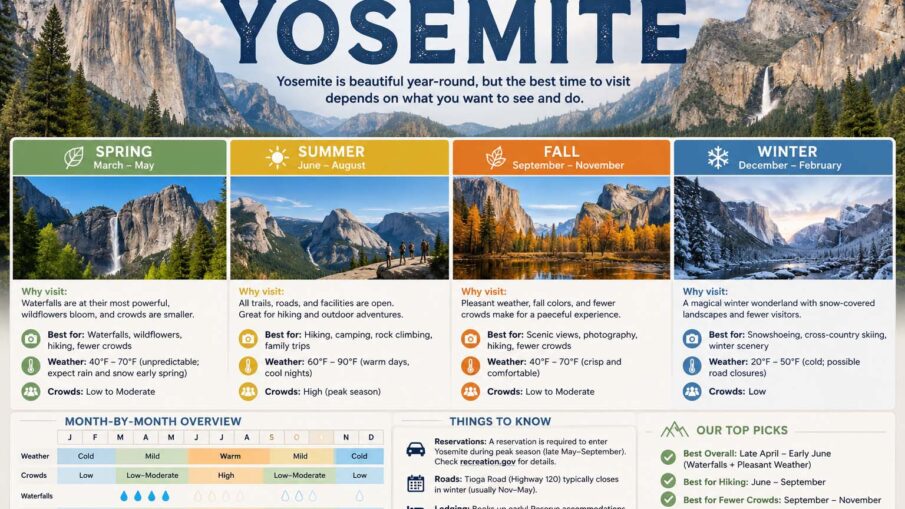
Yosemite National Park is one of the most breathtaking natural destinations in the United States. In fact, known for its towering granite cliffs, giant sequoia trees, waterfalls, and scenic hiking trails, Yosemite attracts millions of visitors every year. However, choosing the best time to visit Yosemite can significantly impact your experience.
Moreover, each season offers something unique, from roaring waterfalls in spring to colorful landscapes in fall and snow-covered scenery in winter. Ultimately, the ideal time depends on your interests, budget, and preferred activities.
Why Visit Yosemite National Park?
Located in California’s Sierra Nevada mountains, Yosemite National Park is famous for iconic landmarks such as:
- Yosemite Valley
- El Capitan
- Half Dome
- Glacier Point
- Yosemite Falls
- Mariposa Grove
In fact, many of these attractions rank among America’s most recognizable famous landmarks.
Additionally, visitors enjoy hiking, camping, photography, wildlife viewing, rock climbing, and scenic drives throughout the year.
Because weather conditions vary dramatically between seasons, timing your visit carefully can enhance your experience.
Best Time to Visit Yosemite National Park
For most travelers, the best time to visit Yosemite National Park is between May and June.
During this period:
- Waterfalls are at their peak flow.
- Temperatures are pleasant.
- Most roads begin opening.
- Wildflowers bloom throughout the park.
- Hiking conditions improve.
Therefore, spring provides the perfect balance of scenery, accessibility, and outdoor activities.
Likewise, travelers comparing national parks may research the best time to visit Yellowstone.
Yosemite Visit: Weather and Climate Overview
Generally, Yosemite experiences four distinct seasons.
When to Visit Yosemite in Spring (March to May)
Average temperatures:
- 45°F to 75°F (7°C to 24°C)
Conditions:
- Melting snow
- Powerful waterfalls
- Blooming wildflowers
- Moderate crowds
Overall, spring is one of the most visually impressive times to visit.
Yosemite Summer Travel (June to August)
Average temperatures:
- 55°F to 90°F (13°C to 32°C)
Conditions:
- Warm weather
- Full trail access
- Peak tourist season
- Busy roads and accommodations
Although summer is ideal for hiking, it brings larger crowds.
Yosemite Fall Travel (September to November)
Average temperatures:
- 40°F to 80°F (4°C to 27°C)
Conditions:
- Fewer visitors
- Comfortable temperatures
- Scenic autumn colors
- Easier reservations
In fact, many travelers consider fall an underrated season.
Yosemite Winter Travel (December to February)
Average temperatures:
- 28°F to 55°F (-2°C to 13°C)
Conditions:
- Snow-covered landscapes
- Winter sports opportunities
- Reduced crowds
- Limited road access
Spring Yosemite Visit: Waterfall Season
Overall, spring is often considered Yosemite’s most spectacular season.
For example, snowmelt feeds famous waterfalls such as:
- Yosemite Falls
- Bridalveil Fall
- Vernal Fall
As a result, the park becomes lush and vibrant with blooming wildflowers and fresh greenery.
In particular, photographers love spring because of dramatic landscapes and excellent lighting conditions.
Summer Yosemite Visit: Best for Hiking
Generally, summer offers maximum accessibility.
Popular activities include:
- Hiking Half Dome
- Exploring Glacier Point
- Camping
- Rock climbing
In addition, most roads and trails are fully open.
However, the downside is larger crowds and higher accommodation prices.
Therefore, if visiting in summer, book lodging several months in advance.
Moreover, campers may want to compare the best camping pillows before an overnight stay.
Fall Yosemite Visit: Fewer Crowds and Pleasant Weather
Overall, fall combines comfortable temperatures with smaller crowds.
Advantages include:
- Easier parking
- Shorter lines
- Better hotel availability
- Beautiful fall foliage
In particular, September and October are popular among photographers and hikers.
Winter Yosemite Visit: Snowy Beauty
Visitors can enjoy:
- Snowshoeing
- Cross-country skiing
- Winter photography
- Scenic snowy views
Although some roads may close due to snow, Yosemite Valley remains accessible most of the season.
Best Time of Year to Visit Yosemite for Hiking
Many travelers ask about the best time of year to visit Yosemite for hiking.
Ultimately, the answer depends on trail difficulty.
May and June Yosemite Hiking
Ideal for:
- Yosemite Valley trails
- Waterfall hikes
- Moderate temperatures
July and August Yosemite Hiking
Ideal for:
- High-elevation trails
- Half Dome
- Backcountry adventures
September and October Yosemite Hiking
Ideal for:
- Comfortable temperatures
- Reduced crowds
- Long hiking days
Therefore, many experienced hikers prefer early fall because conditions are less crowded than summer.
When Is the Best Time to Visit Yosemite for Photography?
Photography enthusiasts often choose:
Spring Yosemite Photography
Reasons:
- Waterfalls at maximum flow
- Vibrant greenery
- Wildflowers
Fall Yosemite Photography
Reasons:
- Golden foliage
- Clear skies
- Balanced lighting
Winter Yosemite Photography
Reasons:
- Snow-covered landscapes
- Unique scenery
- Fewer visitors in photographs
Overall, each season provides distinct photographic opportunities.
Cheapest Time for a Yosemite Visit
Budget-conscious travelers often seek the cheapest time to visit Yosemite.
Generally, the most affordable months are:
- January
- February
- November
Benefits include:
- Lower hotel prices
- Less competition for lodging
- Reduced travel demand
However, winter travel often provides the best value, though some activities may be limited by weather conditions.
Monthly Yosemite Travel Overview
| Month | Crowds | Weather | Recommendation |
|---|---|---|---|
| January | Low | Cold, snowy | Budget travelers |
| February | Low | Snowy | Winter activities |
| March | Moderate | Cool | Early waterfall season |
| April | Moderate | Mild | Great photography |
| May | High | Pleasant | Excellent overall |
| June | High | Warm | Peak waterfall season |
| July | Very High | Hot | Hiking and camping |
| August | Very High | Hot | Outdoor adventures |
| September | Moderate | Comfortable | Hiking favorite |
| October | Moderate | Cool | Fall scenery |
| November | Low | Cool | Budget travel |
| December | Moderate | Cold | Holiday visits |
Additionally, travelers planning a wider American Southwest itinerary may compare the best time to visit Grand Canyon.
Things to Avoid During a Yosemite Visit
Visiting Without Reservations
In fact, certain periods may require advance reservations or permits.
Ignoring Weather Conditions
Because mountain weather can change quickly, always check forecasts before arrival.
Arriving Late in Summer
Since parking fills early during peak season, early arrivals improve the experience.
Underestimating Hiking Difficulty
Although some Yosemite trails are challenging, bringing appropriate footwear, water, and supplies can improve safety.
Booking Accommodation Too Late
In particular, summer lodging often sells out months in advance.
These precautions also matter when considering what is the safest way to travel in mountain environments.
Travel Tips for a Yosemite Visit
Reserve Early
Therefore, book accommodations and permits well ahead of your trip.
Start Activities Early
Pack Layers
Because temperatures vary significantly throughout the day, bring suitable layers.
Bring Water
Above all, hydration is essential, especially during summer hikes.
Explore Beyond Yosemite Valley
Generally, less-visited areas provide incredible scenery and fewer crowds.
Check Road Conditions
Because seasonal closures can affect travel plans, check conditions before traveling.
Yosemite Travel by Visitor Type
Families Visiting Yosemite
Best months:
- June
- July
Yosemite Photographers
Best months:
- April
- May
- October
Yosemite Hikers
Best months:
- September
- October
Yosemite Budget Travelers
Best months:
- January
- February
- November
First-Time Yosemite Visitors
Best months:
- May
- June
Frequently Asked Questions About Visiting Yosemite
When Is the Best Time to Visit Yosemite?
Most travelers prefer May and June because of pleasant weather, active waterfalls, and excellent sightseeing opportunities.
What is the best time of year to visit Yosemite?
Generally, spring and early fall are considered the best seasons for most visitors.
Is Yosemite crowded in summer?
Yes. In fact, July and August are the busiest months of the year.
What is the cheapest time to visit Yosemite?
Generally, winter months, particularly January and February, offer the lowest travel costs.
Can you visit Yosemite in winter?
Yes. However, although Yosemite remains open year-round, some roads and areas may be affected by snow.
Conclusion
The best time to visit Yosemite depends on the type of experience you’re seeking. For breathtaking waterfalls and beautiful spring scenery, May and June are hard to beat. Travelers looking for hiking adventures often prefer summer and early fall, while photographers can find incredible opportunities throughout the year. Budget-conscious visitors may enjoy winter’s lower prices and peaceful atmosphere.