
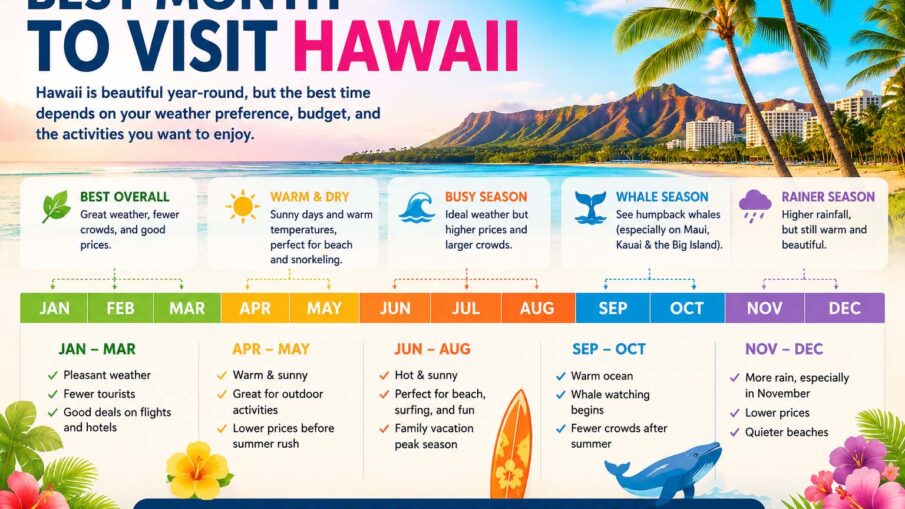
Choosing the best month to visit Hawaii depends on what kind of vacation you want. Some travelers want sunny beach days and comfortable ocean conditions, while others prefer fewer crowds, better value, or seasonal activities. Fortunately, Hawaii stays warm throughout the year, so several months can provide an excellent vacation.
If you are wondering what is the best month to visit Hawaii, April, May, September, and October are strong choices for many travelers. Spring and fall can combine pleasant weather with fewer visitors than major holiday and summer periods. However, the ideal month still depends on your budget, island, and planned activities.
Therefore, this guide compares Hawaii month by month, including weather, crowds, off-season periods, family travel, costs, and activities.
Best Month to Visit Hawaii by Season
Each season creates a slightly different experience across the Hawaiian Islands. Therefore, comparing the main travel periods can help you choose the right month.
| Season | Typical Conditions | Crowds | Best For |
|---|---|---|---|
| Spring (March–May) | Warm and pleasant | Moderate | Sightseeing, hiking, beaches |
| Summer (June–August) | Warm and generally drier | High | Families, swimming, snorkeling |
| Fall (September–November) | Warm with shoulder-season periods | Lower outside holidays | Couples, value seekers |
| Winter (December–February) | Mild with wetter periods | High around holidays | Whale watching, surfing |
Although temperatures remain relatively consistent, rainfall and ocean conditions can vary considerably between islands and even between different parts of the same island.
If you are comparing different travel windows, our guide on when is the best time to go to hawaii provides a broader look at seasonal conditions across the islands.
Best Month to Visit Hawaii for Weather
Hawaii’s tropical climate is one reason the islands remain popular throughout the year. However, there are still seasonal differences worth considering.
According to the official Hawaii tourism weather guide, Hawaii has two broad seasons: summer from May through October and winter from November through April. Weather can also vary significantly because of elevation and local microclimates. Go Hawaii
In addition, the wetter months generally occur from November through March, although rainfall can be highly localized. Ocean conditions also vary by season and coast. Therefore, travelers should check local weather and ocean forecasts rather than relying only on statewide averages. Go Hawaii
For many visitors, the best month to visit Hawaii for weather is May, September, or October because these months can provide warm conditions without some of the demand associated with major vacation periods.
Best Month to Visit Hawaii: January Through May
The first half of the year offers everything from winter whale watching to comfortable spring sightseeing.
January in Hawaii
January provides a warm escape from colder destinations. Moreover, it falls within Hawaii’s whale-watching season.
January is particularly attractive for:
- Whale watching
- Winter escapes
- Surf watching
- Outdoor sightseeing
However, winter remains popular with visitors escaping colder climates. Therefore, accommodation and flight prices can vary considerably.
February in Hawaii
February continues the winter travel season and is particularly appealing to visitors interested in whales.
In addition, couples often choose Hawaii for romantic trips during February. Although temperatures remain comfortable, local rainfall and surf conditions should be checked before outdoor activities.
March: Is Mid-March a Good Time to Visit Hawaii?
Yes, mid-March can be a good time to visit Hawaii. Temperatures remain comfortable, while hiking, sightseeing, and beach activities are widely available.
However, spring-break travel can increase demand on certain dates. Therefore, travelers seeking fewer crowds should compare their dates carefully.
April: One of the Best Months to Visit Hawaii
April is one of the strongest choices for travelers who want a balance of weather, crowds, and activities.
In particular, parts of April fall between winter travel demand and the main summer vacation period. As a result, visitors may find a more relaxed experience.
Moreover, spring offers comfortable conditions for sightseeing and outdoor adventures.
May: A Strong Choice for Hawaii
May is another excellent candidate for the best month to visit Hawaii.
The weather is warm, while the busiest summer family-travel period has not fully arrived. Consequently, May can work particularly well for couples, independent travelers, and families with flexible schedules.
For many visitors asking what month is best to visit Hawaii, April and May deserve serious consideration.
Best Month to Visit Hawaii During Summer
Summer is particularly popular with families because schools are on vacation. In addition, warmer weather and generally calmer summer ocean conditions at many beaches make water activities attractive. Go Hawaii
June in Hawaii
June begins the main summer vacation period.
Travelers can enjoy:
- Beach vacations
- Snorkeling
- Boat tours
- Hiking
- Family activities
However, visitor numbers can increase as schools begin summer break.
July in Hawaii
July is a popular month for family vacations.
It works especially well for:
- Swimming
- Beach days
- Water sports
- Family trips
- Sightseeing
On the other hand, travelers seeking quieter resorts may prefer a shoulder-season month.
August in Hawaii
August remains warm and lively. Therefore, beaches, resorts, and major attractions can remain busy.
Nevertheless, travelers who prioritize summer conditions over smaller crowds may find August suitable.
Best Month to Visit Hawaii in Fall
September and October are especially important when comparing the best months to travel to Hawaii.
After the main summer vacation period, some destinations may become less crowded. Therefore, fall can provide an attractive combination of warm conditions and greater flexibility.
September: A Good Month to Go to Hawaii
September can be a strong option for travelers who are not restricted by school schedules.
For example, couples and adults traveling without children may appreciate visiting after the main summer rush.
In addition, September can offer more flexibility when comparing accommodations and activities.
October: Another Strong Hawaii Travel Month
October is also worth considering.
Warm conditions continue, while travelers avoid the main summer vacation period and the late-December holiday rush.
Therefore, September and October are among the first months to consider if you are asking when should I go to Hawaii for a balanced vacation.
November in Hawaii
November marks the transition into Hawaii’s winter season.
Early November can appeal to travelers seeking dates between major vacation periods. However, Thanksgiving travel can increase demand later in the month.
Consequently, travelers with flexible dates may prefer early November.
Hawaii Off Season Months
Many travelers search specifically for Hawaii off season months because they want smaller crowds or better travel value.
Hawaii does not have one strict off-season because visitors arrive throughout the year. However, shoulder periods outside major school holidays can be less crowded than peak vacation periods.
Good periods to investigate include:
- Parts of April
- May
- September
- October
- Early November
Therefore, if you are searching for the best time to visit Hawaii off season, start by comparing these months.
Still, airfare and accommodation prices change constantly. As a result, compare your actual travel dates rather than assuming a particular month will always be cheapest.
Best and Worst Months to Visit Hawaii
There is no universal answer to the best and worst months to visit Hawaii because different seasons suit different travelers.
For example, winter can be excellent for whale watching. However, travelers focused on calmer ocean conditions may prefer summer at many beaches.
Similarly, July can be convenient for families following school calendars, but couples seeking fewer crowds may prefer May or September.
For many travelers:
Best balanced months: April, May, September, and October.
Busier periods: Major winter holidays and summer vacation.
Therefore, your personal best and worst months depend on your priorities.
Why Spring and Fall Can Be the Best Months for Hawaii
Spring and fall stand out because they include periods between major vacation peaks.
Potential advantages include:
- Fewer crowds on some dates
- Pleasant weather
- Greater accommodation availability
- More flexible itineraries
- Fewer school-holiday travelers
In fact, Hawaii’s official tourism information describes spring as a period with fewer crowds than the winter holiday and summer peaks. Go Hawaii
As a result, these periods can provide a more relaxed Hawaiian experience.
If you are planning several tropical vacations, comparing the best time to travel to hawaii with other destinations can help you choose the season that best matches your travel style.
Best Month to Visit Hawaii With Family
The best time to visit Hawaii with family often depends on school schedules.
June, July, and August are convenient because many children are on summer vacation. However, these months can also attract more families.
Meanwhile, families with flexible schedules can consider May, September, or October.
Popular family activities include:
- Snorkeling
- Beach days
- Easy hiking
- Botanical gardens
- Cultural attractions
- Wildlife excursions
- Scenic drives
Therefore, families do not necessarily need to visit during peak summer.
If you are unsure about travel documents, our guide answering do you need a passport to go to hawaii explains the requirements for different travelers.
Best Month for a Hawaii Vacation on a Budget
Travel costs vary according to your departure city, island, accommodation, events, and exact dates.
Nevertheless, budget-conscious travelers should compare shoulder-season periods first.
Consider checking:
- Late April
- May
- September
- October
- Early November
Moreover, flexible dates can make a noticeable difference. Instead of choosing one week immediately, compare several departure dates and hotel combinations.
Therefore, there is no guaranteed cheapest month, but avoiding major holiday periods can provide more opportunities to find suitable prices.
Best Time to Book a Trip to Hawaii
There is no single booking date that guarantees the cheapest Hawaii vacation.
However, popular periods can sell out earlier. Therefore, travelers planning Christmas, New Year, spring break, or summer trips should consider booking well ahead.
In contrast, shoulder-season travelers may have more flexibility.
Still, waiting until the last minute can reduce your choices for flights, hotels, rental cars, and popular activities.
Things to Do Throughout the Year
Hawaii offers activities in every season.
Popular experiences include:
- Relaxing on beaches
- Hiking volcanic landscapes
- Visiting waterfalls
- Snorkeling
- Exploring parks
- Watching sunsets
- Scenic drives
- Learning about Hawaiian culture
However, local weather and ocean conditions can affect individual activities.
Therefore, check current conditions before swimming, hiking, boating, or snorkeling.
Which Hawaiian Island Should You Choose?
Choosing the right island can be just as important as choosing the best month to visit Hawaii.
Oahu
Oahu works particularly well for:
- First-time visitors
- Surfing
- Shopping
- Nightlife
- Historic attractions
- Beaches
In addition, Oahu offers a combination of urban attractions and natural scenery.
Maui
Maui is known for:
- Scenic beaches
- Resorts
- Whale watching
- Outdoor activities
- Scenic drives
However, weather varies considerably across the island because Maui contains multiple microclimates. Go Hawaii
Kauai
Kauai can be ideal for travelers who enjoy:
- Nature
- Hiking
- Dramatic coastlines
- Scenic landscapes
- Quieter surroundings
Because weather differs across the island, check local forecasts before planning outdoor activities.
Hawaii Island
Hawaii Island, commonly called the Big Island, offers:
- Volcanic landscapes
- Beaches
- Stargazing
- Diverse climates
- Outdoor adventures
Therefore, it can be particularly appealing to travelers interested in geology and varied landscapes.
Travel Costs by Season
Hawaii travel prices fluctuate throughout the year.
Generally:
- Major holidays can create high demand.
- Summer attracts many family travelers.
- Shoulder periods may provide better value.
- Airfare depends heavily on departure city and dates.
- Accommodation prices vary by island and location.
Consequently, compare your total vacation cost rather than airfare alone.
For example, accommodation, rental cars, activities, meals, and inter-island transportation can substantially affect your final budget.
Getting Around the Hawaiian Islands
Transportation requirements depend on the island and your itinerary.
Rental Cars
Renting a car can be useful if you want to explore beyond your resort area.
For example, a rental car provides flexibility for scenic viewpoints, beaches, hiking areas, and day trips.
Public Transportation
Oahu has more extensive public transportation than the other major islands.
However, transportation options vary significantly by island. Therefore, research your planned destinations before deciding whether you need a car.
Inter-Island Flights
Travelers visiting several islands commonly use short flights between them.
However, island hopping takes more time than the flight itself because you also need to account for airport transfers, security, baggage, and hotel changes.
Therefore, avoid trying to fit too many islands into a short vacation.
Packing Tips for Every Hawaii Travel Month
Hawaii’s warm climate makes packing relatively simple.
Consider bringing:
- Lightweight clothing
- Swimsuits
- Comfortable walking shoes
- Sandals
- Sun protection
- Sunglasses
- Reusable water bottle
- Light rain jacket
- Hat
- Light sweater or jacket
Moreover, higher elevations can be considerably cooler than beach areas. Therefore, your packing list should reflect your planned activities rather than beach temperatures alone. Go Hawaii
Helpful Budget Tips
A Hawaii vacation can become expensive, but careful planning can help control costs.
For example:
- Travel during shoulder periods.
- Compare flights across several dates.
- Book peak periods early.
- Compare accommodation types.
- Use kitchen facilities when practical.
- Enjoy public beaches and scenic areas.
- Plan transportation before arrival.
- Avoid unnecessary island changes.
In addition, flexible dates can sometimes provide better choices than committing immediately to one specific week.
Common Mistakes When Choosing When to Visit Hawaii
A little planning can prevent several common travel problems.
Visiting During Peak Holidays Without Booking Early
Christmas, New Year, and other major vacation periods can bring strong demand.
Therefore, waiting too long may reduce your choices for flights, hotels, and rental cars.
Trying to Visit Too Many Islands
Island hopping sounds exciting. However, changing islands takes valuable vacation time.
For a one-week trip, focusing on one or two islands can provide a more relaxed experience.
Ignoring Hawaii’s Microclimates
Weather can vary dramatically across the same island.
For example, one area can be sunny while another receives rain. Therefore, check the forecast for the specific location you plan to visit.
Ignoring Ocean Conditions
Ocean conditions vary by location and season.
For instance, Hawaii’s official tourism guidance notes that winter swells can create large waves on many north-facing shores. Go Hawaii
Therefore, follow posted warnings and lifeguard advice before entering the ocean.
Frequently Asked Questions About the Best Month to Visit Hawaii
What Is the Best Month to Visit Hawaii?
For many travelers, April, May, September, and October offer a strong balance of weather, activities, and manageable visitor levels. However, the ideal month depends on your island, budget, and travel goals.
What Is the Best Month to Go to Hawaii?
May and September are excellent months to compare if your schedule is flexible. However, April and October can also be strong choices.
What Are the Best Months to Go to Hawaii?
April, May, September, and October are among the best months to investigate first. In particular, these periods avoid some of the busiest summer and winter holiday dates.
What Are Hawaii Off Season Months?
Hawaii does not have a strict off-season. However, parts of spring and fall outside school holidays can experience fewer visitors than major peak periods.
What Are the Best and Worst Months to Visit Hawaii?
There is no universal worst month. Spring and fall can provide a balanced experience, summer suits many families, and winter is attractive for whale watching and surfing.
Is Mid-March a Good Time to Visit Hawaii?
Yes. Mid-March can provide warm weather and many outdoor activities. However, spring-break schedules may affect crowds and prices.
What Is the Best Month to Visit Hawaii With Family?
Summer is convenient for families following school calendars. However, families with flexible schedules may prefer May, September, or October.
What Is the Best Month to Fly to Hawaii?
No single month always offers the cheapest airfare. Therefore, compare several dates and consider shoulder-season travel if your schedule is flexible.
When Is the Best Time to Visit Hawaii for Whale Watching?
Hawaii’s official tourism guidance says whale-watching season begins in late December and continues into early May, with peak viewing from January through early April. Go Hawaii
Therefore, January, February, and March can be particularly attractive for travelers focused on whale watching.
Is Hawaii Crowded Year-Round?
No. Visitor demand changes throughout the year. Summer and winter holidays can be busy, while some spring and fall periods can feel less crowded.
Is Hawaii a Good Winter Destination?
Yes. Warm temperatures and beaches make Hawaii attractive during winter. Therefore, it remains a popular option for travelers deciding where to travel in winter, especially when escaping colder climates.
How Many Days Should I Spend in Hawaii?
A 7-to-10-day trip can provide enough time to relax and explore without making every day feel rushed.
However, if you plan to visit several islands, consider staying longer because changing islands takes additional travel time.
Best Month to Visit Hawaii: Final Recommendation
Choosing the best month to visit Hawaii ultimately depends on your priorities. However, April, May, September, and October are excellent months to compare first if you want a balance of warm weather, activities, and potentially more manageable visitor levels.
For families limited by school schedules, summer may be more practical. Meanwhile, travelers interested in humpback whales may prefer winter. Budget-conscious visitors should compare shoulder-season dates, while beach-focused travelers should consider the specific island and local ocean conditions.
Therefore, there is no single perfect month for everyone. Instead, match your travel dates to the experience you want and compare current flights, accommodation, weather, and activities before booking.
Finally, if you are considering another tropical destination after Hawaii, comparing the best time to visit puerto rico can help you decide which destination best matches your preferred travel season.