
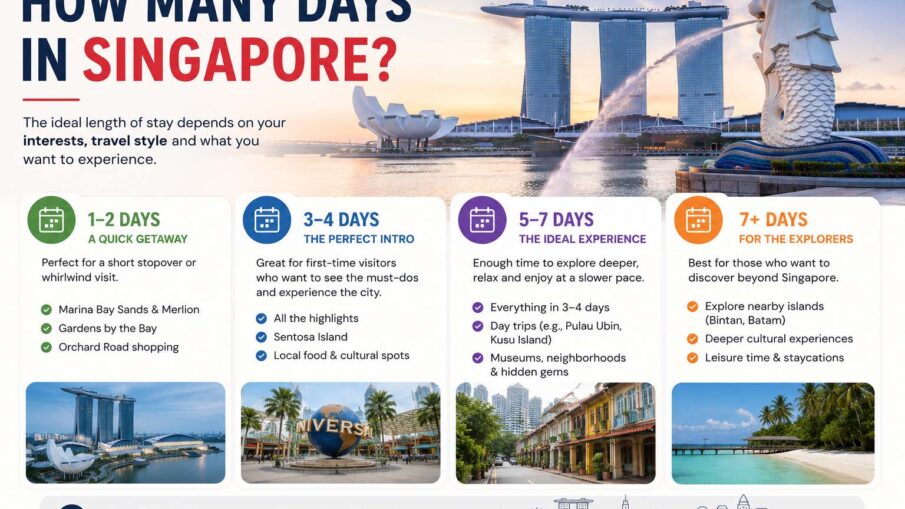
If you’re asking how many days in Singapore you should plan, the simple answer is three to four days. That gives you enough time to visit the city’s famous attractions, explore different neighborhoods, enjoy its world-class food scene, and still leave room for a relaxed pace. While a quick two-day visit covers the highlights, spending four or five days lets you experience Singapore beyond the major landmarks.
Despite being one of the world’s smallest countries, Singapore packs an impressive number of attractions into a compact area. Excellent public transportation, modern infrastructure, and short travel times make it easy to see a lot without constantly moving between hotels.
Whether you’re visiting for the first time, stopping during a Southeast Asia trip, or traveling with family, choosing the right trip length helps you make the most of your time.
How Many Days in Singapore Is Enough?
The best length of your stay varies based on your travel preferences.
| Trip Length | Best For | What You’ll Experience |
|---|---|---|
| 2 Days | Short stopovers | Marina Bay, Gardens by the Bay, Chinatown |
| 3 Days | First-time visitors | Major attractions plus cultural neighborhoods |
| 4 Days | Relaxed sightseeing | Museums, Sentosa, shopping, local food |
| 5 Days | Slow travel | Hidden gems, nature parks, day trips, extra flexibility |
For most travelers wondering how many days in Singapore is enough, three days strikes the perfect balance. You’ll have enough time to visit iconic landmarks while also exploring neighborhoods that showcase the city’s multicultural character.
If Singapore is only one stop on a larger international journey, comparing travel seasons with the best time to visit new zealand can help if you’re planning multiple destinations in the same vacation.
Why Singapore Is Easy to Explore
Unlike many large cities, Singapore is surprisingly simple to navigate.
Its MRT (Mass Rapid Transit) network connects almost every major attraction, making taxis or rental cars unnecessary for most visitors.
Travel times between popular locations are often under 30 minutes, allowing you to fit several attractions into a single day without feeling rushed.
The city’s clean streets, bilingual signage, and efficient transportation system also make it one of the easiest destinations in Asia for first-time international travelers.
How Many Days to Spend in Singapore for First-Time Visitors
If this is your first visit, plan three full days.
That schedule allows you to experience the city’s modern skyline, cultural districts, gardens, museums, and famous food markets without constantly checking the clock.
A three-day itinerary usually includes:
- Marina Bay Sands
- Gardens by the Bay
- Merlion Park
- Chinatown
- Little India
- Kampong Glam
- Singapore Botanic Gardens
- Clarke Quay
- Orchard Road
- Hawker centres
You’ll also have time to enjoy Singapore after dark, when landmarks such as Supertree Grove and Marina Bay become even more spectacular.
Suggested Singapore Itineraries
Two-Day Singapore Itinerary
If you’re visiting during a layover or weekend trip, focus on the city’s highlights.
Day One
- Marina Bay Sands
- Merlion Park
- Gardens by the Bay
- Evening light show
Day Two
- Chinatown
- Buddha Tooth Relic Temple
- Clarke Quay
- Orchard Road shopping
Although fast-paced, this itinerary covers many of Singapore’s most recognizable attractions.
Three-Day Singapore Itinerary
For travelers asking how many days to spend in Singapore, three days offers an excellent mix of sightseeing and local experiences.
Day One
Explore Marina Bay, Gardens by the Bay, and the waterfront.
Day Two
Visit Chinatown, Little India, Kampong Glam, and enjoy local street food.
Day Three
Spend the day on Sentosa Island, relax at the beaches, visit attractions, or explore the Singapore Botanic Gardens before an evening river cruise.
This schedule keeps travel time manageable while letting you experience different sides of the city.
Four-Day Singapore Itinerary
An extra day allows you to slow down and discover places beyond the main tourist circuit.
Ideas include:
- National Gallery Singapore
- ArtScience Museum
- MacRitchie Reservoir
- Jewel Changi Airport
- East Coast Park
- Tiong Bahru neighborhood
This itinerary is perfect for travelers who enjoy photography, architecture, and local culture.
Attractions You Shouldn’t Miss
Singapore has something for every type of traveler.
Marina Bay
This waterfront district is the city’s postcard view.
You’ll find:
- Marina Bay Sands
- Merlion Park
- Helix Bridge
- Singapore Flyer
- Spectra Light & Water Show
Visiting both during the day and after sunset gives you two completely different experiences.
Gardens by the Bay
Few attractions represent modern Singapore better than Gardens by the Bay.
Highlights include:
- Supertree Grove
- Cloud Forest
- Flower Dome
- OCBC Skyway
Many visitors spend half a day exploring this incredible garden complex.
Sentosa Island
Sentosa combines beaches, family attractions, adventure activities, and luxury resorts.
Popular experiences include:
- Universal Studios Singapore
- S.E.A. Aquarium
- Skyline Luge
- Adventure Cove Waterpark
- Siloso Beach
Families often dedicate an entire day to Sentosa.
Cultural Neighborhoods
Singapore’s neighborhoods reflect its multicultural heritage.
Don’t miss:
- Chinatown
- Little India
- Kampong Glam
- Arab Street
- Haji Lane
Each area has its own architecture, cuisine, temples, and shopping streets.
Best Time to Visit Singapore
Singapore enjoys warm temperatures throughout the year because it’s located near the equator.
Unlike destinations with four distinct seasons, weather changes are relatively small.
February to April
Many travelers consider this one of the most comfortable periods to visit.
Rainfall is generally lower, humidity can feel slightly more manageable, and outdoor sightseeing is pleasant.
If you’re comparing destinations with very different climates, our guide to the best time to visit switzerland highlights how seasonal planning changes between tropical and alpine countries.
May to September
These months remain popular thanks to school holidays and frequent events.
Expect warm weather, occasional afternoon showers, and plenty of sunshine between rainstorms.
Packing lightweight clothing and staying hydrated helps make sightseeing much more comfortable.
October to January
The final months of the year bring more frequent rainfall, especially during the Northeast Monsoon season. Even so, showers are often short, and sightseeing rarely stops for long.
If you’re visiting in December, you’ll also find festive decorations, Christmas events, and vibrant shopping displays along Orchard Road.
The good news is that Singapore remains a year-round destination, so you can plan a visit whenever it fits your schedule.
Where to Stay in Singapore
Choosing the right neighborhood can make your trip even more enjoyable.
Marina Bay
Marina Bay is perfect if you want luxury hotels, skyline views, and easy access to famous attractions.
It’s an excellent choice for first-time visitors, though accommodation prices tend to be higher.
Orchard Road
Travelers who enjoy shopping will appreciate staying near Orchard Road.
You’ll find shopping malls, restaurants, cafés, and convenient MRT stations within walking distance.
Chinatown
Chinatown offers a great balance between affordability and location.
Boutique hotels, heritage buildings, and excellent food make it one of the most popular places to stay.
Bugis and Kampong Glam
These neighborhoods suit travelers looking for trendy cafés, street art, local markets, and a lively atmosphere.
They’re also well connected to public transportation.
Getting Around Singapore
One of Singapore’s biggest advantages is its efficient transportation network.
The MRT reaches almost every major attraction, making it the easiest way to travel around the city.
Other options include:
- Public buses
- Ride-hailing services
- Taxis
- Walking between nearby attractions
Many visitors purchase a reloadable transit card, although contactless bank cards are also accepted on most public transport services.
Since attractions are relatively close together, you’ll spend more time exploring than commuting.
How Much Does a Singapore Trip Cost?
Singapore has a reputation for being expensive, but costs vary depending on your travel style.
| Expense | Budget | Mid-Range | Luxury |
|---|---|---|---|
| Accommodation | $70–120 | $180–300 | $400+ |
| Meals | $15–35 | $40–80 | $120+ |
| Transportation | $8–15 | $15–25 | $30+ |
| Attractions | $20–60 | $60–120 | $150+ |
One of the easiest ways to save money is by eating at hawker centres, where you’ll find authentic local dishes at affordable prices.
What to Eat in Singapore
Food is one of Singapore’s biggest attractions.
Some dishes you shouldn’t miss include:
- Hainanese chicken rice
- Laksa
- Chili crab
- Satay
- Char kway teow
- Kaya toast
- Roti prata
Hawker centres such as Maxwell Food Centre, Lau Pa Sat, and Newton Food Centre offer excellent opportunities to sample local cuisine without spending a fortune.
Packing Tips
Singapore’s tropical climate calls for lightweight, breathable clothing.
A practical packing list includes:
- Comfortable walking shoes
- Lightweight shirts and shorts
- Umbrella or compact rain jacket
- Reusable water bottle
- Sunscreen
- Sunglasses
- Power adapter (if needed)
Since you’ll spend plenty of time outdoors, breathable fabrics help you stay comfortable throughout the day.
Safety Tips for Travelers
Singapore is widely considered one of the safest cities in the world.
Even so, following basic travel precautions is always wise.
For example:
- Keep valuables secure in crowded areas.
- Stay aware of your surroundings on public transportation.
- Follow local laws carefully, as regulations are strictly enforced.
- Carry travel insurance for added peace of mind.
If you’re preparing for international travel in general, understanding what is the safest way to travel can help you build smart habits before any trip.
Common Mistakes to Avoid
Many first-time visitors make similar planning mistakes.
Try to avoid:
- Packing too many attractions into one day.
- Visiting outdoor attractions during the hottest afternoon hours.
- Skipping hawker centres in favor of only restaurant dining.
- Forgetting to carry water in the tropical heat.
- Booking accommodation far from MRT stations.
A relaxed itinerary usually leads to a much more enjoyable experience.
Is Singapore Worth Combining With Other Destinations?
Absolutely.
Singapore is one of Southeast Asia’s biggest transportation hubs, making it easy to combine with nearby countries such as Malaysia, Indonesia, Thailand, or Vietnam.
Many travelers also include destinations farther away during extended vacations. If you’re planning a multi-country itinerary through Asia, you may also wonder is osaka worth visiting before adding Japan to your route.
Likewise, travelers continuing into Europe sometimes compare destinations before building a longer itinerary, making guides like is valencia worth visiting useful for future travel planning.
Frequently Asked Questions
How many days do you need in Singapore?
Three days is ideal for most first-time visitors. You’ll comfortably see the major attractions while still having time to explore different neighborhoods and enjoy local food.
How many days needed in Singapore for families?
Families usually enjoy four days. This provides enough flexibility for attractions like Sentosa Island, Gardens by the Bay, and the Singapore Zoo without rushing.
Is two days enough?
Yes, if you’re visiting during a layover or weekend. Focus on Marina Bay, Gardens by the Bay, Chinatown, and one cultural neighborhood.
Is five days too much?
Not at all. Five days lets you explore museums, nature parks, shopping districts, and lesser-known neighborhoods while enjoying a slower pace.
What’s the best way to get around Singapore?
The MRT is the fastest, most affordable, and easiest transportation option for most visitors.
Do I need cash?
Most hotels, restaurants, attractions, and shops accept credit cards and mobile payments. Still, carrying a small amount of cash is useful for some hawker stalls and local markets.
Ready to Plan Your Singapore Adventure?
Deciding how many days in Singapore depends on how you like to travel, but three to four days is the sweet spot for most visitors. That gives you enough time to experience iconic landmarks, enjoy incredible local food, discover vibrant cultural neighborhoods, and still slow down to appreciate the city’s unique atmosphere.
Whether you’re planning a short stopover or a longer Southeast Asia vacation, Singapore rewards travelers with efficient transportation, outstanding attractions, and experiences that suit every budget. Build a flexible itinerary, leave room for spontaneous discoveries, and you’ll quickly see why this compact city is one of Asia’s most enjoyable destinations.