
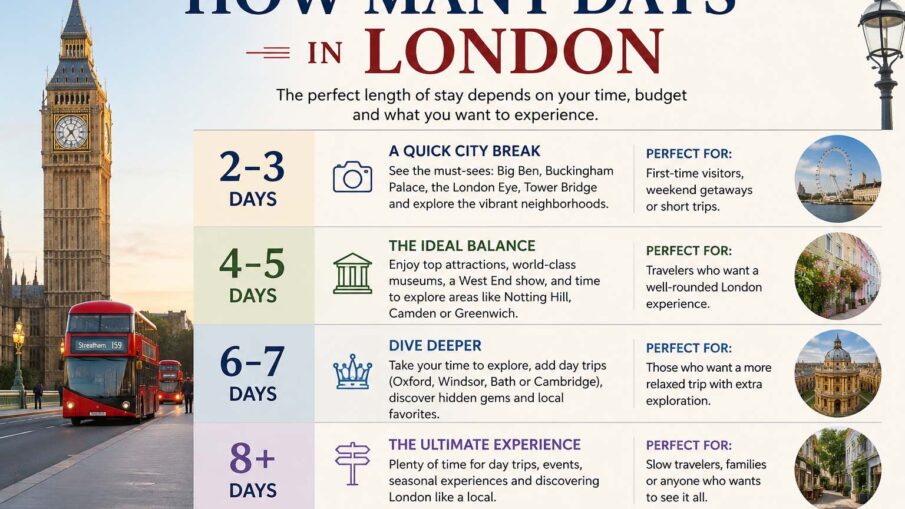
Planning your first trip to England and wondering how many days in London is enough? You’re not alone. London is one of the world’s most visited cities, packed with famous landmarks, world-class museums, vibrant neighborhoods, and historic attractions. The city offers something for every traveler, but deciding how long to stay can make a big difference to your overall experience.
For most visitors, three to five days is the ideal amount of time. That gives you enough flexibility to explore London’s highlights without rushing while still leaving room for shopping, local food, or even a nearby excursion.
This guide explains how many days you should spend in London, what you can realistically see in different timeframes, and how to build an itinerary that matches your travel style.
How Many Days in London Is Enough?
The answer depends on your interests and travel pace.
Here’s a quick guide:
| Trip Length | Best For |
|---|---|
| 1 Day | Layovers or business travelers |
| 2 Days | Fast-paced sightseeing |
| 3 Days | First-time visitors |
| 4 Days | Museums, neighborhoods, and shopping |
| 5+ Days | Relaxed travel with day trips |
If this is your first visit, three or four full days usually provides the best balance.
You’ll have enough time to explore iconic attractions while also enjoying London’s atmosphere beyond the major tourist sites.
How Many Days Do You Need in London?
Many travelers ask, how many days do you need in London to experience the city properly.
Three days generally allows you to visit:
- Buckingham Palace
- Big Ben
- Westminster Abbey
- Tower of London
- Tower Bridge
- British Museum
- Covent Garden
- Hyde Park
- Soho
- The South Bank
If you enjoy museums, shopping, theatre performances, or slower travel, four or five days creates a much more relaxed schedule.
A Suggested 3-Day London Itinerary
If you’re wondering how many days to spend in London, this sample itinerary covers many of the city’s must-see attractions.
Day 1: Classic London
Begin with London’s most famous landmarks.
Visit:
- Buckingham Palace
- St James’s Park
- Westminster Abbey
- Big Ben
- Houses of Parliament
- London Eye
Spend the evening walking along the South Bank before enjoying dinner in Covent Garden.
Day 2: History and Culture
Dedicate your second day to London’s rich history.
Recommended attractions include:
- Tower of London
- Tower Bridge
- Borough Market
- St Paul’s Cathedral
- Sky Garden
History lovers can easily spend several hours exploring the Tower of London alone.
Day 3: Museums and Local Neighborhoods
Use your final day to experience another side of London.
Popular choices include:
- British Museum
- Notting Hill
- Portobello Road Market
- Hyde Park
- Kensington Gardens
Depending on your interests, you could also visit the Natural History Museum or the Victoria and Albert Museum.
How Many Days to Spend in London for Different Travelers
Every traveler has different priorities.
Weekend Visitors
Two full days are enough to experience London’s major landmarks, although you’ll have a busy schedule.
First-Time Visitors
Three days is enough for most travelers to explore the city’s main attractions without feeling rushed
It’s the option many travel experts recommend.
Museum Enthusiasts
London’s museums deserve extra time.
Many are free to enter, making them excellent additions to a four- or five-day itinerary.
Food and Shopping Lovers
If you enjoy exploring markets, afternoon tea, local pubs, and shopping districts like Oxford Street or Covent Garden, plan on staying at least four days.
This gives you time to balance sightseeing with relaxing experiences.
Should You Include Day Trips?
If you’re staying four days or longer, adding a nearby destination is a great idea.
Historic cities, royal residences, and scenic countryside are all within easy reach by train.
If you’re looking for inspiration, exploring some of the best day trips from london can help you extend your vacation without changing hotels.
Popular choices include Windsor, Oxford, Cambridge, Bath, and the White Cliffs of Dover.
Best Time to Visit London
London is a year-round destination, but every season offers a different experience.
| Season | What to Expect |
| Spring | Mild weather, blooming parks, fewer crowds |
| Summer | Festivals, longer daylight hours, busiest season |
| Autumn | Colorful parks and comfortable temperatures |
| Winter | Holiday markets, festive decorations, cooler weather |
Spring and early autumn are often considered the most comfortable times to visit because temperatures remain pleasant while tourist crowds are generally smaller than during peak summer.
How Many Days a Year Does It Rain in London?
Many visitors worry about London’s weather before planning their trip.
A common question is how many days a year does it rain in London.
On average, London experiences measurable rainfall on around 150 to 170 days each year. However, this doesn’t mean it rains all day.
Many showers are brief and light, with sunshine returning shortly afterward.
Packing a lightweight waterproof jacket or a compact umbrella is usually enough for most trips.
Can You See London in Two Days?
Yes, but you’ll need to prioritize.
A realistic two-day itinerary might include:
Day One
- Buckingham Palace
- Westminster Abbey
- Big Ben
- London Eye
- Covent Garden
Day Two
- Tower of London
- Tower Bridge
- Borough Market
- British Museum
You’ll miss many neighborhoods, but you’ll still experience some of London’s most famous attractions.
Is Five Days Too Long?
Not at all.
Five days allows you to explore London beyond the postcard attractions.
You can:
- Visit additional museums
- Explore Greenwich
- Spend time shopping
- Watch a West End show
- Enjoy local food markets
- Take a river cruise
- Visit quieter neighborhoods
The extra time also creates opportunities for spontaneous discoveries, which often become the most memorable parts of a trip.
Typical Daily Budget
London has a reputation for being expensive, but your actual costs depend on your travel style.
| Traveler Type | Estimated Daily Budget |
| Budget | £80–£140 |
| Mid-range | £180–£300 |
| Luxury | £400+ |
These estimates generally include accommodation, meals, transportation, and attraction tickets.
Booking flights and hotels well in advance can significantly reduce overall travel costs, especially during the busy summer season.
Getting Around London
London has one of the world’s most extensive public transportation systems, making it easy to explore without renting a car.
The main options include:
- London Underground (Tube)
- Double-decker buses
- Elizabeth line
- Overground trains
- River buses on the Thames
- Black cabs and ride-sharing services
For most visitors, using an Oyster Card or a contactless bank card is the simplest and most affordable way to pay for public transport.
Walking is also a great option. Many famous attractions are surprisingly close together, especially in central London.
Where to Stay in London
Choosing the right neighborhood can make your trip much easier.
Best for First-Time Visitors
Westminster, Covent Garden, and South Bank put you close to many iconic attractions.
Best for Budget Travelers
King’s Cross, Paddington, and Bayswater often offer more affordable accommodation while still providing excellent transport links.
Best for Nightlife
Soho and Shoreditch are popular choices for restaurants, pubs, live music, and evening entertainment.
Best for Families
South Kensington and Kensington are quieter areas with museums, parks, and family-friendly hotels.
What to Pack for London
London’s weather can change quickly, even during summer.
Pack clothing you can layer so you’re comfortable throughout the day.
A practical packing list includes:
- Comfortable walking shoes
- Waterproof jacket
- Compact umbrella
- Reusable water bottle
- Portable phone charger
- Universal travel adapter
- Lightweight backpack
If you’re planning a longer European vacation, reading how to pack a suitcase efficiently can help you fit everything you need without overpacking.
Local Food to Try
London is one of Europe’s best cities for food lovers.
Alongside international cuisine, don’t miss classic British dishes such as:
- Fish and chips
- Full English breakfast
- Sunday roast
- Steak and ale pie
- Afternoon tea
- Sticky toffee pudding
Food markets like Borough Market, Camden Market, and Maltby Street Market are excellent places to sample a variety of local and international dishes.
Money-Saving Tips
Although London can be expensive, there are plenty of ways to keep costs under control.
Consider these tips:
- Visit free museums such as the British Museum and the National Gallery.
- Book attraction tickets online in advance.
- Travel outside school holidays if possible.
- Stay slightly outside the city center while using public transportation.
- Take advantage of free walking tours.
- Bring a reusable water bottle, as refill stations are common.
Small savings throughout your trip can make a noticeable difference.
Common Mistakes Visitors Make
A little planning helps avoid common travel frustrations.
Trying to See Everything
London is enormous.
Rather than filling every hour with attractions, allow time to enjoy parks, cafés, and local neighborhoods.
You’ll often enjoy the city more with a slower pace.
Underestimating Travel Times
Even though London’s transport system is efficient, crossing the city can take longer than expected.
Group attractions by neighborhood instead of traveling back and forth across the city.
Ignoring Free Attractions
Some first-time visitors assume London is expensive because of admission fees.
In reality, many of the city’s best museums and galleries are completely free.
Forgetting About the Weather
Rain can occur unexpectedly at any time of the year.
Packing waterproof clothing makes sightseeing much more enjoyable.
Is London Good for Families?
Absolutely.
London offers attractions suitable for travelers of every age.
Families often enjoy:
- Natural History Museum
- Science Museum
- London Zoo
- Hyde Park
- Harry Potter Studio Tour
- River Thames cruises
- Changing of the Guard
Large parks throughout the city also provide space for children to relax between sightseeing stops.
Comparing London With Other Popular Destinations
Many travelers compare London with other major international cities before finalizing their itinerary.
For example, if you’ve been researching how many days in tokyo, you’ll notice that Tokyo often requires more time because of its size and the number of neighborhoods spread across the city. London is also large, but many of its most famous landmarks are concentrated within central areas, making a three- or four-day visit more manageable.
Some European travelers also ask is venice worth visiting when planning a multi-city vacation. Venice offers canals, historic architecture, and a compact city center, while London delivers a wider variety of museums, royal landmarks, theaters, shopping districts, and multicultural dining experiences.
Choosing between destinations often depends on whether you prefer history, art, city life, or slower sightseeing.
Frequently Asked Questions
Is three days enough for London?
Yes. Three days is enough to visit many of London’s iconic landmarks, enjoy local neighborhoods, and experience the city’s atmosphere without feeling rushed.
How many days in London is enough for first-time visitors?
For most people, three to four days provides the best balance between sightseeing and relaxation.
Is five days too much?
Not at all. Five days allows time for museums, shopping, parks, food experiences, and one or two nearby excursions.
Is London expensive?
London is one of Europe’s more expensive cities, but free museums, public transportation, and careful planning can help reduce costs.
What’s the best way to get around London?
The Underground, buses, walking, and trains are the easiest ways to explore the city.
Make the Most of Your London Adventure
If you’re still deciding how many days in London, three to five days is the ideal choice for most travelers. That gives you enough time to experience world-famous landmarks, explore historic neighborhoods, enjoy local food, and discover the city’s unique character without rushing from one attraction to the next.
If your schedule allows a longer stay, add a day trip or spend extra time exploring London’s markets, museums, and parks. A flexible itinerary, comfortable walking shoes, and realistic daily plans will help you enjoy one of the world’s most exciting cities while creating memories that last long after your trip ends.