
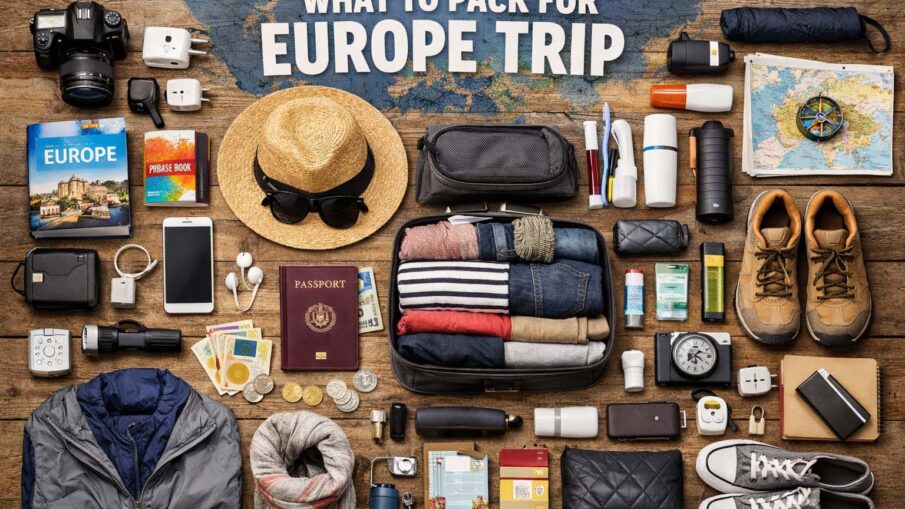
Planning a European vacation is exciting, but figuring out what to pack for Europe trip can feel overwhelming. Europe is a diverse continent with different climates, cultures, and travel styles. Whether you are exploring Paris, hiking in Switzerland during the best time to visit Switzerland, or enjoying beaches in Greece, packing smartly can make your trip smoother and stress-free.
The key to successful packing is balancing comfort, style, and practicality. In other words, you want to travel light while still bringing everything you need. Airlines often have baggage restrictions, and trains may require carrying luggage up stairs. On top of that, cobblestone streets can make heavy suitcases a nightmare. That is why strategic packing matters.
In this complete guide, you’ll learn exactly what to pack for Europe trip, including clothing, travel essentials, electronics, toiletries, and seasonal tips. By the end, you’ll be fully prepared for an unforgettable adventure.
Why Packing Smart for Europe Matters
Europe travel often includes multiple cities, public transportation, walking tours, and changing weather conditions. Unlike all-inclusive vacations, European travel usually requires mobility. As a result, a lighter bag means easier train rides, faster airport transfers, and more comfort overall.
When deciding what to pack for Europe trip, think versatility. In particular, choose items that can mix and match, layer easily, and work for different occasions.
Documents to Pack for a Europe Trip
Before thinking about clothes or shoes, start with your important paperwork.
First, bring a passport that stays valid for at least three months after you leave Europe. To be safe, many travelers prefer six months of validity.
In addition, carry visa documents if required, travel insurance papers, flight confirmations, and hotel reservations.
Also pack your train tickets, printed and digital passport copies, credit or debit cards, and some local cash.
Before you go, check the official EU page on travel documents for non-EU nationals. Then keep everything in a travel organizer for easy access.
Clothes to Pack for a Europe Trip
Clothing should be stylish, practical, and weather-appropriate. Since Europeans often dress neatly, smart casual outfits are ideal.
For most trips, pack four to six tops, two or three pairs of pants or jeans, and one dress or nicer outfit.
Next, add one light jacket, one sweater or cardigan, pajamas, socks, and undergarments for one week.
Finally, bring comfortable walking shoes and, in summer, a pair of sandals.
Above all, neutral colors help create multiple outfit combinations.
What to Pack for a 10 Day Trip to Europe
If you’re wondering what to pack for a 10 day trip to Europe, the best approach is carry-on only if possible. After all, ten days is enough time to wash clothes once during the trip.
For this trip length, pack five tops, two bottoms, one jacket, and one nicer evening outfit.
Then add seven underwear sets, two pairs of shoes, travel-size toiletries, and your chargers and adapters.
Moreover, rolling clothes and using packing cubes saves space and keeps everything organized.
Shoes to Pack for Europe
Shoes can make or break your trip. Indeed, Europe often involves lots of walking, stairs, and uneven streets.
Generally, the best options are comfortable sneakers and stylish walking shoes. Depending on the season, add sandals for summer or waterproof boots for winter.
However, avoid packing too many shoes because they take space and add weight.
Electronics to Pack for Europe
Modern travel is easier with the right technology.
At a minimum, bring your smartphone, a charger, a power bank, and a universal adapter.
Optionally, add a camera, headphones, a tablet or e-reader, and a travel laptop if you need one.
Because Europe uses different plug types depending on the country, a universal adapter is essential.
Toiletries to Pack for Europe
Bring only essentials in travel sizes.
For example, pack a toothbrush, toothpaste, shampoo, conditioner, face wash, and moisturizer.
Likewise, add sunscreen, deodorant, a razor, a hairbrush, basic makeup, and any medications.
Luckily, most toiletries can also be purchased in Europe if needed.
What to Pack for a Europe Trip as a First-Timer
Many first-time travelers wonder what to pack for a trip to Europe when preparing for their first vacation overseas. In short, travel light, dress in layers, and focus on comfort.
For instance, a practical strategy includes layered clothing, a weatherproof jacket, and a day bag or backpack.
Besides that, bring a reusable water bottle, a portable charger, and a passport pouch.
Ultimately, being organized helps you enjoy the journey rather than stress over luggage.
What to Pack for Europe by Season
Summer in Europe
Summer can be hot, especially in Spain, Italy, and Greece.
Therefore, pack lightweight clothing, sunglasses, a sun hat, sandals, sunscreen, and a swimsuit.
Spring and Fall
Weather changes often, so layers are important.
During these seasons, pack long sleeves, a light jacket, comfortable pants, a scarf, and waterproof shoes.
Winter
Winter in Europe can be cold, wet, and snowy.
For this reason, pack a warm coat, thermal layers, gloves, boots, wool socks, and a beanie hat.
What to Pack for Trip to Europe
When travelers ask what to pack for trip to Europe, the answer depends on your destinations and activities. For example, a city-hopping itinerary differs from a beach holiday or mountain adventure.
For general travel, always include comfortable outfits, weather layers, walking shoes, and travel documents.
Additionally, bring electronics, a small first-aid kit, and a reusable tote bag.
In the end, think about mobility and convenience rather than overpacking.
Bags and Luggage Tips
Choosing the right luggage and learning how to pack a suitcase efficiently is just as important as choosing what goes inside.
Carry-on suitcase: First of all, a carry-on is perfect for shorter trips and budget airlines.
Backpack: Alternatively, a backpack is great for adventurous travelers moving between cities often.
Personal day bag: Meanwhile, a small day bag is useful for sightseeing and daily essentials.
Also, use anti-theft bags in crowded tourist areas.
Laundry Tips While Traveling
Instead of packing too much, plan to wash clothes once or twice.
For example, you can use hotel laundry service, local laundromats, or hand washing in the sink.
Even better, portable detergent sheets take almost no space.
As a result, laundry helps reduce baggage significantly.
What to Pack for a 2 Week Trip to Europe
If you’re planning longer travel, you may wonder what to pack for a 2 week trip to Europe. Surprisingly, you do not need twice as many clothes. Instead, pack for one week and repeat outfits.
For two weeks, pack six tops, three bottoms, one jacket, and one dressy outfit.
Then add eight underwear sets, three bras, two pairs of shoes, toiletries, and laundry supplies.
This way, your luggage stays manageable while covering two weeks comfortably.
Safety and Comfort Essentials
When considering what is the safest way to travel, don’t forget a few helpful extras.
For long journeys, pack a neck pillow, a sleep mask, earplugs, and a reusable water bottle.
Similarly, hand sanitizer, tissues, travel locks, and a small umbrella are worth bringing.
Finally, carry copies of your emergency contacts. Clearly, these little items can make a huge difference.
Common Packing Mistakes to Avoid
Overpacking: In fact, most travelers wear only half of what they bring.
Wrong shoes: Likewise, fashion shoes without comfort support can ruin city walking days.
Ignoring weather: Therefore, always check forecasts before departure.
No adapter: Otherwise, charging issues can become frustrating quickly.
Heavy suitcases: Above all, remember stairs, trains, and cobblestone roads.
Minimalist Europe Packing Strategy
If you want ultimate convenience, pack in a capsule wardrobe style.
In practice, that means five tops, three bottoms, one jacket, two pairs of shoes, and a few accessories.
Most importantly, choose colors that all match. This way, you create many outfits with fewer items.
Final Checklist Before Departure
Before leaving, confirm you packed your passport, wallet, phone, chargers, and tickets.
Next, double-check your medication, clothing basics, shoes, toiletries, and travel insurance.
In the end, a checklist prevents last-minute panic.
Conclusion
Knowing what to pack for Europe trip can transform your travel experience. Smart packing means lighter luggage, easier transportation, and less stress. Whether you’re planning a 10 day trip, a 2 week trip, or your first visit, the best approach is simple. In short, pack versatile clothes, travel essentials, and only what you truly need.