
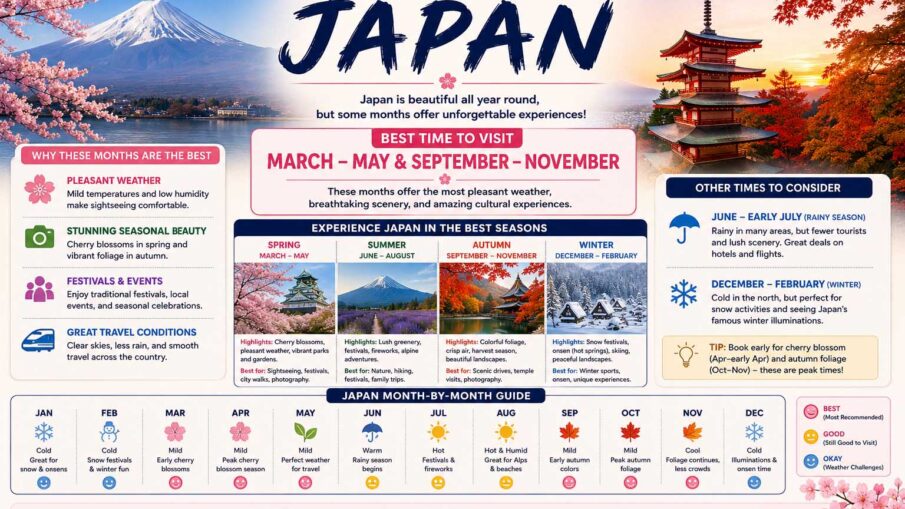
The best month to visit Japan depends on your travel preferences, budget, and the experiences you want to enjoy. However, April and November are often excellent choices because they offer pleasant weather, beautiful scenery, and plenty of opportunities for sightseeing.
In April, cherry blossoms transform parks, gardens, and city streets into colorful landscapes. Meanwhile, November brings vibrant autumn foliage, comfortable temperatures, and beautiful views of traditional temples.
However, these popular months can also attract large crowds. Therefore, travelers who prefer quieter destinations or lower accommodation costs may want to consider January, February, June, or early December.
Japan offers something different in every season. Spring is famous for cherry blossoms, summer brings lively festivals, autumn features colorful leaves, and winter offers snow-covered landscapes and hot springs. Understanding these seasonal differences can help you choose the right time for your trip.
Watch this short travel video for additional inspiration:
Best Month to Visit Japan by Season
Japan experiences four distinct seasons, and each one creates a different travel experience. Before choosing your dates, consider the weather, major attractions, seasonal events, and expected visitor numbers.
Best Months to Visit Japan in Spring: March to May
Spring is one of the most popular times to explore Japan. Temperatures gradually become milder, gardens begin to bloom, and cherry blossoms appear across many regions.
March can be a good option for travelers who want to experience early spring. However, blossom timing varies by location and year. In many popular destinations, the main cherry blossom period occurs in late March or early April.
April is particularly appealing for sightseeing in Tokyo, Kyoto, and Osaka. Nevertheless, accommodation can become expensive during peak blossom dates. Booking flights, hotels, and popular experiences early can help you avoid limited availability.
May also offers comfortable conditions for walking and exploring. However, Japan’s Golden Week holiday period, usually at the beginning of May, can bring crowded transport, busy attractions, and higher hotel prices.
Spring is ideal for garden visits, cultural sightseeing, photography, and outdoor activities. Travelers interested in colorful seasonal scenery can also explore these best places to see autumn leaves japan when planning a separate autumn trip.
Best Time to Visit Japan in Summer: June to August
Summer brings warm temperatures, longer daylight hours, fireworks displays, and traditional festivals. It is a lively season, although the weather can be challenging in some regions.
June is generally part of the rainy season across much of Japan. Rain does not necessarily last all day, but flexible plans and waterproof clothing are useful. Hokkaido is often a good alternative for travelers seeking different summer conditions.
July becomes hotter and more humid in many cities. At the same time, summer festivals and fireworks events create memorable cultural experiences. Mountain destinations can also provide opportunities for hiking when trails are open and conditions are suitable.
August is especially busy because of summer holidays and the Obon period. Consequently, transport and accommodation may be more expensive around popular travel dates. Heat and humidity can also make long sightseeing days tiring.
Summer works well for festival lovers, mountain trips, coastal destinations, and travelers who do not mind warm weather. Plan outdoor sightseeing early in the morning and leave the hottest part of the day for indoor attractions or breaks.
Best Months to Visit Japan in Autumn: September to November
Autumn is another excellent season for exploring Japan. Temperatures generally become more comfortable as the season progresses, while forests, parks, and temple gardens develop beautiful red, orange, and yellow colors.
September can still be hot and humid, particularly in central and southern Japan. It also falls within a period when typhoons can affect travel. Therefore, check forecasts and keep some flexibility in your itinerary.
October usually brings more comfortable sightseeing conditions. It is a good month for walking through historic neighborhoods, visiting temples, exploring national parks, and taking day trips.
November is especially popular for autumn foliage. Kyoto, Tokyo, and many mountain areas offer seasonal scenery, although the exact timing varies with location and weather. Popular viewing spots may become crowded during peak foliage weekends.
Autumn is ideal for photography, cultural experiences, scenic walks, and comfortable city exploration. If colorful leaves are your main priority, research the expected foliage period for each destination before booking your trip.
Best Time to Visit Japan in Winter: December to February
Winter can be a rewarding time to visit Japan, particularly if you enjoy snow, hot springs, winter sports, or quieter sightseeing experiences.
December often brings festive illuminations to major cities. Early December may also offer opportunities to enjoy autumn scenery in some warmer areas, although this depends on local conditions.
January and February are usually cold in much of the country. Northern Japan and mountainous regions receive substantial snowfall, making them attractive for skiing and snowboarding. In contrast, some southern destinations have milder winters.
Winter can also be a good time to visit hot spring towns, enjoy seasonal food, and explore popular cities outside the main spring and autumn sightseeing peaks. However, New Year holidays can affect business hours and domestic travel.
For more seasonal travel inspiration, see this guide to where to travel in winter.
Best Month to Visit Tokyo, Japan
Tokyo is a year-round destination, but April, May, October, and November are often attractive choices because the weather can be comfortable for walking and sightseeing.
April is popular for cherry blossoms in parks and along rivers. However, blossom season attracts many visitors, so reserve accommodation early if you have specific dates in mind.
May generally offers pleasant conditions outside the busiest holiday period. It is a good time to explore neighborhoods, gardens, shopping districts, and outdoor attractions.
October and November are also excellent months for discovering Tokyo. Temperatures are often more comfortable than in summer, and autumn colors add seasonal appeal to parks and landscaped gardens.
January and February may suit travelers who prefer fewer seasonal crowds at some attractions. However, expect cold weather, especially in the mornings and evenings.
Summer is still an option, particularly for indoor attractions, shopping, museums, and evening activities. To make the most of your visit, organize outdoor sightseeing around the weather forecast.
Best Time to Visit Japan for Weather and Activities
The right month depends on what you want to do during your trip. Japan’s regional climate varies, so conditions in Hokkaido can differ significantly from those in Okinawa.
| Travel activity | Months to consider | What to expect |
|---|---|---|
| Cherry blossom viewing | March to April | Blossoms in many popular central destinations, depending on local conditions |
| Comfortable city sightseeing | April, May, October, November | Often suitable temperatures for walking and exploring |
| Summer festivals | July to August | Fireworks, local celebrations, and seasonal events |
| Hiking | Late spring to autumn | Conditions vary by trail, elevation, and opening dates |
| Autumn foliage | October to November | Colorful leaves in many regions, depending on location |
| Skiing and snowboarding | December to February | Snow sports in suitable mountain and northern destinations |
| Hot spring visits | Winter and other cooler periods | Relaxing experiences in traditional onsen towns |
| Budget-focused travel | Selected dates in January, February, June, or September | Potential savings outside major holidays and peak events |
These periods are general guidelines rather than fixed guarantees. Always check regional weather, attraction schedules, and seasonal forecasts before finalizing your itinerary.
Best Month to Visit Japan in 2026: Seasonal Guide
When planning a Japan trip in 2026, consider both seasonal conditions and the travel calendar. Cherry blossom forecasts, autumn foliage timing, public holidays, and major events can affect hotel availability and prices.
First, decide which experiences matter most. If you want cherry blossoms, research the expected dates for your chosen cities. If you prefer autumn colors, check regional foliage information because northern and mountainous areas generally change earlier than warmer southern locations.
Next, compare your preferred dates with national holidays and school vacation periods. Golden Week in spring and the Obon period in summer can increase domestic travel demand. Accommodation in popular destinations may become limited during these times.
It is also helpful to consult the Japan National Tourism Organization’s official travel information for destination guidance, seasonal travel information, and practical planning resources.
Finally, avoid building your entire trip around a single weather-dependent event. Allow a little flexibility in your schedule so you can adjust plans if rain, crowds, or seasonal timing changes.
Which Japan Travel Season Matches Your Style?
Different travelers may find different months most suitable. Consider your interests and travel priorities before choosing your dates.
Best Time to Visit Japan for First-Time Visitors
First-time visitors often benefit from spring or autumn because the weather is generally suitable for exploring cities, temples, gardens, and cultural attractions.
April and November are popular choices, although both can be busy. May outside Golden Week and October can provide a useful balance between sightseeing conditions and seasonal scenery.
Best Month to Visit Japan for Food Lovers
Japan’s food culture changes with the seasons. Spring brings seasonal vegetables and cherry blossom-themed treats, while summer offers refreshing noodles and festival snacks.
Autumn is known for ingredients such as mushrooms, sweet potatoes, and chestnuts. In winter, hot pot dishes, ramen, and regional comfort foods are particularly appealing.
Food lovers can enjoy Japan throughout the year. Consider regional specialties and local food events when deciding where to travel.
Best Time to Visit Japan for Families
Families may prefer spring or autumn because comfortable temperatures can make outdoor activities easier. Parks, interactive museums, aquariums, and cultural attractions can help create a balanced itinerary.
Summer is also suitable for families who want festivals and theme parks. However, high temperatures and humidity mean that regular breaks, water, and indoor activities are important.
Winter can work well for families interested in snow activities or hot springs. Choose destinations and accommodation that suit the ages and needs of everyone traveling.
Best Month to Visit Japan on a Budget
Travel costs depend on flight demand, accommodation availability, holidays, and special events. January after the New Year holiday period, February outside major events, and some dates in June or September may offer better value.
However, cheaper months can come with trade-offs. June may bring rain, September can be hot or affected by typhoons, and winter conditions vary considerably by region.
Compare several date ranges before booking. Staying near a convenient train station, reserving accommodation early, and traveling outside major holiday periods can also help control your overall budget.
Planning Your Route Around Japan
A well-planned route helps you spend less time moving between destinations and more time enjoying them. Many first-time visitors combine Tokyo, the Mount Fuji area, Kyoto, and Osaka.
| Destination | Suggested time | Why visit |
|---|---|---|
| Tokyo | 3–4 days | Neighborhoods, museums, shopping, food, and city attractions |
| Hakone or the Mount Fuji area | 2 days | Scenic views, hot springs, and outdoor experiences |
| Kyoto | 3 days | Temples, traditional streets, gardens, and cultural attractions |
| Osaka | 2 days | Food, shopping, nightlife, and major attractions |
These recommendations are flexible. If you prefer a slower pace, add extra nights rather than trying to see every destination in a short trip.
Before finalizing your itinerary, consider how many days in tokyo you may need based on your interests. Travelers who enjoy museums, shopping, food, and day trips may want more time in the capital.
Likewise, decide whether Osaka fits your interests and route. Moving between cities is relatively straightforward by train, but transfers, luggage, and check-in times still take time.
Helpful Tips Before You Book Your Japan Trip
A little preparation can make your trip more comfortable and help you avoid common travel problems.
- Book popular periods early. Cherry blossom season, autumn foliage, Golden Week, and major festivals can create strong demand for accommodation.
- Check regional weather. Conditions can differ between northern Japan, central cities, mountain areas, and southern islands.
- Keep your itinerary flexible. Rain, heat, seasonal events, and transport changes may affect your plans.
- Compare transport options. Calculate the cost of individual tickets and passes based on your actual route.
- Check opening hours. Museums, gardens, shops, and attractions may have seasonal schedules or holiday closures.
- Plan around public holidays. Domestic travel demand can increase during major holiday periods.
- Pack for the season. Comfortable shoes and suitable layers are useful for most Japan itineraries.
These simple steps help you match your travel dates to the experiences you want.
Best Month to Visit Japan: Month-by-Month Guide
Every month offers a different combination of weather, scenery, activities, and travel costs. Use this overview to narrow down your preferred dates.
January: Winter Scenery and Hot Springs
January is cold in many parts of Japan, but it can be a great choice for snow sports, hot springs, and winter landscapes. Ski resorts in suitable regions attract visitors, while cities offer museums, shopping, and seasonal food.
The New Year period can be busy, and some businesses may close or operate on reduced hours. Traveling later in the month may offer a different experience from visiting during the holiday period.
February: Snow Festivals and Winter Activities
February is a strong option for travelers interested in skiing, snowboarding, and snowy scenery. Northern Japan hosts winter events, although dates and programs vary each year.
Major cities remain suitable for indoor sightseeing and food experiences. Pack warm layers and check local transport conditions if you plan to visit snowy regions.
March: Early Spring and Seasonal Changes
March marks the transition from winter to spring. Some areas begin to warm up, and early blossoms may appear toward the end of the month.
The weather can vary, so layers are useful. March can also be a good time to combine city sightseeing with seasonal parks and gardens.
April: Cherry Blossoms and Popular Sightseeing
April is one of the most famous months to visit Japan because cherry blossoms often appear in major tourist destinations around this period.
The exact timing changes each year and varies by region. Since demand can be high, book accommodation and transport in advance if cherry blossom viewing is central to your trip.
May: Pleasant Weather and Outdoor Exploration
May often provides comfortable weather for walking, sightseeing, and exploring gardens. It can be an excellent month for visitors who want to enjoy the outdoors without summer heat.
The main consideration is Golden Week, when many residents travel. If your schedule is flexible, compare dates before and after this holiday period.
June: Rainy Season and Flexible Travel
June is part of the rainy season in many areas. Although showers can affect outdoor plans, you can still enjoy museums, shopping districts, restaurants, and indoor attractions.
Travelers who prefer quieter experiences may find opportunities during this period, depending on the destination and local demand. Carry an umbrella and allow alternatives for outdoor activities.
July: Festivals and Summer Energy
July brings warmer temperatures, lively festivals, and seasonal events. It can be a good time for cultural celebrations and trips to cooler mountain destinations.
However, many cities become hot and humid. Plan outdoor activities earlier in the day and take regular breaks.
August: Summer Holidays and Fireworks
August is known for summer festivals, fireworks, and domestic holiday travel. It can be exciting for visitors who want to experience Japan’s summer atmosphere.
At the same time, heat, humidity, and crowds can make travel more demanding. Book transport and accommodation ahead of popular holiday dates.
September: Early Autumn and Variable Weather
September begins the transition toward autumn, although many areas remain hot. It is also within the broader typhoon season, so monitor forecasts before and during your trip.
Flexible bookings and alternative indoor activities can help you manage unexpected weather. Toward the end of the month, some regions begin to feel more autumn-like.
October: Comfortable Conditions and Scenic Trips
October is often an excellent month for sightseeing. Temperatures become more comfortable in many destinations, making it easier to explore cities, temples, and nature areas.
Autumn foliage may begin in northern or higher-elevation regions, while other areas change later. Check local timing if you want to include leaf-viewing destinations.
November: Autumn Foliage and Cultural Experiences
November is a popular month for colorful autumn scenery in many parts of Japan. Parks, gardens, and temple grounds can be particularly beautiful during peak foliage.
Temperatures are often comfortable for walking, although evenings can be cool. Popular viewing locations may be busy, so consider visiting early in the day.
December: Winter Illuminations and Seasonal Food
December brings winter illuminations, seasonal menus, and a festive atmosphere in many cities. It can be a rewarding month for travelers who enjoy winter experiences without necessarily planning a snow-sports holiday.
Temperatures fall as the month progresses, and northern or mountainous destinations may experience significant snowfall. Check holiday schedules if your trip extends into the New Year period.
Cheapest Months to Visit Japan
The cheapest time to visit Japan depends on your departure city, travel dates, accommodation preferences, and destination. However, comparing dates outside the busiest travel periods can help you find better value.
January after the New Year holiday, February outside major events, and selected dates in June or September may be worth checking. These periods can have lower demand in some destinations, although prices are never guaranteed to be lower everywhere.
To manage your budget, compare flights across several days, book accommodation in advance when traveling during popular seasons, and consider staying slightly outside the busiest tourist districts. Use public transport where practical and plan your route to avoid unnecessary backtracking.
Also, remember that the lowest price is not always the best value. A hotel with convenient transport access may save time and travel costs, while a flexible itinerary can help you adjust to weather conditions.
Transportation Tips for Traveling Around Japan
Japan’s public transportation network makes it possible to explore many destinations without renting a car. Major cities have extensive train and subway systems, while intercity trains connect popular travel areas.
Before buying a rail pass, calculate the cost of the journeys you plan to take. A pass may be worthwhile for some routes, but individual tickets can be cheaper for other itineraries.
Reserve seats when needed, especially during busy holiday periods. Leave enough time for transfers and check luggage policies if you are carrying large suitcases.
In rural areas, buses or rental cars may be useful because trains can be less frequent. Research local transport schedules before visiting remote destinations, particularly during winter or periods of heavy rain.
Accommodation Advice for Every Season
Accommodation demand changes throughout the year. Cherry blossom season, autumn foliage, major festivals, and national holidays can make popular hotels more expensive or difficult to book.
Reserve early if you have fixed travel dates. If you are visiting during a quieter period, compare different neighborhoods and consider whether staying near a major train station would make your daily plans easier.
Tokyo and Osaka offer a wide range of accommodation, while Kyoto has traditional inns and hotels near historic attractions. If you are deciding whether to include Osaka in your itinerary, read this guide to is osaka worth visiting.
For hot spring towns and ski destinations, check whether meals, transport, and seasonal facilities are included in the price. During winter, confirm that your accommodation is accessible in the expected weather conditions.
Japan Packing Checklist
Your packing list should reflect the season and destinations on your itinerary.
- Spring: Light layers, a compact umbrella, and comfortable walking shoes.
- Summer: Breathable clothing, sunscreen, a refillable water bottle, and rain protection.
- Autumn: Layers, comfortable shoes, and a light or medium jacket for cooler evenings.
- Winter: Warm clothing, a coat, gloves, and suitable footwear for cold or snowy conditions.
- Throughout the year: Travel documents, medication you normally need, chargers, and a small day bag.
If you are visiting multiple regions, check the forecast for each stop rather than packing only for the first city. Mountain areas and northern destinations may have very different conditions from Tokyo or Osaka.
Common Mistakes to Avoid When Choosing Your Travel Month
Booking Too Late for Peak Seasons
Waiting too long can limit your choice of hotels and transport during cherry blossom season, autumn foliage, and major holidays. If your dates are fixed, start comparing options early.
Ignoring Regional Weather
Japan does not have identical weather across the country. A month that is comfortable in one region may bring snow, heavy rain, or high temperatures in another. Check conditions for every destination on your route.
Trying to See Too Much
Traveling between several cities takes time, even with efficient trains. Allow enough time to explore each destination rather than filling every day with long transfers.
Forgetting Festival and Holiday Dates
Festivals can create memorable experiences, but they may also affect prices, transport, and crowd levels. Check event schedules before booking, especially if you want to attend a particular celebration.
Comparing Japan With Other Asian Destinations
If you are planning a broader Asian trip, compare Japan’s seasons with the weather in neighboring destinations. Conditions can differ significantly across the region, so the best month for one country may not be ideal for another.
For example, travelers considering a beach holiday or tropical activities may want to review this guide to the best time to go to thailand.
Think about the type of experience you want most. Japan is popular for seasonal scenery, cultural attractions, food, and efficient city travel, while other destinations may offer different climates and outdoor activities. Comparing weather, flight costs, and travel time can help you decide whether to visit one country or combine several.
Frequently Asked Questions About the Best Month to Visit Japan
What Is the Best Month to Visit Japan?
April and November are often excellent choices for comfortable sightseeing and seasonal scenery. April is associated with cherry blossoms in many popular areas, while November is known for autumn foliage. However, the best choice depends on local timing, budget, and crowd preferences.
What Is the Best Month to Visit Tokyo, Japan?
April, May, October, and November are often good months for exploring Tokyo. These periods can offer comfortable conditions for walking and sightseeing. However, cherry blossom season and autumn weekends can be busy.
When Is the Best Month to Visit Japan for Fewer Crowds?
There is no single quiet month across the entire country. January after the New Year holiday, February outside major events, and some dates in June or September may offer quieter experiences in certain destinations. Always compare local events and holiday dates.
Is Japan Worth Visiting in Winter?
Yes. Winter offers snow sports, hot springs, seasonal food, winter illuminations, and snowy landscapes in suitable regions. Cities also have indoor attractions that can be enjoyed in cold weather. Pack appropriately and check local transport conditions.
Is Japan Expensive Year-Round?
Costs vary according to flights, accommodation, transport, and seasonal demand. Popular spring and autumn dates can be expensive, while selected dates in quieter periods may offer better value. Booking early and planning an efficient route can help manage costs.
Choose the Japan Travel Season That Fits Your Adventure
The best month to visit Japan depends on the memories you want to create. April may suit travelers dreaming of cherry blossoms, while November can be ideal for autumn scenery. Summer is full of festivals and outdoor adventures, and winter offers snow, hot springs, and seasonal experiences.
Before booking, compare weather patterns, regional attractions, expected crowds, and your budget. Then build a realistic itinerary that leaves enough time to enjoy each destination.
With thoughtful planning, Japan can be a rewarding destination in every season. Choose the month that matches your interests, check local conditions, and prepare for a trip that balances sightseeing, food, culture, and relaxation.