
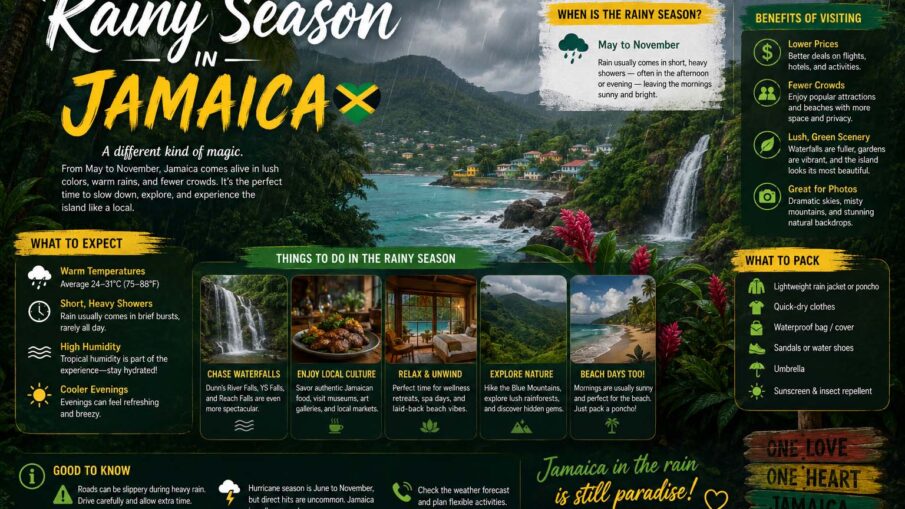
Thinking about visiting during the rainy season in Jamaica? You might be surprised to learn that the island still enjoys plenty of sunshine between tropical showers. While rain is more common during certain months, it rarely means your vacation will be ruined. In fact, many travelers enjoy fewer crowds, lower hotel prices, and greener scenery during Jamaica’s wet season.
The key is understanding when rain is most likely, choosing flexible activities, and packing appropriately. With a little planning, the rainy season can be an excellent time to discover Jamaica’s beaches, waterfalls, mountains, and vibrant culture.
Rainy Season in Jamaica at a Glance
| Travel Detail | Information |
|---|---|
| Typical Rainy Season | May to June and September to November |
| Wettest Months | October and May |
| Average Temperature | 26°C–31°C (79°F–88°F) |
| Humidity | High |
| Rain Pattern | Short tropical showers with sunny breaks |
| Hurricane Season | June through November |
| Budget-Friendly? | Yes, outside major holidays |
Unlike destinations with months of nonstop rain, Jamaica usually experiences passing showers followed by sunshine.
When Is Rainy Season in Jamaica?
Many travelers ask when is rainy season in Jamaica before booking flights.
Jamaica has two rainy periods instead of one long wet season. The first generally arrives during May and June, while the second occurs between September and November. October is often the wettest month across much of the island.
Rainfall varies by region, and weather patterns can shift slightly from year to year. Even so, visitors often enjoy sunny mornings before afternoon showers develop.
If you’re comparing different travel periods, learning how to pack a suitcase efficiently can make it easier to prepare for changing weather without overpacking.
What Is the Rainy Season in Jamaica Like?
If you’re wondering what is the rainy season in Jamaica, think of warm tropical weather rather than constant gloomy skies.
Most rain arrives in short bursts. A heavy shower may last 30 minutes before clear blue skies return.
This pattern allows visitors to enjoy beaches, sightseeing, and outdoor adventures with only minor adjustments to their daily plans.
Jamaica’s Tropical Weather Throughout the Year
Jamaica stays warm all year thanks to its tropical climate.
Instead of dramatic seasonal temperature changes, the island experiences differences mainly in rainfall.
Average daytime temperatures remain comfortable throughout the year:
- Winter: 26°C–29°C (79°F–84°F)
- Spring: 27°C–30°C (81°F–86°F)
- Summer: 29°C–31°C (84°F–88°F)
- Autumn: 28°C–30°C (82°F–86°F)
Coastal areas stay warm, while the Blue Mountains offer cooler temperatures because of their higher elevation.
Month-by-Month Rainfall Breakdown
Understanding monthly weather helps you plan outdoor activities more effectively.
| Month | Weather Overview |
| January | Warm, mostly dry |
| February | Pleasant with low rainfall |
| March | Sunny and dry |
| April | Slight increase in showers |
| May | Beginning of the first rainy period |
| June | Warm with occasional tropical rain |
| July | Plenty of sunshine between showers |
| August | Hot, humid, occasional rain |
| September | Increased rainfall and hurricane season |
| October | Wettest month in many areas |
| November | Rain gradually decreases |
| December | Drier weather returns |
This seasonal pattern gives travelers plenty of opportunities to enjoy outdoor attractions throughout the year.
When Is Rainy Season in Jamaica Montego Bay?
Visitors often ask when is rainy season in Jamaica Montego Bay because it’s one of the island’s most popular resort destinations.
Montego Bay follows the same general weather pattern as much of Jamaica.
The wettest months are usually:
- May
- October
- November
Even during these months, long stretches of sunshine are common.
Many beach days begin with clear skies before brief afternoon showers move through.
Why Some Travelers Prefer the Rainy Season
The wet season has several advantages that many first-time visitors overlook.
Lower Hotel Prices
Accommodation rates often drop outside peak holiday periods.
Travelers can sometimes book beachfront resorts or luxury villas for considerably less than during the busiest winter months.
Greener Landscapes
Rain transforms Jamaica’s countryside.
Waterfalls become more powerful, forests appear brighter, and botanical gardens are especially beautiful after fresh rainfall.
Nature lovers often appreciate these conditions.
Fewer Tourists
Popular attractions tend to feel less crowded.
You’ll often spend less time waiting at waterfalls, beaches, restaurants, and sightseeing locations.
Things to Keep in Mind
The rainy season isn’t perfect for every traveler.
Knowing the possible downsides helps you plan a smoother vacation.
Afternoon Showers
Many days begin sunny before clouds develop later.
Planning outdoor excursions during the morning often provides the best weather.
Humidity
Humidity increases during rainy months.
Lightweight clothing made from breathable fabrics helps you stay comfortable.
Tropical Storm Risk
The Atlantic hurricane season officially runs from June through November, with the highest risk of tropical storms and hurricanes typically occurring between August and October.
Direct hurricane impacts are uncommon, but travelers should monitor weather forecasts before and during their trip.
Travel insurance can offer extra peace of mind when visiting tropical destinations during this period.
Packing for Jamaica’s Rainy Months
Packing for tropical weather is easier than many travelers expect.
Useful items include:
- Lightweight rain jacket
- Compact umbrella
- Waterproof phone pouch
- Sandals with good grip
- Breathable clothing
- Reusable water bottle
- Quick-drying swimwear
- Sunscreen
- Insect repellent
If you’re planning overnight nature excursions or eco-lodges, comfortable gear such as best camping pillows can make longer journeys much more enjoyable while taking up very little luggage space.
Is the Rainy Season Good for Families?
Absolutely.
Families often appreciate the quieter atmosphere, shorter attraction lines, and discounted accommodation prices.
Many resorts also offer indoor activities, kids’ clubs, games, cooking classes, and cultural experiences when passing showers interrupt beach plans.
Since rain rarely lasts all day, families usually have plenty of time to enjoy swimming pools, beaches, and sightseeing between showers.
What to Do During the Rainy Season in Jamaica
Rain doesn’t have to keep you indoors. In fact, many of Jamaica’s best experiences are enjoyable even when brief showers pass through.
Visit Waterfalls
The island’s famous waterfalls are especially impressive during the rainy season because higher rainfall increases the water flow.
Popular choices include:
- Dunn’s River Falls
- YS Falls
- Reach Falls
- Konoko Falls
Wear water shoes with good grip, as rocks can become slippery after rain.
Explore Local Towns
Spend a rainy afternoon wandering through Montego Bay, Ocho Rios, Port Antonio, or Kingston.
You’ll find local markets, cafés, museums, art galleries, and shops that offer a different side of Jamaican culture beyond the beaches.
Enjoy Jamaican Cuisine
Rainy afternoons are a great excuse to slow down and enjoy local food.
Try traditional dishes such as:
- Jerk chicken
- Ackee and saltfish
- Curry goat
- Patties
- Fresh tropical fruit
Many beachfront restaurants have covered seating where you can enjoy ocean views while tropical showers pass.
Relax at Your Resort
Many resorts offer:
- Spa treatments
- Fitness centers
- Cooking demonstrations
- Live music
- Cultural performances
- Indoor pools
These activities make rainy afternoons just as enjoyable as sunny beach days.
Budget Tips for Visiting During the Wet Season
One of the biggest advantages of traveling during the rainy season is the opportunity to save money.
Hotels frequently offer lower prices outside the busiest winter travel period.
You may also find:
- Resort promotions
- Discounted vacation packages
- Better room upgrades
- Lower airfare on selected dates
Booking flexible cancellation policies remains a smart idea in case weather forecasts change.
Getting Around Jamaica
Transportation remains reliable throughout the rainy season.
Rental cars provide flexibility for exploring different regions, although drivers should slow down during heavy rain because roads can become slippery.
Private transfers and licensed taxis are popular choices for visitors staying at resorts.
If you’re planning several sightseeing stops in one day, allow extra travel time in case of afternoon showers.
Staying Safe During the Rainy Season
Most visits are trouble-free with a little preparation.
Keep these simple tips in mind:
- Check the local weather forecast each morning.
- Avoid hiking during thunderstorms.
- Stay away from flooded roads and rivers.
- Keep valuables in waterproof bags.
- Wear shoes with good traction.
Travelers comparing Caribbean destinations sometimes ask is puerto rico safe before deciding where to vacation. No matter which island you choose, following local advice and using common travel precautions helps create a safer and more enjoyable trip.
Is the Rainy Season Good for Solo Travelers?
Yes, especially if you enjoy relaxed travel.
Solo visitors often appreciate the quieter atmosphere, making it easier to meet fellow travelers on tours or at local cafés.
Flexible daily plans also help you adjust activities around changing weather without feeling rushed.
Comparing Jamaica With Other Tropical Destinations
Many travelers plan multi-country vacations and compare seasonal weather before booking.
For example, checking the best time to visit costa rica can help you understand how tropical rainfall differs between Central America and the Caribbean. Although both destinations have rainy seasons, local weather patterns and peak rainfall months are not exactly the same.
Likewise, travelers considering a beach-focused getaway often compare Jamaica with nearby islands. Reading about the best time to visit turks and caicos can provide a useful contrast, especially if calm waters and consistently dry weather are high on your priority list.
Common Mistakes to Avoid
A few simple decisions can make your trip much smoother.
Avoid these common mistakes:
- Assuming it rains all day every day.
- Packing heavy jackets instead of lightweight rain gear.
- Scheduling every activity outdoors.
- Ignoring weather updates during hurricane season.
- Forgetting insect repellent.
Keeping your itinerary flexible allows you to swap beach time with indoor attractions whenever a shower passes through.
Frequently Asked Questions
Does it rain every day during the rainy season in Jamaica?
Not usually.
Most days still include sunshine, with rain arriving as short tropical showers rather than all-day storms.
Is the rainy season cheaper?
Often, yes.
Hotels, resorts, and vacation rentals commonly offer lower prices outside the peak winter season, making it an attractive time for budget-conscious travelers.
Can you still swim during the rainy season?
Yes.
Many beaches remain suitable for swimming, although sea conditions can change after storms. Always pay attention to local safety flags and weather warnings.
Is hurricane season the same as the rainy season?
They overlap but are not identical.
Hurricane season officially runs from June through November, while the rainiest months are generally May and October, depending on the region.
What should I pack?
Bring lightweight clothing, comfortable sandals, sunscreen, insect repellent, a compact umbrella, quick-drying swimwear, and a waterproof bag for electronics and travel documents.
Plan Around the Weather, Not Against It
The rainy season in Jamaica offers lush scenery, quieter attractions, and attractive travel deals that many visitors never experience during the busy winter months. While tropical showers are part of the journey, they usually arrive for short periods before sunshine returns.
With realistic expectations, flexible plans, and the right gear, you’ll still have plenty of opportunities to relax on beautiful beaches, chase waterfalls, enjoy authentic Jamaican food, and experience the island’s warm hospitality. Rather than avoiding the rainy season, many travelers discover it’s one of Jamaica’s best-kept travel secrets.