
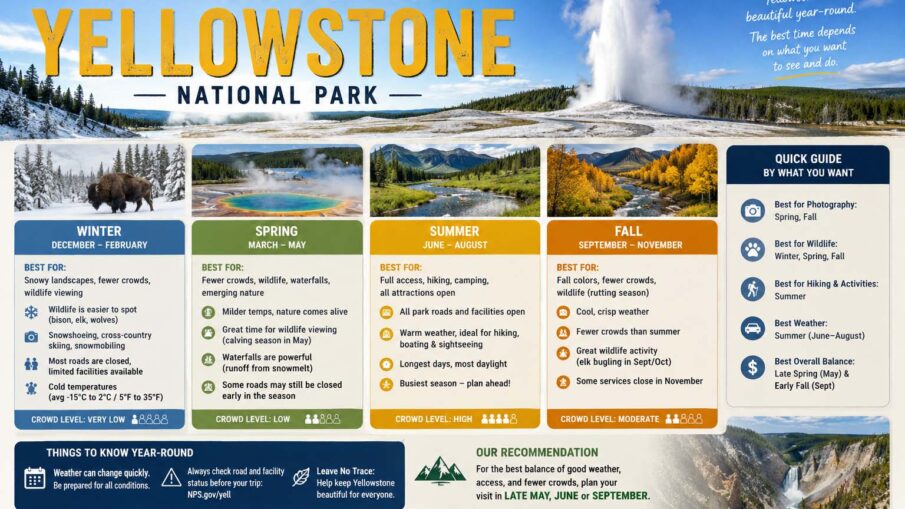
The best time to visit Yellowstone depends on your travel goals, preferred weather, and activities. Late May through September is generally the most convenient period for first-time visitors, while spring and fall offer excellent wildlife viewing and fewer crowds. Winter, meanwhile, transforms the park into a snowy destination for guided adventures.
Yellowstone National Park is located primarily in Wyoming, with sections extending into Montana and Idaho. The park features spectacular geysers, colorful hot springs, waterfalls, forests, mountains, and abundant wildlife.
As one of America’s most remarkable natural destinations, Yellowstone attracts travelers interested in famous landmarks, scenic drives, hiking, and outdoor photography.
However, each season brings different weather conditions, road access, accommodation options, and visitor experiences. Therefore, understanding these differences helps you choose the right travel dates.
Best Time to Visit Yellowstone National Park
For most travelers, late May through September offers the best combination of accessible roads, available services, and outdoor activities.
However, some facilities and high-elevation routes may remain closed in late spring or begin closing during autumn. Consequently, visitors should check current conditions before traveling.
The National Park Service Yellowstone operating hours and seasons guide provides official information about seasonal access, facilities, and park operations.
Best Season to Visit Yellowstone for First-Time Visitors
June, July, and August offer the broadest range of sightseeing opportunities.
During summer, most park roads, major attractions, and visitor services are generally accessible. As a result, families and first-time travelers often prefer these months.
However, summer also brings heavy traffic and crowded parking areas near popular attractions.
Best Time for Yellowstone Wildlife Watching
April and May are excellent months for observing Yellowstone’s changing landscape and returning wildlife activity.
For example, visitors may see bison calves and bears emerging from their winter dens.
Nevertheless, snow, cold temperatures, and seasonal road restrictions can affect travel plans.
Best Months to Visit Yellowstone for Smaller Crowds
September and early October offer cooler temperatures, changing foliage, and fewer visitors than peak summer.
Additionally, autumn is an excellent period for observing elk during their mating season.
However, freezing temperatures and early snowfall are possible.
When to Visit Yellowstone for Snow Adventures
Winter offers a completely different Yellowstone experience.
Snow-covered landscapes, steaming geothermal features, and quiet scenery create remarkable photography opportunities.
However, most park roads close to ordinary vehicles. Visitors may need authorized snowcoach or snowmobile transportation to reach many interior attractions.
Yellowstone National Park Best Time to Visit by Season
Every season offers distinct advantages and limitations. Therefore, the right choice depends on whether you prioritize wildlife, comfortable weather, hiking, or quieter surroundings.
Visiting Yellowstone in Spring
Spring generally covers March through May, although winter conditions can continue well into the season.
As temperatures gradually rise, wildlife becomes more active in many accessible areas.
Travelers may observe:
- Bison calves
- Bears
- Migrating birds
- Elk
- Other native wildlife
For example, bison calves commonly appear during spring, making this period especially appealing to wildlife photographers.
However, visitors should not expect every park road to be open. Road openings depend on weather, snow removal, and seasonal schedules.
Additionally, mornings and evenings can remain extremely cold.
Therefore, spring works best for flexible travelers who are comfortable adjusting their plans.
Visiting Yellowstone in Summer
Summer is Yellowstone’s busiest travel season.
During June, July, and August, visitors can generally enjoy the widest selection of outdoor activities.
Popular experiences include:
- Hiking
- Camping
- Wildlife watching
- Scenic drives
- Boating in permitted areas
- Photography
- Visiting geothermal attractions
Furthermore, longer daylight hours provide more time for sightseeing.
However, popular locations such as Old Faithful and Grand Prismatic Spring can become crowded.
As a result, starting early and allowing extra driving time can improve your experience.
Accommodation demand also increases significantly during summer. Therefore, reserve lodging and campsites well in advance.
Visiting Yellowstone in Fall
September and early October provide a quieter alternative to summer travel.
Temperatures become cooler, and changing vegetation adds beautiful autumn colors to the landscape.
Additionally, elk become especially active during their mating season, commonly called the rut.
Wildlife photographers may find this period rewarding because animal behavior can be easier to observe in certain areas.
However, visitors should prepare for cold nights, shorter daylight hours, and possible snowfall.
Some accommodations and facilities also begin seasonal closures during autumn.
Consequently, checking operating schedules before departure is essential.
Visiting Yellowstone in Winter
Winter transforms Yellowstone into a dramatic landscape of snow, ice, and steaming geothermal features.
Although regular vehicle access becomes limited, visitors can explore selected areas through permitted winter transportation.
Popular winter activities include:
- Guided snowcoach excursions
- Authorized snowmobile tours
- Cross-country skiing
- Snowshoeing
- Wildlife photography
- Winter landscape photography
Meanwhile, the road between Yellowstone’s North and Northeast entrances generally remains open to regular vehicles, weather permitting.
Winter visitors should prepare for extremely cold conditions and limited services.
Nevertheless, this season offers an unforgettable experience for travelers exploring where to travel in winter.
Best Time of Year to Visit Yellowstone for Weather
Yellowstone’s weather changes considerably throughout the year.
Because much of the park sits at high elevation, temperatures can drop quickly even during summer.
Best Time to Visit Yellowstone for Warm Weather
July and August are generally the warmest months.
Daytime conditions often support hiking, sightseeing, and camping. However, temperatures vary by elevation and location.
Additionally, afternoon thunderstorms can develop during summer.
Therefore, travelers should carry rain protection and prepare for sudden changes.
Coldest Months in the National Park
December, January, and February bring some of the coldest conditions.
Snowfall and freezing temperatures are common, while nighttime temperatures can become extremely low.
As a result, winter visitors need appropriate insulated clothing and reliable transportation arrangements.
Rain and Snow During Spring
April and May can bring rain, snow, and muddy conditions.
Although some lower-elevation areas become accessible, higher elevations may retain substantial snow.
Consequently, trail availability and road conditions can vary significantly.
Most Comfortable Weather for Sightseeing
Many travelers prefer June or September for a balance of sightseeing opportunities and manageable temperatures.
June offers long daylight hours and increasing access to park attractions.
Meanwhile, September generally brings cooler weather and smaller crowds.
However, neither month guarantees ideal conditions.
When Is the Best Time to Visit Yellowstone for Wildlife?
Spring and early summer are particularly rewarding for wildlife enthusiasts.
During these months, visitors may observe newborn animals and increased activity in accessible valleys.
However, wildlife sightings are never guaranteed because animals move freely throughout the park.
Best Months for Wildlife Viewing
April, May, and June are excellent choices for many wildlife experiences.
For example, bison calves appear during spring, while bears may become more visible as they search for food.
September also offers interesting opportunities, especially for observing elk during the rut.
Popular Animals in Yellowstone
Visitors may encounter:
- Bison
- Elk
- Wolves
- Black bears
- Grizzly bears
- Moose
- Bald eagles
Some wildlife is easier to observe in specific habitats and seasons.
For instance, Lamar Valley is widely known for wildlife watching, particularly for large mammals.
Best Time of Day to See Yellowstone Wildlife
Early morning and evening are often productive periods for wildlife viewing.
Additionally, cooler temperatures may encourage animal activity in some areas.
However, visitors should always maintain safe distances.
Yellowstone requires visitors to remain at least 100 yards from bears and wolves and at least 25 yards from other wildlife.
Never approach, feed, or disturb animals for photographs.
Cheapest Time to Visit Yellowstone
The cheapest time to visit Yellowstone often falls during the shoulder seasons, particularly parts of spring and autumn.
Accommodation prices outside the park may be lower than during peak summer, although actual costs depend on location and availability.
Best Budget-Friendly Months for Yellowstone
Travelers looking for potential savings can consider:
- April
- Early May
- Late September
- October
However, these months also bring limitations.
For example, some roads, lodges, and campgrounds may be closed. Therefore, lower accommodation prices do not always translate into a cheaper overall trip.
Winter can also involve substantial transportation costs because access to the park interior often requires specialized services.
Ways to Save Money on Your Yellowstone Trip
Several practical strategies can help reduce travel expenses:
- Compare accommodation near different park entrances.
- Reserve campsites and lodging early.
- Visit during less crowded weekdays when possible.
- Prepare meals instead of relying entirely on restaurants.
- Combine nearby attractions into efficient driving routes.
- Check seasonal road access before booking accommodation.
Camping can also reduce lodging costs when suitable campgrounds are available.
For additional comfort, travelers may consider bringing the best camping pillows for overnight outdoor stays.
Best Months to Visit Yellowstone for Hiking and Scenic Drives
Hiking and scenic driving are among Yellowstone’s most popular activities.
However, trail conditions and road access depend heavily on seasonal weather.
Best Time for Hiking in Yellowstone
Late June through September generally offers favorable opportunities for exploring many established trails.
By midsummer, more high-elevation routes become accessible as snow melts.
Nevertheless, some trails may remain wet, snowy, or temporarily closed.
Additionally, hikers should carry water, weather protection, and bear spray where appropriate.
Best Months for Yellowstone Scenic Road Trips
July and August typically provide the broadest access to Yellowstone’s main road network.
As a result, visitors can plan routes connecting major geothermal attractions, waterfalls, and wildlife areas.
However, traffic delays are common during peak season.
Therefore, avoid scheduling too many distant attractions on the same day.
September for Quieter Outdoor Adventures
September offers a useful balance of scenic access and reduced visitor numbers.
Furthermore, cooler temperatures can make some hikes more comfortable.
However, early snowfall and changing weather remain possible.
Things to Avoid When Visiting Yellowstone
Proper planning helps visitors avoid common mistakes and enjoy the park safely.
Avoid Feeding or Approaching Wildlife
Feeding wildlife is prohibited and can endanger both animals and visitors.
Instead, observe animals from the required distance and use binoculars or a telephoto lens.
Avoid the Busiest Sightseeing Hours
Popular attractions often become crowded during the middle of the day.
Therefore, visiting major viewpoints early in the morning may help reduce parking delays.
Avoid Underestimating Driving Distances
Yellowstone covers a vast area, and driving between attractions can take considerable time.
Additionally, wildlife crossings, construction, and traffic may slow travel.
As a result, allow extra time between planned stops.
Avoid Ignoring Sudden Weather Changes
Even summer evenings can become cold.
Therefore, carry layered clothing and suitable rain protection throughout the year.
Avoid Last-Minute Accommodation Bookings
Popular lodges and campgrounds can fill well ahead of peak travel dates.
Consequently, early reservations provide more flexibility.
Avoid Walking Outside Designated Thermal Areas
Yellowstone’s geothermal features can be extremely dangerous.
Stay on designated boardwalks and established trails around hot springs and geysers.
Never touch thermal water or step onto fragile ground outside approved paths.
Travel Tips for Visiting Yellowstone
A few practical preparations can make your trip more comfortable and efficient.
Start Your Day Early
Early departures can help visitors avoid some traffic and improve wildlife viewing opportunities.
Additionally, morning light often creates excellent photography conditions.
Pack Layered Clothing
Yellowstone temperatures can change quickly.
Therefore, bring clothing suitable for warm afternoons, chilly mornings, and unexpected rain.
Download Offline Maps
Mobile coverage is unreliable in many park areas.
As a result, downloading maps before arrival can help with navigation.
However, offline maps should supplement rather than replace current road information and official park guidance.
Carry Essential Supplies
Bring drinking water, snacks, appropriate footwear, and basic emergency supplies.
Furthermore, check weather forecasts before long hikes or remote drives.
Follow Park Safety Rules
Visitors should respect wildlife regulations, thermal-area restrictions, and posted trail closures.
Travelers researching what is the safest way to travel should also consider the specific risks associated with national park environments.
FAQ About the Best Time to Visit Yellowstone
What Is the Best Time to Visit Yellowstone National Park?
Late May through September is generally the most convenient period for most visitors.
However, June through August offers the broadest range of services and sightseeing opportunities, while September often brings smaller crowds.
What Is the Cheapest Time to Visit Yellowstone?
Parts of spring and autumn may offer lower accommodation prices.
Nevertheless, travelers should account for seasonal closures and transportation costs before choosing dates.
When Is the Best Time to Visit Yellowstone for Wildlife?
Spring and early summer are excellent for observing many animals, including bison calves.
Additionally, September offers opportunities to observe elk during their mating season.
Is Yellowstone Crowded in Summer?
Yes. July and August are among the busiest months.
Therefore, visitors should expect popular attractions, roads, and parking areas to be crowded.
Can You Visit Yellowstone in Winter?
Yes. Yellowstone remains accessible in winter, although most roads close to regular vehicles.
Visitors can enjoy permitted winter tours, snow activities, and scenic photography.
Is September a Good Month to Visit Yellowstone?
Yes. September often offers cooler weather, fewer visitors, and excellent wildlife viewing.
However, some facilities begin closing, and snowfall is possible.
Conclusion
The best time to visit Yellowstone depends on whether you prioritize comfortable weather, wildlife watching, outdoor activities, or smaller crowds.
For first-time visitors, late May through September generally provides the most convenient travel window. Summer offers extensive access to attractions, while spring and autumn provide distinctive wildlife and photography opportunities.
Meanwhile, winter reveals Yellowstone’s snowy landscapes through specialized travel experiences.
By considering seasonal road access, weather conditions, accommodation availability, and your preferred activities, you can choose the most suitable time for a memorable Yellowstone National Park adventure.