
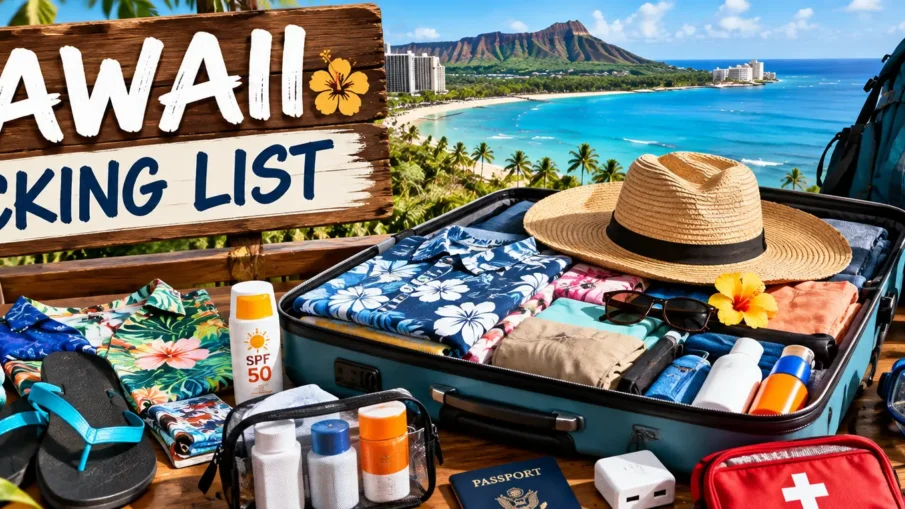
Packing for Hawaii sounds simple until you start thinking about beach days, tropical rain, hiking trails, restaurants, boat trips, and changing temperatures. A practical Hawaii packing list should cover all of those situations without filling your suitcase with things you will never use. In most cases, lightweight clothes, comfortable footwear, sun protection, swimwear, and a few activity-specific essentials are enough for a relaxed island vacation.
The exact items you need will depend on which Hawaiian island you visit, the season, your planned activities, and how long you stay. However, packing versatile clothing and planning for both sunshine and occasional rain will prepare you for most trips.
Hawaii Packing List: The Essential Checklist
Start with the essentials before adding activity-specific gear. Since Hawaii has a generally warm climate, you can usually leave bulky everyday clothing at home.
Here is a simple packing list for Hawaii:
- Lightweight T-shirts and tops
- Shorts
- Breathable dresses or casual outfits
- Two swimsuits
- Light sweater or jacket
- Comfortable walking shoes
- Sandals or flip-flops
- Sun hat
- Sunglasses
- Reef-conscious sunscreen
- Reusable water bottle
- Small daypack
- Lightweight rain jacket
- Toiletries
- Prescription medications
- Phone and charger
- Portable power bank
- Travel documents
- Waterproof phone pouch
- Beach bag
- Sleepwear
- Undergarments and socks
Meanwhile, avoid packing a separate outfit for every possible situation. Hawaii’s atmosphere is generally casual, while versatile clothes can work for beaches, sightseeing, lunches, and many evening activities.
If fitting everything into a carry-on feels difficult, learning how to pack a suitcase efficiently can help you save space without leaving useful items behind.
What Clothes Should You Pack for Hawaii?
Comfort should guide most clothing choices. Since temperatures are often warm, lightweight and breathable fabrics usually work better than thick materials.
For daytime sightseeing, consider shorts, T-shirts, tank tops, breathable shirts, skirts, or casual dresses. Likewise, quick-drying fabrics are useful if you plan to spend time near beaches or waterfalls.
However, pack at least one light extra layer. Air-conditioned restaurants, higher elevations, windy boat rides, and cooler evenings can feel surprisingly chilly.
Beachwear
Bring at least two swimsuits if you expect frequent beach days.
A lightweight cover-up also makes it easier to move between the beach, hotel, and nearby shops. Likewise, sandals or flip-flops are useful for casual beach visits.
If you plan to snorkel frequently, consider a rash guard. Besides providing coverage in the water, it can reduce your reliance on repeated sunscreen application on covered areas.
Evening Clothing
Hawaii usually does not require an extremely formal wardrobe for ordinary vacation activities. Therefore, one or two smart-casual outfits should be enough for many restaurants and evening plans.
However, check dress requirements if you have reservations at a specific upscale restaurant or event.
Hawaii Packing List for Different Weather Conditions
Hawaii’s weather can vary by island, elevation, and even which side of an island you are visiting. Consequently, preparing only for constant sunshine can leave you uncomfortable.
A compact rain jacket is one of the easiest items to carry. Since tropical showers may arrive quickly, lightweight rain protection can be useful without occupying much suitcase space.
If weather is a major concern when planning your trip, understanding the rainy season in Hawaii can help you decide how much wet-weather gear makes sense for your dates.
Pack for Higher Elevations
Not every Hawaiian experience takes place beside a warm beach.
For example, trips to high-elevation areas can expose travelers to much cooler, windier conditions than coastal resorts. Therefore, research your specific excursions before packing.
If your itinerary includes a high-altitude sunrise, sunset, or hiking experience, you may need long pants, closed shoes, and warmer layers.
This is one situation where packing according to planned activities matters more than packing according to the general tropical climate.
Hawaii Packing List Female Travelers Can Use
A practical Hawaii packing list female travelers can follow does not need dozens of outfits.
For a one-week vacation, a simple wardrobe might include several breathable tops, two or three pairs of shorts, one or two casual dresses, two swimsuits, a cover-up, sleepwear, sandals, comfortable walking shoes, and a light jacket.
A small crossbody bag can also be useful for sightseeing. Meanwhile, a foldable beach tote provides extra room for towels, water, and sunscreen.
If you use specific skincare, haircare, or personal-care products, bring travel-size versions when possible. However, basic toiletries are easy to purchase locally if you forget something.
For jewelry, expensive pieces are usually unnecessary. Instead, simple accessories reduce the risk of losing valuable items while swimming, hiking, or moving between hotels.
Shoes to Bring on a Hawaii Vacation
Shoes can take up more suitcase space than almost anything else. Therefore, choose pairs that serve different purposes.
For many vacations, three footwear options are enough:
- Comfortable walking or athletic shoes
- Sandals or flip-flops
- Optional water or hiking shoes
Walking shoes are useful for towns, attractions, and longer sightseeing days. Meanwhile, sandals handle casual resort and beach activities.
Water shoes may be useful for specific rocky shorelines or water activities. However, they are not necessary for every traveler.
Likewise, serious hikers should choose footwear appropriate for the trail rather than relying on ordinary beach sandals.
What to Pack for the Beach
A Hawaii trip often includes plenty of beach time, yet you do not need to bring your entire beach setup from home.
Hotels, vacation rentals, and equipment companies may provide or rent larger items. Therefore, check what is available before filling your luggage with bulky gear.
Useful beach items include:
- Swimsuit
- Cover-up
- Sun hat
- Sunglasses
- Sunscreen
- Reusable water bottle
- Waterproof pouch
- Beach tote
- Rash guard
- Small dry bag
Meanwhile, consider buying or renting bulky snorkeling equipment after arrival unless you strongly prefer your own gear.
Also, protect electronics from sand and water. A simple waterproof pouch can be particularly useful when kayaking, boating, or spending a full day near the ocean.
Sun Protection Deserves Extra Attention
Hawaii’s tropical sun can be strong, especially when you spend hours outside.
Therefore, bring a wide-brimmed hat or cap, quality sunglasses, protective clothing, and suitable sunscreen. A rash guard can also provide convenient coverage during long swimming or snorkeling sessions.
However, do not assume clouds eliminate sun exposure.
Carry a reusable water bottle as well. Hiking, walking, beach activities, and warm temperatures can increase your need for fluids.
Documents and Travel Essentials
Keep essential documents and valuable items in your carry-on rather than checked luggage.
Your document requirements depend partly on where you are traveling from. For U.S. travelers, the answer to do you need a passport to go to Hawaii depends on factors such as citizenship and the nature of the journey, while international visitors should verify current U.S. entry requirements before departure.
Keep your identification and other necessary travel documents somewhere secure but easy to reach.
You may also want digital or offline copies of:
- Hotel reservations
- Flight information
- Rental car details
- Travel insurance information
- Activity bookings
- Emergency contacts
Meanwhile, store important documents securely rather than leaving them loose in a beach bag.
Electronics Worth Packing
Most travelers need only a small collection of electronics.
Your phone will probably serve as your camera, map, communication device, boarding-pass holder, and travel planner. Therefore, bring its charging cable and wall adapter.
A portable power bank can also be valuable during long sightseeing days.
If you plan to take many photos or videos, make sure your phone has enough storage before leaving home. Alternatively, photographers may want a dedicated camera, spare batteries, memory cards, and suitable protection from rain and sand.
A waterproof phone case or pouch is useful around pools and beaches, although it should not automatically be treated as suitable for deep underwater use unless the manufacturer specifically rates it for that purpose.
Packing for Hiking and Outdoor Adventures
If hiking is part of your vacation, adjust your packing list for Hawaii vacation activities accordingly.
Start with comfortable footwear that offers appropriate grip. Then, pack moisture-wicking clothing, a small backpack, water, sun protection, and a light rain layer.
Depending on the trail, you may also need insect repellent and extra water.
Avoid assuming every Hawaiian hike is a casual beach walk. Trails can involve mud, steep terrain, heat, rain, and exposed sections.
Therefore, research the actual trail conditions before choosing clothing and footwear.
How the Time of Year Changes Your Packing
Hawaii remains a year-round destination, yet seasonal conditions can influence what you pack.
If you are deciding when is the best time to go to Hawaii, consider your preferred activities as well as weather patterns. For example, ocean conditions, rainfall, crowds, and seasonal wildlife experiences can influence both trip planning and your packing choices.
During wetter periods, a compact waterproof layer becomes especially useful. Meanwhile, travelers visiting during warmer and drier conditions may prioritize breathable clothing and sun protection.
Still, do not overpack based on one weather forecast. Conditions can differ significantly across islands and elevations.
When choosing dates, researching the best month to visit Hawaii can also help you match your wardrobe and activity gear to the kind of vacation you want.
What Not to Pack for Hawaii
Knowing what to leave home can save as much suitcase space as creating a packing checklist.
Unless your itinerary specifically requires them, you probably do not need:
- Multiple heavy jackets
- Several pairs of dress shoes
- Too many formal outfits
- Large quantities of toiletries
- Bulky beach equipment
- Excessive jewelry
- A separate outfit for every day
- Too many towels
Check your accommodation before packing towels, hair dryers, irons, or other common hotel amenities.
Likewise, remember that Hawaii has stores. Forgetting an ordinary toiletry or inexpensive piece of beach gear usually does not mean your vacation is ruined.
Common Hawaii Packing Mistakes
One common mistake is packing exclusively for the beach. Hawaii offers hiking, scenic drives, restaurants, higher elevations, boat trips, cultural attractions, and many other experiences.
Another mistake is bringing too many clothes. Since casual clothing can often be mixed, matched, and reworn, a smaller wardrobe usually works well.
Travelers also sometimes forget rain protection because they picture Hawaii as constantly sunny. However, a small rain shell takes little space and can be very useful.
Finally, avoid packing valuable belongings that you do not genuinely need. Carrying fewer expensive items makes it easier to enjoy beaches and outdoor activities without constantly worrying about them.
Quick Hawaii Packing List Before You Leave
Before closing your suitcase, run through this final packing list Hawaii checklist:
Clothing: Lightweight tops, shorts, casual outfits, underwear, sleepwear, swimsuit, cover-up, and light layer.
Footwear: Walking shoes, sandals, and activity-specific footwear if needed.
Beach gear: Sunscreen, sunglasses, hat, water bottle, waterproof pouch, and beach bag.
Outdoor gear: Daypack, rain jacket, hiking clothing, and suitable footwear.
Personal items: Toiletries, medications, skincare products, and any essential personal-care supplies.
Technology: Phone, charger, power bank, camera equipment if needed, and headphones.
Travel essentials: Identification, required travel documents, payment cards, reservations, and insurance information where applicable.
Pack Light and Plan Around Your Activities
The most useful Hawaii packing list is not the longest one. Instead, it matches what you will actually do.
Start with lightweight everyday clothes, swimwear, comfortable shoes, sun protection, a reusable water bottle, and a rain layer. Then, add specialized gear only for activities already on your itinerary.
Most importantly, consider your island, accommodation, excursions, and expected weather before packing. With a flexible wardrobe and a few practical essentials, you can spend less time managing luggage and more time enjoying Hawaii’s beaches, trails, towns, and landscapes.