
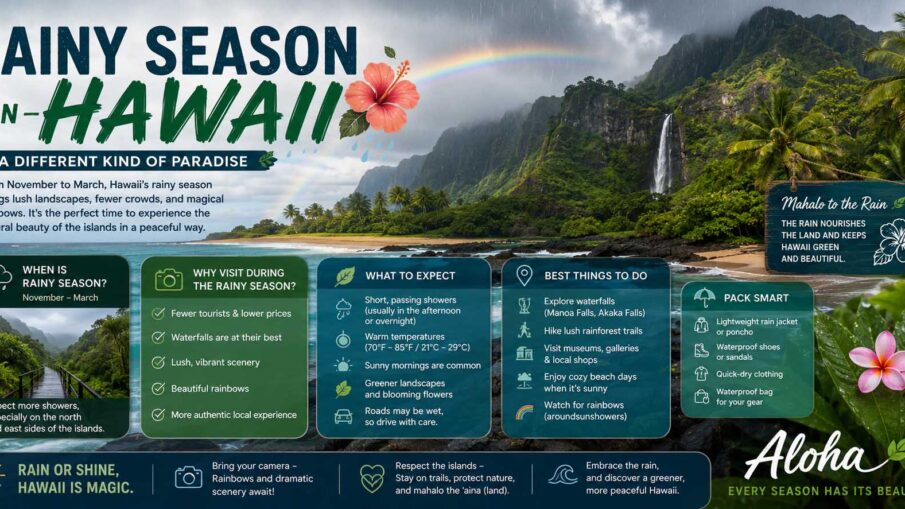
Many first-time visitors worry about the rainy season in Hawaii, assuming nonstop storms will ruin their vacation. Fortunately, that’s rarely the case. Hawaii’s tropical climate means rain showers are often brief, localized, and followed by sunshine. In fact, those passing showers are one reason the islands stay so lush and why rainbows are such a common sight.
If you’re wondering when is the rainy season in Hawaii, whether it’s worth visiting during wetter months, and which islands receive the least rain, this guide will help you plan with confidence.
What Is the Rainy Season in Hawaii?
The rainy season generally runs from November through March, although rainfall patterns vary significantly between islands and even between different sides of the same island.
Unlike tropical destinations with months of continuous rain, Hawaii usually experiences:
- Sunny mornings
- Passing rain showers
- Bright afternoons
- Cooler evenings
- Plenty of opportunities for outdoor activities
It can rain on one beach while another beach just a few miles away enjoys blue skies.
When Is the Rainy Season in Hawaii?
If you’re asking when is rainy season in Hawaii, the answer depends on where you’re traveling.
Here’s a general seasonal overview.
| Season | Months | Weather | Visitor Crowds |
|---|---|---|---|
| Winter | November–March | Wetter, slightly cooler | High during holidays |
| Spring | April–May | Warm and pleasant | Moderate |
| Summer | June–August | Drier and hotter | High |
| Fall | September–October | Warm with fewer crowds | Moderate to Low |
Rain is most common during winter, but even then, many days remain sunny.
Rainy Season in Hawaii by Month
November
Rainfall begins increasing, especially on the windward (northeastern) sides of the islands.
Travel conditions remain excellent.
December
One of the wetter months.
Holiday crowds arrive, making accommodations more expensive despite occasional rain.
January
Frequent showers appear across many islands.
Large winter surf attracts experienced surfers and spectators.
February
Rain continues, although beach days remain common.
Whale watching reaches one of its best periods.
March
Rain gradually decreases as spring approaches.
Landscapes remain beautifully green.
Rainfall Varies by Island
One of Hawaii’s unique features is its diverse microclimates.
Oahu
Honolulu and Waikiki remain relatively dry compared with the island’s eastern mountains.
The North Shore experiences more rain during winter.
Maui
South Maui, including Kihei and Wailea, receives much less rainfall than the lush Hana region.
Kauai
Often called the Garden Isle, Kauai receives the most rainfall overall.
Its green cliffs, waterfalls, and valleys exist because of frequent showers.
Big Island
The Big Island contains several climate zones.
Kona is known for its sunny, dry climate, while Hilo receives significantly more rainfall and is considered one of the wettest cities in the United States.
Is There a Rainy Season in Hawaii Worth Avoiding?
For most travelers, no.
There is there a rainy season in Hawaii, but it rarely prevents sightseeing.
Instead, think of it as:
- Short rain showers
- Cooler temperatures
- More dramatic scenery
- Better waterfalls
- More frequent rainbows
Outdoor activities continue throughout the year.
Many visitors actually prefer winter because temperatures remain comfortable while tourist attractions are still open.
Why Visit During the Rainy Season?
Traveling during Hawaii’s wetter months offers several advantages.
Greener Scenery
Rain keeps valleys, waterfalls, and forests vibrant.
Photographers often love winter landscapes.
Whale Watching
From December through March, humpback whales migrate to the warm waters of Hawaii to breed, give birth, and care for their calves, making this one of the best times for whale watching.
This becomes one of the biggest seasonal attractions.
Pleasant Temperatures
Winter temperatures usually range between:
- 75°F–82°F (24°C–28°C)
Humidity often feels more comfortable than during summer.
Great Surf
Winter brings world-famous waves to Oahu’s North Shore.
Even if you don’t surf, watching professionals compete is unforgettable.
Budget Considerations
Prices vary depending on the season.
Holiday periods remain expensive despite wetter weather.
Outside Christmas and New Year’s:
- Hotel rates may decrease.
- Flights can become more affordable.
- Rental car prices sometimes drop.
- Tourist attractions feel less crowded.
Being flexible with your travel dates and destinations can often help you find better deals on flights, accommodations, and other travel expenses.
Best Activities During the Rainy Season in Hawaii
Rain doesn’t mean staying indoors.
Excellent options include:
- Whale watching
- Scenic drives
- Botanical gardens
- Waterfall hikes
- Snorkeling on calmer beaches
- Food tours
- Cultural museums
- Coffee farm visits
- Sunset cruises
Simply plan outdoor adventures early in the day whenever possible.
What to Pack
Packing for Hawaii’s rainy season isn’t difficult.
Bring:
- Lightweight rain jacket
- Quick-drying clothing
- Swimsuits
- Comfortable sandals
- Waterproof hiking shoes
- Small umbrella
- Waterproof phone pouch
- Sunglasses
- Sunscreen
- Reusable water bottle
Avoid heavy jackets.
Temperatures stay warm throughout the year.
Sample Five-Day Rainy Season Itinerary
| Day | Activity |
|---|---|
| Day 1 | Explore Waikiki and Diamond Head |
| Day 2 | Morning snorkeling and afternoon food tour |
| Day 3 | Waterfall hike and botanical gardens |
| Day 4 | Whale watching or scenic coastal drive |
| Day 5 | Beach relaxation and local shopping |
Morning adventures provide the best chance of dry weather.
Transportation Tips
Getting around Hawaii remains easy during the rainy season.
Helpful suggestions include:
- Rent a car for flexibility.
- Check weather before mountain drives.
- Allow extra travel time after heavy showers.
- Avoid flooded hiking trails.
- Fill your fuel tank before exploring remote areas.
Road closures are uncommon but can happen after major storms.
Comparing Hawaii’s Rainy Season with Other Destinations
Travelers often compare tropical destinations before booking.
If you’re deciding when is the best time to go to hawaii, understanding seasonal rainfall helps balance weather, crowds, and travel costs.
Many visitors also research the best time to travel to hawaii to determine whether winter or summer better fits their plans.
For those seeking the driest conditions, exploring the best month to visit hawaii provides a useful overview of weather patterns throughout the year.
Compared with destinations like the rainy season in jamaica, Hawaii generally experiences shorter, more localized showers instead of prolonged tropical rainfall.
Similarly, travelers considering Caribbean vacations often compare Hawaii with the best time to visit puerto rico, where hurricane season can influence travel planning differently.
Common Mistakes to Avoid
Expecting Constant Rain
Most showers pass quickly.
You’ll likely enjoy plenty of sunshine every day.
Ignoring Island Differences
Weather varies dramatically across Hawaii.
Research your specific island instead of relying on statewide averages.
Skipping Sunscreen
Clouds don’t block harmful UV rays completely.
Sunburn remains common throughout the year.
Planning Every Activity Outdoors
Mix beaches with museums, restaurants, and scenic drives.
Having backup plans keeps your itinerary flexible.
Safety Tips During Wet Weather
Rain creates beautiful scenery, but it also brings extra precautions.
Stay safe by:
- Watching for slippery trails.
- Avoiding flooded streams.
- Respecting ocean warning signs.
- Checking surf reports before swimming.
- Following local weather advisories.
Flash flooding can occur in valleys and mountain areas after heavy rain.
FAQs
What is the rainy season in Hawaii?
The rainy season generally lasts from November through March, although showers can happen at any time of year.
Does it rain every day?
Some areas receive daily showers, but they usually last a short time.
Most visitors still enjoy several hours of sunshine.
Which Hawaiian island gets the least rain?
Leeward areas like Kona on the Big Island and South Maui tend to be among the driest locations.
Can you swim during the rainy season?
Yes.
Many beaches remain excellent for swimming.
Is winter a good time to visit Hawaii?
Absolutely.
Winter offers whale watching, comfortable temperatures, green landscapes, and world-famous surfing.
Are flights cheaper during the rainy season?
Outside major holidays, airfare and hotel prices can sometimes be lower than during peak summer travel.
Final Travel Tips
The rainy season in Hawaii shouldn’t discourage you from visiting. While winter months bring more showers, they also create lush scenery, spectacular waterfalls, and unforgettable wildlife experiences. Because rainfall is often brief and localized, a flexible itinerary lets you enjoy beaches, hikes, and cultural attractions without missing out.
Pack light rain gear, start outdoor adventures early, and embrace Hawaii’s ever-changing weather. You may even discover that a passing tropical shower leads to one of the islands’ most memorable sights—a brilliant rainbow stretching across the Pacific sky.