
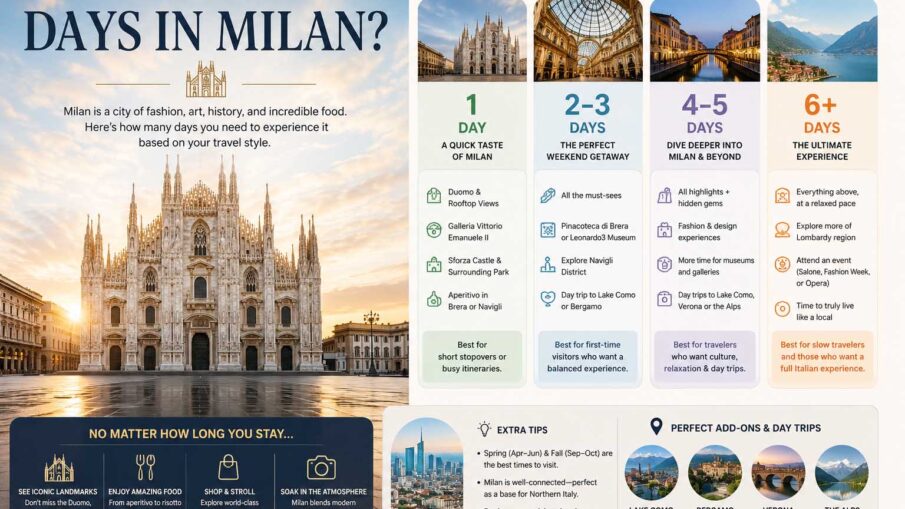
If you’re wondering how many days in Milan you should plan for, the answer depends on what you want from your trip. While Milan is often known as Italy’s fashion and business capital, it also offers stunning architecture, world-famous art, historic neighborhoods, and excellent food. For most travelers, 2 to 3 days is the perfect amount of time to experience the city’s highlights without feeling rushed.
Whether you’re stopping during a larger Italian vacation or planning a city break, deciding how many days to spend in Milan helps you build a realistic itinerary. This guide explains how long to stay, what to see each day, when to visit, and practical tips to make the most of your trip.
How Many Days in Milan Is Enough?
For most first-time visitors, how many days in Milan is enough comes down to your travel style.
Here’s a quick overview:
| Trip Length | Best For | What You Can See |
|---|---|---|
| 1 Day | Short stopover | Duomo, Galleria, city center |
| 2 Days | First-time visitors | Major landmarks, museums, neighborhoods |
| 3 Days | Relaxed sightseeing | Art, shopping, canals, local food |
| 4–5 Days | Slow travel | Day trips and hidden gems |
Two or three days provide enough time to enjoy Milan’s famous attractions while also experiencing its local atmosphere.
How Many Days Do You Need in Milan?
The answer depends on your interests.
One Day
A single day works if Milan is part of a larger European itinerary.
Focus on:
- Duomo di Milano
- Galleria Vittorio Emanuele II
- Piazza del Duomo
- Rooftop terraces
- An authentic Italian dinner
You’ll see the city’s biggest highlights, although your schedule will be busy.
Two Days
Two days offer a much better experience.
You can comfortably visit:
- Sforza Castle
- Parco Sempione
- Brera District
- Leonardo da Vinci’s The Last Supper (reserve well in advance)
- Navigli canals
This is the recommended minimum for most travelers.
Three Days
Three days let you slow down and explore beyond the major attractions.
You’ll have time for:
- Boutique shopping
- Local cafés
- Art museums
- Fashion districts
- Hidden churches
- Neighborhood walks
Many visitors find this to be the ideal balance.
Sample 3-Day Milan Itinerary
If you’re asking how many days should I spend in Milan, this itinerary covers the city’s highlights while leaving room to enjoy its atmosphere.
Day 1: Milan’s Historic Heart
Begin with the city’s most iconic landmarks.
Suggested stops include:
- Duomo di Milano
- Rooftop terraces
- Piazza del Duomo
- Galleria Vittorio Emanuele II
- Teatro alla Scala
End your evening with traditional Milanese cuisine.
Day 2: Art, Castles, and Parks
Spend your second day exploring Milan’s history.
Visit:
- Sforza Castle
- Parco Sempione
- The Last Supper
- Brera District
If you’re still deciding whether the city deserves a place on your itinerary, reading is milan worth visiting can help you understand what makes Milan different from other Italian destinations.
Day 3: Local Neighborhoods and Canals
Use your final day to experience everyday Milan.
Highlights include:
- Navigli District
- Vintage markets
- Local cafés
- Independent boutiques
- Porta Nuova
- Bosco Verticale
This slower-paced day balances sightseeing with local culture.
Should You Stay Longer?
If you have four or five days available, Milan becomes an excellent base for northern Italy.
Popular day trips include:
- Lake Como
- Bergamo
- Verona
- Turin
- Lake Maggiore
Italy’s high-speed rail network makes these destinations easy to reach.
Best Time to Visit Milan
Weather plays a big role in your experience.
If you’re planning your Italian vacation, our guide to the best time to visit italy can help you choose the ideal season for visiting Milan and other destinations across the country.
Here’s what to expect throughout the year.
Spring (March to May)
Spring offers:
- Mild temperatures
- Blooming parks
- Comfortable walking weather
- Outdoor cafés
Many travelers consider this one of the best seasons to visit.
Summer (June to August)
Summer brings:
- Warm temperatures
- Longer daylight hours
- Outdoor festivals
- Larger tourist crowds
July and August can be quite hot.
Fall (September to November)
Autumn features:
- Pleasant weather
- Smaller crowds
- Cultural events
- Comfortable sightseeing
September is especially popular.
Winter (December to February)
Winter visitors enjoy:
- Christmas markets
- Holiday decorations
- Fewer tourists after New Year
- Cooler temperatures
Fashion events can also make certain weeks busier.
Getting Around Milan
Milan has one of Italy’s easiest public transportation systems.
Metro
The metro is:
- Fast
- Clean
- Affordable
- Easy to navigate
Most major attractions are connected by subway.
Trams
Historic yellow trams remain one of the city’s most charming ways to travel.
Walking
Many central attractions are within walking distance of one another.
Comfortable shoes make exploring much more enjoyable.
Where to Stay
Choosing the right neighborhood saves time and improves your trip.
Centro Storico
Best for:
- First-time visitors
- Walking to landmarks
- Historic atmosphere
Brera
Ideal for:
- Art lovers
- Boutique shopping
- Quiet streets
- Local restaurants
Navigli
Perfect for:
- Nightlife
- Canal views
- Food lovers
- Evening walks
Porta Nuova
Great for:
- Modern hotels
- Business travelers
- Contemporary architecture
Budgeting for Milan
Compared with some Italian cities, Milan can be more expensive.
Here’s a rough daily estimate.
| Budget Level | Daily Cost (USD) |
|---|---|
| Budget | $90–$140 |
| Mid-range | $150–$260 |
| Luxury | $300+ |
Daily costs usually include:
- Hotel
- Meals
- Transportation
- Attraction tickets
Booking accommodations early often helps reduce costs.
Foods You Should Try
Milan’s cuisine differs from southern Italy.
Don’t miss:
- Risotto alla Milanese
- Cotoletta alla Milanese
- Ossobuco
- Panettone
- Gelato
- Aperitivo
The city’s aperitivo tradition is one of its most enjoyable dining experiences.
Helpful Packing Tips
Your packing list depends on the season.
Bring:
- Comfortable walking shoes
- Light jacket for evenings
- Reusable water bottle
- Power adapter
- Umbrella during spring or fall
If you’re visiting several European cities, guides like what to pack for europe trip can help you prepare for different climates and travel styles.
Safety Tips
Milan is generally a safe city for tourists.
Even so, basic precautions are worth following.
- Watch for pickpockets in crowded areas.
- Keep valuables secure on public transportation.
- Stay alert around major tourist attractions.
- Use licensed taxis or reputable ride-sharing services.
- Carry only what you need for the day.
Most visitors experience a smooth and enjoyable trip.
Common Mistakes Travelers Make
Avoid these common planning errors.
Booking The Last Supper Too Late
Tickets often sell out weeks or months ahead.
Reserve them early.
Underestimating Walking
Even with excellent public transportation, you’ll spend plenty of time on foot.
Comfortable shoes make a huge difference.
Skipping Local Neighborhoods
Many visitors spend all their time near the Duomo.
Areas like Brera and Navigli offer a more authentic experience.
Visiting During Fashion Week Without Planning
Hotels become more expensive and availability drops during major fashion events.
Book accommodations well in advance if your trip overlaps with these dates.
Comparing Milan With Other European City Breaks
Many travelers compare city itineraries before building a longer European vacation.
For example, guides such as how many days in venice and how many days in florence help visitors balance time between Italy’s historic cities.
If you’re expanding your trip beyond Italy, how many days in barcelona offers another useful reference for planning a cultural city break with a different pace and atmosphere.
Unlike some destinations that revolve around one historic district, Milan rewards travelers who take time to explore several neighborhoods.
Frequently Asked Questions
How many days in Milan is enough?
Two to three days are enough for most first-time visitors. You’ll have time to see the major landmarks, enjoy local food, and explore several neighborhoods.
How many days do you need in Milan if you love museums?
Three or four days give museum lovers enough time to visit The Last Supper, Pinacoteca di Brera, Museo del Novecento, and additional galleries.
Is one day enough in Milan?
One day covers the main attractions, but you’ll miss much of the city’s local character and slower-paced experiences.
Is Milan expensive?
Milan is generally one of Italy’s pricier cities, especially for hotels and shopping. Planning ahead can help reduce costs.
Can Milan be used as a base for day trips?
Yes. Its excellent rail connections make it easy to visit Lake Como, Bergamo, Verona, and other destinations in northern Italy.
Make the Most of Your Time in Milan
For most travelers, how many days in Milan comes down to balancing iconic sights with time to enjoy the city’s atmosphere. Two days cover the essential landmarks, while three days provide a more relaxed experience that includes neighborhoods, museums, local restaurants, and canal-side walks.
As you plan your itinerary, book popular attractions in advance, stay in a central neighborhood if possible, and leave a little flexibility in your schedule. Milan isn’t just a gateway to northern Italy—it’s a destination where history, fashion, food, and modern city life come together in a way that’s rewarding to experience at your own pace.