
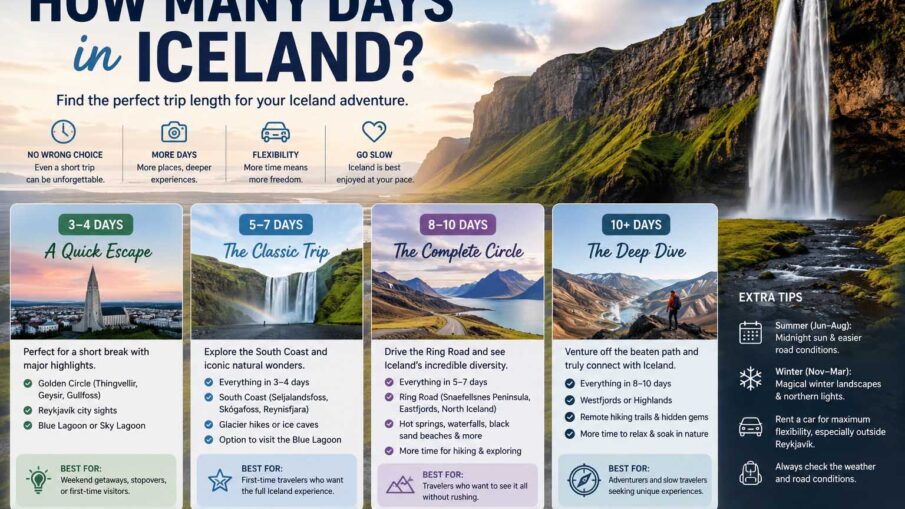
Planning a trip to Iceland often starts with one question: how many days in Iceland do you actually need? The answer depends on what you want to see, the season you’re visiting, and whether you plan to drive the famous Ring Road or focus on a few regions. While it’s possible to enjoy Iceland in just a long weekend, most travelers find that five to seven days offers the best balance between sightseeing and relaxation.
Iceland may look small on a map, but its dramatic landscapes, changing weather, and scenic roads mean travel takes longer than many visitors expect. Giving yourself enough time lets you experience waterfalls, glaciers, volcanoes, geothermal hot springs, black sand beaches, and charming fishing villages without rushing from one attraction to the next.
How Many Days in Iceland Is Enough?
If you’re wondering how many days in Iceland is enough, here’s a quick guide based on different travel styles.
| Trip Length | Best For | Highlights |
|---|---|---|
| 2–3 Days | Stopovers | Reykjavík, Blue Lagoon, Golden Circle |
| 4–5 Days | First-time visitors | Golden Circle, South Coast, waterfalls, glaciers |
| 6–7 Days | Most travelers | South Coast, Snæfellsnes or North Iceland |
| 8–10 Days | Road trips | Complete Ring Road adventure |
| 10–14 Days | Slow-paced travel | Ring Road plus the Westfjords or Highlands (season permitting) |
For most visitors, 5 to 7 days provides enough time to experience Iceland’s most famous attractions while still allowing room for unexpected weather delays or spontaneous stops.
If you’re still deciding when to visit, our guide to best time to go to Iceland can help you match your itinerary with the season that best fits your travel goals.
How Many Days Do You Need in Iceland Based on Your Travel Style?
There’s no single perfect itinerary because every traveler has different priorities.
2–3 Days: Perfect for a Stopover
A short visit works well if Iceland is part of a larger European trip.
During a long weekend, you can comfortably visit:
- Reykjavík
- The Blue Lagoon or Sky Lagoon
- The Golden Circle
- Þingvellir National Park
- Gullfoss Waterfall
- Geysir geothermal area
You’ll get a taste of Iceland’s unique scenery, although you’ll miss many of its more remote regions.
4–5 Days: The Ideal First Visit
For many people, this is the sweet spot.
A five-day itinerary lets you explore beyond Reykjavík without spending every day driving.
A typical route includes:
- Day 1: Arrive in Reykjavík and relax at a geothermal spa.
- Day 2: Drive the Golden Circle.
- Day 3: Explore Iceland’s South Coast.
- Day 4: Visit Jökulsárlón Glacier Lagoon and Diamond Beach.
- Day 5: Return to Reykjavík before departure.
This itinerary covers many of Iceland’s iconic sights while maintaining a comfortable pace.
6–7 Days: Experience More of Iceland
If your schedule allows, spending a full week gives you much greater flexibility.
You can add destinations such as:
- Snæfellsnes Peninsula
- Akureyri
- Lake Mývatn
- East Iceland
- Whale watching tours
A week-long trip also gives you extra flexibility if changing weather conditions affect your driving plans.
How Many Days to Spend in Iceland for the Ring Road?
The Ring Road (Route 1) circles nearly the entire country and connects most of Iceland’s major attractions.
Although it’s technically possible to complete the drive in about a week, doing so leaves little time for sightseeing.
Here are better options:
- 7 days: Fast-paced Ring Road trip
- 8–10 days: Comfortable sightseeing itinerary
- 12–14 days: Relaxed journey with scenic detours
If visiting the Highlands or Westfjords is part of your plan, you’ll likely want even more time, especially during summer.
Seasonal Considerations
The season you choose can affect how many days you should spend in Iceland.
Summer (June to August)
Summer offers:
- Nearly endless daylight
- Easier driving conditions
- Open mountain roads
- Better access to remote areas
Because daylight lasts so long, you can comfortably fit more activities into each day.
Winter (November to March)
Winter travel moves at a slower pace due to:
- Snow
- Ice
- Short daylight hours
- Weather-related road closures
For that reason, adding an extra day or two is often worthwhile if you’re visiting during winter.
Many travelers plan their winter itinerary around opportunities to see the aurora. If that’s one of your goals, our guide to best time to see northern lights in Iceland explains the ideal months and viewing conditions.
Suggested 7-Day Iceland Itinerary
If you have a full week, this route balances sightseeing with manageable driving distances.
Arrive in Reykjavík and explore the city.
Drive the Golden Circle, including Þingvellir National Park, Gullfoss, and Geysir.
Continue along the South Coast, stopping at Seljalandsfoss, Skógafoss, and Reynisfjara Black Sand Beach.
Visit Jökulsárlón Glacier Lagoon and nearby Diamond Beach before staying overnight in southeast Iceland.
Return west, making time for any attractions you missed along the South Coast.
Explore the Snæfellsnes Peninsula or enjoy a whale-watching excursion from Reykjavík.
Spend your final morning shopping, visiting museums, or relaxing in a geothermal pool before your flight home.
Transportation Tips for Your Iceland Adventure
Getting around Iceland is part of the experience. Most visitors rent a car because it provides the freedom to stop at waterfalls, lava fields, and scenic viewpoints whenever they like. Roads are generally well maintained, although conditions change quickly during winter.
If you plan to stay near Reykjavík, guided day tours are an excellent alternative. They eliminate the stress of driving and often include transportation to popular attractions like the Golden Circle, South Coast, or glacier lagoons.
For travelers wondering how many days do I need in Iceland, transportation should play a big role in the decision. The more places you want to visit, the more driving time you’ll need to include.
Budgeting for Different Trip Lengths
Iceland is one of Europe’s more expensive destinations, but careful planning helps keep costs under control.
Here’s a general guide.
| Trip Length | Budget Traveler | Mid-Range Traveler | Luxury Traveler |
|---|---|---|---|
| 3 Days | $500–900 | $900–1,600 | $2,000+ |
| 5 Days | $900–1,600 | $1,600–2,800 | $3,500+ |
| 7 Days | $1,300–2,200 | $2,300–3,800 | $5,000+ |
These estimates include accommodation, transportation, food, and common attractions. Actual costs vary depending on the season, exchange rates, rental vehicle choice, and booking time.
Money-saving tips include:
- Book rental cars early.
- Stay in guesthouses or apartments.
- Buy groceries for breakfast and lunch.
- Carry a reusable water bottle since Iceland’s tap water is excellent.
- Travel during shoulder seasons for lower prices.
Where to Stay During Your Trip
Accommodation choices depend on your itinerary.
Reykjavík
Ideal if you’re staying two or three days or taking guided tours.
Pros:
- Wide range of hotels
- Restaurants within walking distance
- Easy airport transfers
- Great nightlife
South Coast
Perfect for travelers spending several days exploring waterfalls and glaciers.
You’ll reduce daily driving by staying in towns such as Vík or Kirkjubæjarklaustur.
Around the Ring Road
If you’re driving around Iceland, book accommodations well in advance. Hotels and guesthouses in rural areas often fill quickly during summer.
Packing Tips Based on Your Trip Length
Packing smart makes Iceland much more enjoyable because the weather changes quickly.
Your essentials should include:
- Waterproof jacket
- Waterproof hiking boots
- Warm base layers
- Hat and gloves
- Reusable water bottle
- Power bank
- Swimsuit for hot springs
- Camera with extra batteries
Even during summer, temperatures can feel cool because of wind and rain.
If you’re already planning other city breaks, comparing trip lengths can help you pace your vacation. For example, travelers often ask how many days in London or how many days in Tokyo, yet Iceland usually requires more driving time despite its smaller population.
Common Mistakes Travelers Make
Many first-time visitors underestimate Iceland’s size.
Avoid these common mistakes.
Trying to See Everything
Attempting to drive the entire Ring Road in five days usually leads to long hours behind the wheel and very little time at each attraction.
Instead, focus on quality over quantity.
Ignoring Weather Forecasts
Weather changes quickly.
Always check forecasts and road conditions before driving each morning.
Booking Too Late
Hotels, rental cars, and popular tours often sell out months ahead during summer.
Early reservations usually mean better prices and more options.
Underestimating Driving Times
Distances may appear short on the map, yet winding roads, sightseeing stops, and changing weather can make journeys much longer than expected.
Is Iceland Good for Families?
Absolutely.
Families enjoy:
- Whale watching
- Easy hiking trails
- Puffin viewing (seasonal)
- Geothermal swimming pools
- Horse riding
- Ice caves during winter (age restrictions may apply)
Many attractions are easy to reach, making Iceland suitable for children as well as older travelers.
Is Iceland Good for Solo Travelers?
Iceland consistently ranks among the safest countries in the world, making it an excellent destination for solo travel.
Benefits include:
- Friendly locals
- Reliable tourism infrastructure
- Easy self-driving routes
- Plenty of group tours
- Excellent public safety
Solo travelers often find it easy to meet others during day tours or hostel stays.
Frequently Asked Questions
How many days in Iceland should first-time visitors spend?
You’ll experience Reykjavík, the Golden Circle, the South Coast, waterfalls, glaciers, and geothermal attractions without feeling rushed.
Is 4 days enough?
Yes, if you focus on southwest Iceland. You’ll have time for Reykjavík, the Golden Circle, and much of the South Coast.
Is 10 days too much?
Not at all. Ten days allows a relaxed Ring Road trip with scenic detours and more time for hiking, wildlife viewing, and local experiences.
Can you visit Iceland without renting a car?
Yes. Many visitors stay in Reykjavík and join organized day tours. This option works especially well for shorter trips.
What is the best month to visit?
That depends on your priorities. Summer offers long daylight hours and easier driving, while winter provides opportunities to see the Northern Lights and explore snowy landscapes.
Final Travel Tips Before You Book
The answer to how many days in Iceland depends on what kind of trip you want. If you’re looking for a quick introduction, three or four days can cover Iceland’s biggest highlights. For most travelers, though, five to seven days offers the best mix of sightseeing, adventure, and relaxation. If your goal is to drive the Ring Road or explore lesser-known regions, plan for at least eight to ten days.
Before booking flights, think about your interests, budget, and the season you’ll visit. Leave some flexibility in your itinerary because Iceland’s weather can change quickly, and you may discover scenic stops you hadn’t planned to explore. A well-paced schedule often leads to a more memorable trip than trying to check every attraction off your list.
Whether you’re chasing waterfalls, soaking in geothermal lagoons, hiking across volcanic landscapes, or hoping to catch the Northern Lights, giving yourself enough time will help you experience Iceland at its best.