
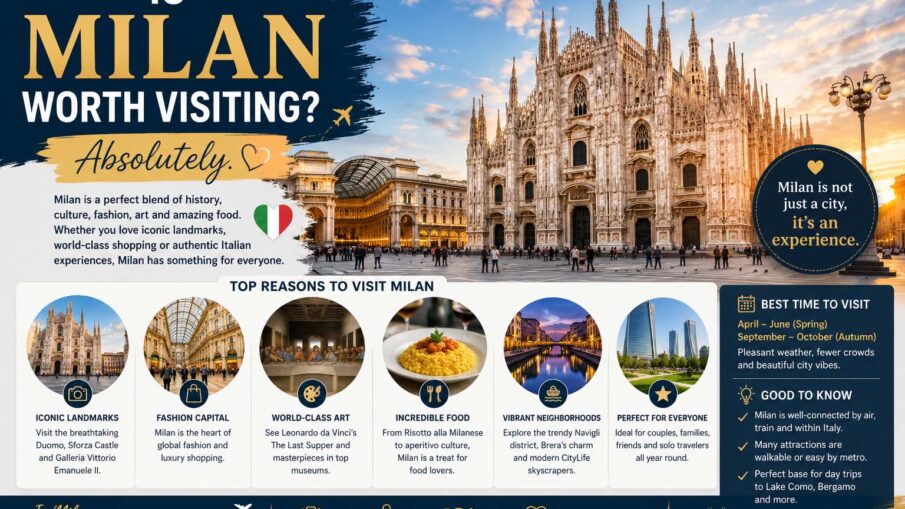
If you’re planning a trip to Italy, you’ve probably wondered: Is Milan worth visiting? The answer is yes, especially if you enjoy beautiful architecture, world-famous art, Italian food, shopping, and modern city life.
Although many travelers focus on Rome, Venice, or Florence, Milan offers a different experience. At first glance, it may seem like a busy business center filled with fashion boutiques and office buildings. However, spend a day or two exploring, and you’ll discover historic landmarks, charming neighborhoods, and an exciting combination of tradition and innovation.
In addition, Milan’s excellent transportation connections make it a convenient starting point for exploring northern Italy.
Whether you’re planning a short city break or a longer Italian adventure, this guide explains what makes Milan special, how many days to spend, when to visit, and what to expect.
Quick Answer: Is Milan Worth Visiting?
Yes, Milan is worth visiting for travelers who appreciate architecture, museums, fashion, Italian cuisine, and energetic city life.
Unlike Rome, Milan doesn’t have ancient ruins around every corner. Instead, it combines historic buildings with contemporary skyscrapers, stylish shopping streets, and creative neighborhoods.
For example, you can admire the magnificent Duomo in the morning, explore world-class art in the afternoon, and enjoy dinner beside the Navigli canals in the evening.
Milan is especially appealing if you enjoy:
- Historic architecture and famous landmarks
- Fashion and shopping
- Art galleries and museums
- Traditional northern Italian food
- Football culture
- Modern architecture and design
- Convenient train connections
- Short European city breaks
However, travelers who mainly want beaches, ancient Roman ruins, or quiet countryside may prefer other destinations.
Therefore, Milan is most rewarding when its attractions match your interests.
Is Milan Worth Visiting Compared With Other Italian Cities?
Every major Italian city offers a different travel experience.
| City | Best Known For | Ideal Travel Style |
|---|---|---|
| Rome | Ancient history and monuments | History and archaeology |
| Florence | Renaissance art and architecture | Museums and culture |
| Venice | Canals and historic atmosphere | Romantic city breaks |
| Milan | Fashion, design, architecture, and food | Modern urban exploration |
Milan generally feels faster-paced and more business-oriented than Florence or Venice.
However, that modern atmosphere is part of its appeal. Historic churches, elegant shopping arcades, and contemporary buildings exist within the same city.
In addition, Milan offers excellent connections to other northern Italian destinations.
For example, travelers can combine the city with Lake Como, Bergamo, or Venice.
If you’re comparing northern Italian destinations, our guide on is Venice worth visiting can help you decide which city better matches your travel preferences.
Why Milan Is Worth Visiting: Top Attractions
Milan offers much more than fashion boutiques and business districts.
In fact, its attractions range from Gothic architecture and Renaissance masterpieces to lively canals and traditional restaurants.
Milan Cathedral: A Major Reason to Visit
The Duomo di Milano dominates the city’s historic center.
Its elaborate Gothic architecture, marble exterior, and countless decorative details make it one of Italy’s most recognizable buildings.
Visitors can:
- Explore the cathedral’s interior
- Visit the rooftop terraces
- Admire intricate sculptures
- Enjoy views across the city
- Photograph the surrounding Piazza del Duomo
However, access to different areas requires the appropriate ticket.
Therefore, check the official Duomo di Milano visitor information before planning your visit.
The rooftop terraces are particularly memorable because they allow visitors to see the cathedral’s architectural details up close.
In addition, the Duomo belongs among Italy’s most impressive famous landmarks.
Milan’s Art Museums and Cultural Attractions
Art lovers will find several important cultural attractions throughout the city.
For example, Leonardo da Vinci’s The Last Supper is displayed at Santa Maria delle Grazie.
However, admission is limited, and reservations are often necessary well in advance.
Other notable attractions include:
- Pinacoteca di Brera
- Sforza Castle museums
- Museo del Novecento
- Leonardo da Vinci National Museum of Science and Technology
As a result, visitors interested in Renaissance art, modern painting, and scientific history can easily fill several days.
Is Milan Worth Visiting for Shopping?
Yes, particularly if you enjoy fashion, designer boutiques, and stylish shopping districts.
Milan is internationally recognized for fashion and design.
Luxury shoppers often explore Via Montenapoleone and the elegant Galleria Vittorio Emanuele II.
However, shopping isn’t limited to expensive designer boutiques.
Visitors can also discover:
- Independent fashion stores
- Popular Italian clothing brands
- Vintage shops
- Local markets
- Seasonal sales
For example, the Brera district offers a different shopping atmosphere from the city’s major luxury streets.
Therefore, you can enjoy Milan’s fashion culture without planning an expensive shopping trip.
Traditional Milanese Food and Restaurants
Milan’s cuisine reflects the culinary traditions of Lombardy and northern Italy.
Instead of focusing only on pizza and pasta, try local specialties such as:
- Risotto alla Milanese
- Ossobuco
- Cotoletta alla Milanese
- Panettone
- Regional cheeses
- Traditional pastries
In addition, the city has everything from casual cafés to upscale restaurants.
For example, a simple lunch at a neighborhood trattoria can provide an enjoyable introduction to Milanese cooking.
Historic and Modern Architecture
Milan combines historic architecture with modern urban development.
For example, you can explore the centuries-old city center before visiting Porta Nuova, an area known for contemporary buildings and public spaces.
Meanwhile, neighborhoods such as Brera and Navigli offer more intimate streets, restaurants, and cafés.
As a result, Milan feels different from Italian destinations that focus primarily on historic attractions.
Is Milan Worth Visiting for a Day?
Yes, Milan can be rewarding even if you have only one day.
Although you won’t see everything, the historic center contains several major attractions within a manageable area.
Therefore, a carefully planned itinerary can give you a satisfying introduction.
Suggested One-Day Milan Itinerary
| Time | Recommended Activity |
|---|---|
| Morning | Visit Milan Cathedral and its rooftop terraces |
| Late Morning | Explore Galleria Vittorio Emanuele II |
| Lunch | Enjoy traditional Milanese cuisine |
| Afternoon | Visit Sforza Castle or a museum |
| Evening | Walk around Navigli and enjoy dinner |
First, start early at the Duomo to make the most of your day.
Next, explore the nearby shopping arcade and surrounding streets.
After lunch, choose one major attraction rather than rushing between several museums.
Finally, spend the evening enjoying Milan’s restaurants or canals.
However, if you want to see The Last Supper, plan your reservation carefully and adjust the itinerary around your assigned entry time.
Is Milan Worth Visiting Throughout the Year?
Spring and autumn are generally excellent seasons for sightseeing.
However, each season offers different advantages depending on your preferences and budget.
For a broader comparison of Italian destinations, read our guide to the best time to visit Italy.
Visiting Milan in Spring: March to May
Spring often brings comfortable sightseeing weather and attractive outdoor spaces.
For example, visitors can enjoy:
- Pleasant walks
- Outdoor cafés
- Blooming parks
- Seasonal events
- Comfortable daytime sightseeing
However, popular attractions can become busy, especially around holidays and major events.
Therefore, book important activities ahead of time.
Summer in Milan: June to August
Summer brings long daylight hours and warm weather.
However, July and August can be hot, with daytime temperatures sometimes exceeding 30°C (86°F).
During this season, visitors can enjoy:
- Outdoor dining
- Evening walks
- Summer events
- Longer sightseeing days
Nevertheless, heat can make extended walking less comfortable.
In addition, some independent businesses close temporarily during August holidays.
Autumn Travel: September to November
Autumn is another attractive season for visiting Milan.
Early autumn often provides comfortable temperatures for exploring the city.
For example, September and October can be pleasant for walking through historic neighborhoods and visiting outdoor attractions.
However, accommodation prices may increase during major fashion and business events.
Therefore, check the event calendar before booking.
Is Milan Worth Visiting in Winter?
Yes, especially if you enjoy museums, shopping, cafés, and festive decorations.
Winter brings cooler weather and a different city atmosphere.
Visitors may enjoy:
- Festive decorations
- Christmas markets
- Seasonal shopping
- Indoor museums
- Traditional cafés
In addition, quieter periods outside major holidays may offer better accommodation value.
However, shorter daylight hours and cold weather can affect outdoor sightseeing.
Monthly Milan Travel Overview
| Month | Typical Conditions | Travel Considerations |
|---|---|---|
| January | Cold | Good for indoor attractions |
| February | Cold | Museums and city breaks |
| March | Cool to mild | Spring sightseeing begins |
| April | Mild | Comfortable walking weather |
| May | Pleasant to warm | Popular sightseeing period |
| June | Warm | Long daylight hours |
| July | Hot | Plan outdoor visits early |
| August | Hot | Check business opening schedules |
| September | Warm to mild | Excellent for exploring |
| October | Mild to cool | Comfortable city sightseeing |
| November | Cool | Museums and indoor activities |
| December | Cold | Festive atmosphere |
Although these patterns are useful for planning, actual weather varies from year to year.
Is Milan Worth Visiting With Kids?
Yes, Milan can be an enjoyable family destination.
Although it has a busy urban atmosphere, the city offers attractions that appeal to different age groups.
For example, families can explore:
- Milan Cathedral
- Sforza Castle
- Sempione Park
- Science and technology museums
- Gelato shops
- Navigli canals
- Football-related attractions
In addition, teenagers may enjoy Milan’s shopping streets and contemporary architecture.
However, younger children may need breaks between museum visits and long walking routes.
Therefore, families should plan a flexible itinerary with time for parks, snacks, and rest.
If your children mainly want beaches or amusement parks, consider combining Milan with other Italian destinations.
Is Milan Worth Visiting for One, Two, or Three Days?
The ideal length of stay depends on your interests and overall Italy itinerary.
One Day: A Quick Introduction
One day works well for:
- Travelers passing through northern Italy
- Short city breaks
- Visitors with limited vacation time
- People who want to see the Duomo and historic center
However, you’ll need to prioritize attractions.
Two Days: Best for Most First-Time Visitors
Two days allow a more comfortable pace.
For example, you can explore:
- Milan Cathedral
- Galleria Vittorio Emanuele II
- Sforza Castle
- Brera
- Navigli
- Selected museums
In addition, you’ll have more time to enjoy local restaurants.
Three Days: A More Relaxed Experience
Three days provide time for additional neighborhoods and cultural attractions.
You can also explore:
- Porta Nuova
- Sempione Park
- Local markets
- Lesser-known museums
- Neighborhood cafés
Alternatively, use part of your stay for a nearby excursion.
Therefore, two to three days are a practical choice for travelers who want more than a quick sightseeing stop.
Is Milan Worth Visiting on a Budget?
Milan can be more expensive than many smaller Italian cities, particularly during major events.
However, travelers can still manage their budgets by choosing affordable accommodation, using public transportation, and eating at casual restaurants.
Estimated Daily Travel Costs
| Travel Style | Approximate Daily Budget |
|---|---|
| Budget | €70–120 |
| Mid-Range | €150–250 |
| Luxury | €350+ |
These are broad planning estimates per person rather than guaranteed prices. Actual spending depends on accommodation arrangements, season, activities, and travel preferences.
Typical expenses include:
- Accommodation
- Public transportation
- Museum tickets
- Food and drinks
- Shopping
- Airport transfers
For example, staying outside the historic center may reduce hotel costs.
In addition, public transportation can help you avoid frequent taxi expenses.
However, Fashion Week and other major events can increase accommodation prices.
Best Areas to Stay in Milan
Choosing the right neighborhood can improve your experience.
Fortunately, Milan offers accommodation options for different travel styles.
Historic Center: Best for First-Time Visitors
The historic center is convenient for major attractions.
It suits travelers who want:
- Easy access to the Duomo
- Walkable sightseeing
- Restaurants and shops
- Central accommodation
However, hotels in this area can be expensive.
Navigli: Best for Restaurants and Nightlife
Navigli is known for its canals, restaurants, and evening atmosphere.
For example, visitors can enjoy waterside walks and lively dining areas.
However, some streets become noisy at night.
Therefore, check accommodation reviews if you prefer a quiet stay.
Porta Nuova: Best for Modern Milan
Porta Nuova features contemporary architecture, modern public spaces, and upscale accommodation.
It may appeal to travelers who enjoy:
- Modern buildings
- Business hotels
- Stylish restaurants
- Contemporary city neighborhoods
In addition, nearby transportation connections make exploring convenient.
Central Station Area: Best for Train Connections
The area around Milano Centrale is practical for travelers arriving or departing by train.
It offers:
- Convenient rail access
- Airport transport connections
- A range of accommodation options
- Public transportation links
However, the atmosphere varies from street to street.
Therefore, check the exact hotel location and recent guest reviews before booking.
Getting Around Milan During Your Visit
Milan has an extensive public transportation network.
As a result, most visitors can explore the city without renting a car.
Transportation options include:
- Metro trains
- Trams
- Buses
- Regional trains
- Walking
- Taxis
For example, the metro is useful for traveling between major districts.
Meanwhile, walking is often the best way to appreciate the historic center.
However, travelers should check current ticket rules and service schedules before using public transportation.
In addition, keep your belongings secure in crowded areas.
For broader transportation safety advice, see our guide on what is the safest way to travel.
Is Milan Worth Visiting as a Base for Day Trips?
Yes, Milan’s rail connections make it a convenient base for exploring northern Italy.
However, travel times and schedules vary, so check connections before planning a day trip.
Lake Como: Beautiful Lakeside Scenery
Lake Como is famous for its lakeside scenery, attractive towns, and mountain views.
For example, visitors can enjoy waterfront walks and boat excursions.
Therefore, it’s an appealing option for travelers who want a change from Milan’s urban atmosphere.
Bergamo: Historic Streets and Scenic Views
Bergamo offers a beautiful historic upper town, known as Città Alta.
Visitors can explore:
- Medieval streets
- Historic squares
- Scenic viewpoints
- Local restaurants
In addition, its compact historic center makes it suitable for a relaxed excursion.
Verona: Roman History and Architecture
Verona is known for its Roman arena and historic city center.
For example, travelers can explore its squares, churches, and riverside streets.
However, allow enough time for the journey and sightseeing.
Turin: Museums and Elegant Architecture
Turin offers elegant architecture, museums, historic cafés, and a distinctive northern Italian atmosphere.
In addition, its cultural attractions make it an appealing alternative to more crowded tourist destinations.
Lake Maggiore: Relaxing Waterfront Towns
Lake Maggiore offers beautiful scenery and lakeside towns.
Depending on your destination, visitors can enjoy boat rides, gardens, and waterfront walks.
Meanwhile, travelers planning a longer journey through southern Italy may also want to explore our guide on is Naples worth visiting.
Why Milan Is Worth Visiting for Food Lovers
Food is another excellent reason to explore Milan.
Although Italian cuisine varies by region, several traditional Milanese dishes deserve attention.
Risotto alla Milanese
This creamy rice dish gets its distinctive golden color from saffron.
It’s one of Milan’s most recognizable specialties.
Ossobuco
Ossobuco is a traditional dish featuring braised veal shanks.
Restaurants often serve it with risotto or another accompaniment.
Cotoletta alla Milanese
This breaded cutlet is a classic local dish.
For example, it makes a satisfying lunch after a morning of sightseeing.
Panettone
Panettone is a traditional sweet bread associated with Milan.
Although it’s particularly popular during the Christmas season, visitors may find it at specialty shops at other times.
Coffee and Pastries
Milan also has an appealing café culture.
Therefore, take time to enjoy an espresso and pastry between attractions.
Practical Travel Tips for Visiting Milan
A little preparation can make your trip smoother.
Before traveling, consider these tips:
- Reserve popular attractions early. For example, tickets for The Last Supper can sell out well in advance.
- Visit the Duomo rooftop earlier in the day. This may help you avoid some of the busiest periods.
- Wear comfortable shoes. Milan rewards travelers who enjoy walking.
- Check public transportation rules. Ticket validation and payment requirements depend on the service.
- Carry a reusable water bottle. Staying hydrated is especially useful during summer.
- Learn basic Italian greetings. Even a few phrases can improve everyday interactions.
- Book accommodation early during major events. Fashion and trade events can affect availability.
- Check attraction opening days. Some museums close on particular weekdays.
In addition, leave some flexibility in your itinerary for unexpected discoveries.
For example, a quiet neighborhood café may become one of your favorite memories.
Common Mistakes When Visiting Milan
Milan is relatively straightforward to explore. However, a few planning mistakes can reduce the enjoyment of your trip.
Skipping the Duomo Rooftop
The cathedral’s interior is impressive.
However, the rooftop terraces provide a different perspective on its architecture.
Therefore, consider including them if your schedule and budget allow.
Assuming Milan Is Only About Shopping
Fashion is important to Milan’s identity.
Nevertheless, the city also offers art, history, architecture, food, and attractive neighborhoods.
As a result, visitors who explore beyond the shopping districts often discover more of its character.
Booking Popular Attractions Too Late
Some attractions have limited admission capacity.
For example, The Last Supper requires advance planning.
Therefore, check ticket availability before finalizing your daily schedule.
Spending All Your Time Near the Station
Milano Centrale is convenient for transportation.
However, neighborhoods such as Brera and Navigli offer different experiences.
Instead, explore several areas to understand the city’s variety.
Ignoring Museum Opening Schedules
Museums don’t necessarily open every day.
Therefore, confirm opening hours before arranging your itinerary.
Is Milan Worth Visiting Instead of Rome or Florence?
Milan is an excellent destination, but it won’t be everyone’s first choice.
For example, Rome may be better for travelers who want extensive ancient history.
Meanwhile, Florence is especially appealing to visitors interested in Renaissance art and architecture.
Choose Milan if you enjoy:
- Modern city life
- Gothic architecture
- Fashion and design
- Art museums
- Traditional northern Italian food
- Football culture
- Convenient transportation
However, consider other destinations if your main priorities are beaches, archaeological sites, or rural landscapes.
In addition, you don’t necessarily need to choose only one city.
For example, combining Milan with Venice or Florence can provide a more varied Italian experience.
Milan Travel Planning Checklist
Before your trip, review the following essentials:
- Valid passport and required travel documents
- Accommodation reservations
- Duomo tickets
- The Last Supper reservation, if visiting
- Comfortable walking shoes
- Weather-appropriate clothing
- Suitable power adapter
- Travel insurance
- Public transportation information
- Payment cards and some cash
In addition, confirm your train or flight arrangements before departure.
Frequently Asked Questions About Visiting Milan
Is Milan Expensive for Tourists?
Milan can be relatively expensive, particularly during major events.
However, budget travelers can save money by using public transportation, choosing affordable accommodation, and eating at casual restaurants.
Is Milan Safe for Tourists?
Milan is generally a manageable destination for visitors.
However, petty theft can occur in crowded tourist areas and around transportation hubs.
Therefore, keep valuables secure and remain aware of your surroundings.
Can You Explore Milan Without Speaking Italian?
Yes. Many hotels, restaurants, and major attractions accommodate English-speaking visitors.
Nevertheless, learning a few Italian phrases can make everyday interactions easier.
Is Milan Good for Solo Travelers?
Yes. Milan offers museums, cafés, public transportation, and plenty of attractions suitable for solo sightseeing.
However, use normal city safety precautions, particularly when traveling late at night.
Is Milan Worth Visiting in Winter With Family?
Yes. Families can enjoy indoor museums, seasonal shopping, festive decorations, and traditional cafés.
Although the weather may be cold, Milan still offers activities suitable for children and teenagers.
Is Milan Worth Visiting for Two Days?
Yes. Two days give most first-time visitors enough time to explore the Duomo, historic center, major museums, and selected neighborhoods.
For example, you can dedicate one day to central attractions and another to art, shopping, and Navigli.
Final Thoughts: Is Milan Worth Visiting?
So, is Milan worth visiting? For most travelers interested in architecture, art, food, fashion, and modern Italian culture, the answer is yes.
Although Milan feels different from Rome, Florence, and Venice, that difference is part of its appeal.
The city combines impressive historic landmarks with contemporary neighborhoods, excellent restaurants, and convenient transportation.
Therefore, even a short visit can be rewarding.
However, spending two or three days gives you more time to explore beyond the major attractions and experience Milan at a comfortable pace.
Whether you’re planning a solo city break, a family vacation, or a longer Italian itinerary, Milan deserves serious consideration as one of northern Italy’s most interesting destinations.