
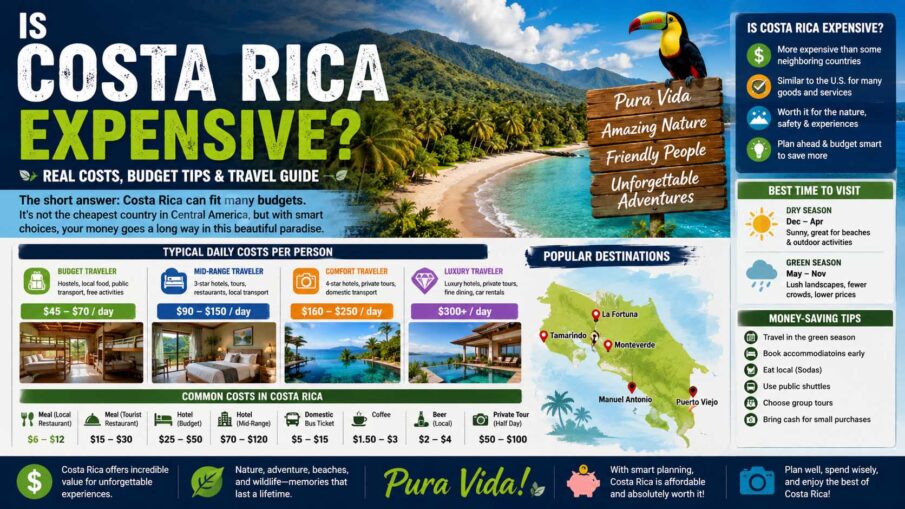
Costa Rica looks like a tropical paradise, but its prices can surprise travelers expecting a cheap Central American vacation. So, is Costa Rica expensive? Compared with several neighboring countries, Costa Rica can be relatively expensive, especially in popular beach towns and major tourist areas. However, you can still control your costs by choosing local restaurants, modest accommodations, public transportation, and a carefully planned mix of free and paid activities.
How much you actually spend depends heavily on where you stay and how you travel. A backpacker using buses and hostels can explore the country on a moderate budget, while a traveler booking private transfers, luxury eco-lodges, and guided adventures can spend several times more.
Understanding the major costs before booking makes it much easier to build a Costa Rica trip that matches your budget.
Is Costa Rica Expensive to Visit?
For travelers asking is Costa Rica expensive to visit, the answer is relative. It is generally not the cheapest destination in Central America, yet it can still offer good value for travelers who prioritize nature, wildlife, beaches, and outdoor experiences.
Popular destinations such as Manuel Antonio, Tamarindo, La Fortuna, and some parts of the Nicoya Peninsula can feel particularly expensive because tourism demand is high.
Meanwhile, less touristy towns may offer cheaper accommodation and food.
A rough daily planning budget per person might look like this:
| Travel Style | Estimated Daily Budget (USD) |
|---|---|
| Budget traveler | $50–$90 |
| Mid-range traveler | $100–$200 |
| Comfortable/upscale | $200–$350+ |
| Luxury traveler | $400+ |
Your actual costs will vary according to season, location, exchange rates, accommodation type, transportation, and activities.
For travelers comparing tropical destinations, researching is puerto rico expensive can also provide useful context because accommodation, activities, and restaurant choices strongly influence the cost of both trips.
Why Can Costa Rica Feel Expensive?
Tourism is a major part of Costa Rica’s economy, and many popular destinations have developed around international visitors.
As a result, prices in tourist areas can be noticeably higher than in places primarily serving local residents.
Imported goods can also cost more than travelers expect. Meanwhile, guided wildlife tours, adventure activities, national parks, private transportation, and beachfront accommodation can quickly raise the overall price of a vacation.
The good news is that many expenses remain optional.
You do not need a beachfront resort, private driver, or organized tour every day to enjoy Costa Rica. Instead, careful choices can dramatically change the final cost.
How Much Does Accommodation Cost?
Where you sleep will probably be one of your largest expenses.
Hostels and simple guesthouses may start around $20–$50 per night, although prices can be higher in famous tourist destinations or during peak travel periods.
Budget hotels and private rooms might commonly fall around $50–$100. Meanwhile, comfortable mid-range properties can cost approximately $100–$250 per night.
Upscale resorts and eco-lodges may charge $250–$500 or considerably more.
Location matters as much as quality.
A basic room close to a famous beach may cost more than a significantly nicer property in a less visited area. Therefore, decide whether being directly beside an attraction is worth paying extra.
Families and groups should also compare vacation rentals with traditional hotel rooms. A property with several bedrooms and a kitchen may provide better overall value when costs are divided among multiple travelers.
Food Costs Can Be Surprisingly Manageable
Restaurant prices vary widely across Costa Rica.
Eating every meal at tourist-oriented beachfront restaurants can become expensive. However, local restaurants known as sodas can offer much better value.
A typical casado may include rice, beans, salad, plantains, and a choice of protein. These local meals are filling and often considerably cheaper than food at international-style restaurants.
As a general planning guide, travelers might pay:
- $5–$10 for an inexpensive local meal
- $10–$25 for a casual restaurant meal
- $25–$50+ for a more upscale dining experience
Prices vary considerably by location.
If your accommodation includes breakfast, you can reduce daily food expenses further. Likewise, apartments with kitchens allow families and long-term travelers to prepare some meals themselves.
Transportation Can Change Your Entire Budget
Costa Rica gives travelers several transportation choices, and the price differences can be substantial.
Public Buses
Buses are generally the cheapest way to travel between many destinations.
However, journeys can take longer, routes may require connections, and schedules may not always fit a tight itinerary.
For budget travelers with plenty of time, buses can dramatically reduce costs.
Shared Shuttles
Tourist shuttles provide more convenience while remaining cheaper than many private transfers.
They can be especially useful when traveling between major tourism hubs such as La Fortuna, Monteverde, and popular coastal areas.
Rental Cars
A rental vehicle provides freedom, particularly if you want to visit remote beaches or rural destinations.
However, compare the full cost rather than the advertised base rental rate. Insurance, fuel, parking, road conditions, vehicle type, and optional equipment can substantially affect your final expense.
Private Transfers
Private transportation is convenient for families and groups, but it can become one of the most expensive ways to move around the country.
Therefore, reserve it for routes where the convenience genuinely justifies the price.
Is Costa Rica Expensive During Peak Season?
Timing can have a noticeable impact on your travel budget.
The country’s Pacific side broadly experiences a drier season and a wetter or “green” season, although regional climate patterns vary.
December Through April
These months generally bring drier conditions to many Pacific destinations, so they are popular with visitors escaping colder climates.
Consequently, accommodation demand can rise, particularly around Christmas, New Year, Easter, and other busy periods.
Travelers researching the best time to visit costa rica should balance comfortable weather against potentially higher hotel rates and larger crowds.
May Through November
The green season generally brings more rain to much of the Pacific side.
However, landscapes become lush, visitor numbers can fall, and accommodation deals may be easier to find.
Rain does not necessarily mean nonstop storms every day. In many locations, travelers can experience clearer mornings followed by afternoon or evening showers.
September and October can be particularly wet on parts of the Pacific coast, while Caribbean weather patterns differ.
What Is the Cheapest Time to Visit Costa Rica?
If your priority is saving money, parts of the green season can offer excellent value.
May, June, September, and October may bring lower prices in some destinations, although conditions differ across the country.
September and October deserve extra planning because heavy rainfall can affect roads and outdoor activities in some Pacific regions.
Meanwhile, Costa Rica’s Caribbean coast follows a different seasonal pattern, so there is no single month that guarantees the cheapest price and ideal weather everywhere.
When choosing dates, compare accommodation rates for the specific places on your itinerary.
Travelers considering the best month to visit costa rica should therefore look beyond national averages and consider both the region and activities they want to experience.
Activities: Where Costs Add Up Quickly
Costa Rica’s natural attractions are a major reason to visit, yet activities can become a significant part of the vacation budget.
Popular paid experiences include:
- Zip-lining
- Whitewater rafting
- Surf lessons
- Guided wildlife walks
- Hot springs
- Snorkeling and diving
- Waterfall tours
- Boat trips
- Canopy experiences
Some guided tours can cost $50–$150 or more per person.
A family of four can therefore spend several hundred dollars on a single day of activities.
Instead of booking an organized experience every day, choose two or three activities that matter most.
Then, mix them with beaches, town exploration, hiking where appropriate, and other inexpensive experiences.
National Parks and Wildlife Experiences
Costa Rica is famous for its biodiversity, so many visitors understandably want to see monkeys, sloths, tropical birds, reptiles, and other wildlife.
National parks can provide excellent experiences, although entrance fees and guide costs should be included in your budget. The official Costa Rica Tourism Board travel guidance provides current planning information about park fees, seasonal costs, transportation, taxes, and other expenses travelers may encounter.
Hiring a naturalist guide can make wildlife easier to spot, particularly in dense rainforest environments. Still, you do not necessarily need a guide for every park visit.
Research each destination before deciding.
For example, spending more on one high-quality guided wildlife experience may provide better value than paying for several similar tours.
How Expensive Is Costa Rica Compared With Other Destinations?
When travelers ask how expensive is Costa Rica, comparisons depend heavily on travel style.
Costa Rica may feel expensive compared with some Central American destinations, especially for hotels, organized tours, and rental vehicles.
However, it may feel more manageable than certain premium island or northern European destinations.
For instance, travelers asking is iceland expensive face a different cost structure where accommodation, restaurant meals, and transportation can become particularly costly.
Meanwhile, someone researching is croatia expensive may encounter wider seasonal differences in European coastal destinations.
Rather than choosing a country based only on average daily costs, consider what you receive for your money. Costa Rica’s appeal lies heavily in its wildlife, landscapes, volcanoes, forests, beaches, and outdoor activities.
Is Costa Rica Expensive for Families?
Costa Rica can become expensive for families because activity prices multiply with each traveler.
Four individual zip-line or wildlife-tour tickets, for example, can create a large single-day expense.
However, families can control costs with strategic accommodation.
A vacation rental or family room with breakfast can reduce food spending. Likewise, staying several nights in each destination rather than moving constantly can lower transportation costs.
Children may qualify for reduced prices at some attractions, although age rules vary.
Therefore, check official prices before building your activity budget.
Budget vs. Mid-Range Costa Rica Trip
Consider two travelers visiting for seven days.
A budget traveler might stay in hostels or simple guesthouses, eat primarily at local restaurants, travel by bus, and select only a few paid activities.
That traveler might spend roughly $400–$700 excluding international airfare.
Meanwhile, a mid-range traveler staying in comfortable hotels, using shuttles or a rental car, eating at a mixture of restaurants, and booking several tours could spend around $900–$1,600 or more.
Luxury resorts, private tours, domestic flights, premium dining, and private transfers can push costs far beyond these estimates.
Again, these numbers are broad planning ranges rather than fixed prices.
Is Costa Rica Expensive to Live In?
The question is Costa Rica expensive to live has a different answer from the cost of taking a vacation.
Residents and long-term visitors need to consider rent, groceries, utilities, transportation, healthcare, insurance, residency requirements, and everyday household expenses.
Location makes a major difference.
Living in a popular beach community that attracts international residents can cost considerably more than living in a less touristy inland town.
Likewise, imported products may be expensive, while locally produced foods and services can offer better value.
So, is it expensive to live in Costa Rica? It can be, particularly if you expect a lifestyle centered around imported goods, tourist destinations, private transportation, and premium housing. However, costs vary greatly according to lifestyle and location.
Short-term travelers should avoid using expat cost-of-living figures as their primary vacation budget because the expenses are fundamentally different.
Easy Ways to Save Money in Costa Rica
You do not need to remove the best experiences from your itinerary just to save money.
Start by choosing your priorities.
If seeing wildlife with a professional guide matters most, spend money on that experience and reduce costs elsewhere.
Eat at local sodas instead of tourist restaurants for every meal. Likewise, refill a reusable water bottle where the local water supply and current guidance make that appropriate rather than constantly purchasing small bottles.
Stay slightly outside premium beachfront zones when transportation is practical.
Also, avoid moving to a different destination every day. Costa Rica may look small on a map, yet travel times between destinations can be longer than expected.
Slow travel reduces transportation costs while giving you more time to enjoy each location.
A Practical 7-Day Costa Rica Budget
Here is a rough mid-range estimate for one traveler, excluding international airfare:
| Category | Estimated 7-Day Cost (USD) |
|---|---|
| Accommodation | $350–$800 |
| Food | $175–$350 |
| Transportation | $100–$350 |
| Activities | $150–$400 |
| Park fees and extras | $50–$150 |
| Estimated Total | $825–$2,050 |
A couple sharing rooms and transportation may lower the per-person accommodation cost.
Meanwhile, a solo traveler paying for private rooms and transfers alone could spend more.
Common Budget Mistakes to Avoid
Trying to visit too many destinations is one of the biggest mistakes.
Constant travel means more buses, shuttles, fuel, rental-car days, or private transfers. Instead, choose two or three bases and explore them properly.
Another mistake is judging a hotel only by its nightly rate.
A cheaper property far from restaurants and activities may require taxis or a rental vehicle, which can erase the savings.
Travelers also sometimes underestimate activity costs.
Build tours and park visits into your budget before booking accommodation so you know what the entire trip will cost.
Finally, do not choose the rainy season purely because a hotel is cheaper. First, make sure seasonal conditions suit the activities you actually want to do.
Is Costa Rica Expensive? FAQs
How Much Money Do I Need for a Week in Costa Rica?
A budget traveler might spend roughly $400–$700 excluding flights, while a mid-range traveler could spend around $900–$1,600 or more. Your itinerary, accommodation, transportation, and activities will determine the actual amount.
Is Costa Rica Expensive Compared With the US?
Some tourist-oriented hotels, restaurants, and activities can approach prices that feel familiar to U.S. travelers. However, local meals and public transportation may cost considerably less. The comparison also depends on which part of the United States you use as a reference.
Can You Travel Costa Rica for $100 a Day?
Yes, many travelers can build a trip around approximately $100 per person per day by choosing modest accommodation, local food, buses, and limited paid activities. However, popular destinations and peak-season dates can make that target harder.
Why Are Hotels in Costa Rica Expensive?
Tourism demand, location, season, property type, amenities, and operating costs all affect hotel prices. Beachfront resorts and famous eco-lodges usually cost much more than simple inland guesthouses.
Is Food Expensive in Costa Rica?
Tourist restaurants can be relatively expensive, while local sodas usually provide better value. Cooking some meals can reduce costs further.
Do I Need Cash in Costa Rica?
Cards are widely accepted in many tourism businesses, but carrying some local currency can be useful for smaller purchases and businesses. Before traveling, check current payment guidance and notify your bank if necessary.
Plan for Experiences, Not Just Prices
So, is Costa Rica expensive? It can cost more than travelers expect from a Central American destination, especially when a trip includes upscale hotels, rental vehicles, private transportation, and multiple guided activities.
Still, Costa Rica does not require a luxury budget. Local restaurants, public buses, simple accommodations, slower itineraries, and selective tours can make the country far more manageable.
Build your budget around the experiences you care about most. If wildlife, rainforests, volcanoes, and beaches are your priorities, spend on the activities that help you experience them properly and save on the parts of the trip that matter less. That approach gives you a better vacation without paying premium prices at every turn.