
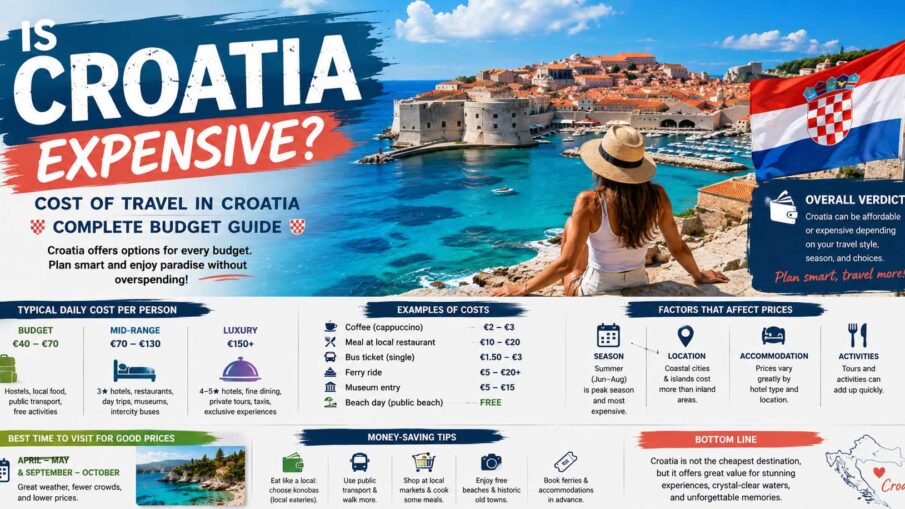
If you are planning a European vacation, you may be wondering, is Croatia expensive compared with nearby destinations? The answer depends heavily on where you stay, when you travel, and how you spend. Croatia can still offer good value, especially outside its most famous coastal areas, but places such as Dubrovnik, Hvar, and central Split can become noticeably more expensive during the summer peak season.
For budget travelers, Croatia can be manageable with guesthouses, local bakeries, buses, ferries, and free outdoor attractions. Meanwhile, mid-range and luxury visitors can easily spend much more on waterfront hotels, private boat tours, beach clubs, fine dining, and island-hopping.
So, instead of asking whether Croatia is simply cheap or expensive, it helps to break the trip into accommodation, food, transportation, attractions, and season.
Is Croatia Expensive to Visit?
For many travelers, the cost of visiting Croatia has no single answer because prices vary sharply between inland cities and popular coastal destinations.
Zagreb and smaller inland towns may feel more affordable than heavily visited areas along the Adriatic coast. Likewise, staying a few streets away from a historic center can reduce accommodation costs considerably.
A budget traveler may be able to travel on roughly €45–€70 per person per day, excluding international flights. Meanwhile, a comfortable mid-range traveler may spend around €90–€180 per day. Luxury travel can easily exceed €250 per person daily.
These figures are planning estimates rather than fixed prices. Your actual spending will depend on the season, hotel category, dining habits, transportation choices, and how many paid activities you book.
For official destination information when planning your itinerary, the Croatian National Tourist Board provides information about activities and experiences across the country.
How Expensive Is Croatia for Different Travel Styles?
The easiest way to understand travel costs in Croatia is to compare typical travel styles.
| Travel Style | Approximate Daily Budget per Person* | Typical Choices |
|---|---|---|
| Budget | €45–€70 | Hostels, guesthouses, bakeries, buses |
| Mid-range | €90–€180 | Comfortable hotels, restaurants, ferries, attractions |
| Luxury | €250+ | Premium hotels, private tours, upscale dining |
*International flights are not included, and prices vary by season and destination.
Budget travelers often save the most by booking accommodation early and using supermarkets or bakeries for some meals. In contrast, mid-range visitors may spend more on central hotels, sit-down restaurants, and island excursions.
Luxury travelers have plenty of premium options, especially around Dubrovnik, Hvar, Split, and upscale coastal resorts.
Accommodation Is Usually the Biggest Expense
Hotels and apartments can take up the largest part of your Croatia budget.
During summer, accommodation prices rise sharply in the most popular destinations. For example, Dubrovnik’s Old Town area and central Split can become much more expensive than smaller coastal towns or inland locations.
If you want better value, consider staying slightly outside the historic center. A short walk or local bus ride may save a meaningful amount over several nights.
Private apartments can also offer good value for couples and families, especially when they include a kitchen. As a result, you can prepare breakfast or simple meals instead of eating out every time.
Travelers planning a broader European itinerary may also want a practical what to pack for Europe trip checklist, since packing efficiently can reduce baggage charges and unnecessary purchases on arrival.
Food Costs in Croatia
Croatian food costs vary by location and restaurant type.
Bakeries, supermarkets, takeaway counters, and local cafés are usually the most budget-friendly choices. Meanwhile, restaurants directly beside famous squares, harbors, or historic attractions often charge more.
Traditional dishes worth trying include grilled fish, black risotto, peka, ćevapi, seafood pasta, and regional stews. However, seafood can be expensive in heavily touristed areas, particularly when restaurants price it by weight.
A simple bakery breakfast may cost only a few euros, while a casual lunch might cost around €10–€20. Dinner at a mid-range restaurant can cost considerably more, especially with drinks or seafood.
To save money, mix restaurant meals with supermarket snacks, bakery lunches, and local markets.
Is Split Croatia Expensive?
Many travelers specifically ask whether Split is expensive because the city is one of the country’s most popular bases for island trips.
Split is not necessarily the most expensive place in Croatia, but central areas around Diocletian’s Palace and the waterfront can feel pricey in summer.
Accommodation costs often rise during July and August, especially when events, cruises, and island traffic increase demand. Restaurants along the Riva promenade also tend to cost more than those a few streets away.
However, Split can still work for a moderate budget if you stay outside the immediate historic core, use local buses, and eat at neighborhood bakeries or casual restaurants.
The city also offers several low-cost activities, including walking through old streets, visiting viewpoints, and spending time at public beaches.
Dubrovnik Is Usually More Expensive
Dubrovnik is often one of Croatia’s costliest destinations.
Its popularity, limited historic center, cruise traffic, and international demand can push prices higher than in many other Croatian cities.
Accommodation inside or near the Old Town can be expensive, while restaurants and attractions may also cost more than elsewhere.
Still, you can reduce costs by staying in Lapad, Gruž, or another nearby area and using public transport to reach the center.
If Dubrovnik is a major priority, consider spending fewer nights there and dividing the rest of your trip between less expensive destinations.
When Is Croatia Most Expensive?
Croatia is generally most expensive during the summer high season, especially from late June through August.
July and August usually bring the highest demand for beaches, islands, ferries, and coastal hotels. Therefore, travelers visiting during this period should book accommodation and transportation well in advance.
May, June, September, and early October may provide warm weather with lower prices and fewer crowds in many areas.
Winter can be much cheaper, especially away from the coast. However, some island businesses, ferries, and seasonal attractions may operate on reduced schedules.
Travelers comparing Mediterranean destinations may also find it useful to review the best time to visit Italy, since Croatia and Italy share similar seasonal travel patterns in some coastal areas.
Cheapest Time to Visit Croatia
If your main goal is to save money, late fall, winter, and early spring generally offer lower accommodation prices.
However, the cheapest period is not always the best for every type of trip.
If you want beaches and island hopping, winter will not provide the same experience as summer. Therefore, shoulder season is often the better compromise.
May and September can offer pleasant temperatures, fewer crowds, and lower hotel rates than peak summer.
Likewise, travelers comparing nearby destinations may want to check the cheapest time to visit Italy because combining Croatia and Italy can sometimes make sense on a broader European itinerary.
Transportation Costs Around Croatia
Croatia has a useful network of buses, ferries, roads, and domestic connections.
Buses are widely used between many cities and towns. They are often cheaper than private transfers.
Ferries are essential for island travel. Prices vary depending on the route, season, operator, vehicle transport, and whether you use a passenger ferry or car ferry.
Renting a car can be useful if you want to explore smaller towns, national parks, or rural areas. However, rental fees, fuel, tolls, parking, and insurance can increase costs.
For cities such as Dubrovnik and Split, you may not need a car at all. Walking and public transport can often be more practical.
Island Hopping Can Increase Your Budget
Croatia’s islands are beautiful, but frequent island hopping can add significant cost.
Ferries themselves may be reasonable, yet accommodation, taxis, boat excursions, and dining on popular islands can increase your daily spending.
Hvar is one of the better-known examples. During peak summer, hotels, nightlife, and restaurants can be expensive.
If you want to explore islands on a budget, choose fewer bases and stay longer in each place. This approach reduces ferry costs and saves time.
You can also consider less famous islands or smaller coastal towns, which may offer a more relaxed experience at lower prices.
Attractions and Activities
Croatia offers a mix of free and paid experiences.
Walking historic centers, relaxing on beaches, exploring local markets, and hiking some scenic areas can cost little or nothing.
However, entry fees for national parks, museums, historic walls, guided tours, and boat trips can increase your total budget.
Popular activities include:
- Walking Dubrovnik’s city walls
- Visiting Plitvice Lakes National Park
- Exploring Krka National Park
- Taking boat trips around islands
- Visiting caves and coastal viewpoints
- Joining wine or food tours
- Kayaking near Dubrovnik
- Touring historic Split
Rather than paying for every attraction, choose the experiences that matter most to you.
Is It Expensive to Live in Croatia?
The cost of living in Croatia is different from the cost of taking a short vacation.
Long-term residents usually spend less per day because they can rent monthly apartments, shop at supermarkets, cook at home, and avoid tourist-oriented businesses.
However, living costs vary widely between Zagreb, coastal cities, islands, and smaller towns.
Dubrovnik and Split can be expensive for long-term housing, especially during the summer season when landlords may prefer short-term tourist rentals.
Meanwhile, smaller inland locations can be much more affordable.
Anyone considering an extended stay should budget for rent, utilities, groceries, transport, healthcare or insurance, residency requirements, and personal expenses.
Croatia Compared With Other European Destinations
Croatia is no longer one of Europe’s cheapest destinations, especially along the coast.
Compared with Iceland, though, everyday travel costs may still feel much lower. Travelers asking is Iceland expensive will generally find Iceland significantly more costly for food, hotels, rental cars, and many activities.
Compared with Italy, Croatia can be cheaper in some areas but similarly priced in popular coastal destinations during peak season.
Meanwhile, countries in Central and Eastern Europe may offer lower costs than Dubrovnik or Hvar.
The best comparison depends on where you travel and how you spend rather than national averages alone.
Croatia for Couples and Honeymooners
Croatia works well for couples because it offers beaches, old towns, islands, wine regions, and scenic coastal drives.
However, a romantic trip does not need to be luxury-priced.
Couples can save by choosing small guesthouses, traveling in shoulder season, and mixing famous destinations with quieter towns.
Croatia may also fit naturally into lists of affordable honeymoon destinations because couples can create a high-quality experience without necessarily paying Western European luxury prices.
Still, Dubrovnik and Hvar can become expensive during peak season, so booking early matters.
Practical Ways to Save Money in Croatia
Saving money does not require sacrificing the trip.
First, avoid peak summer if your schedule allows. Shoulder season can reduce both hotel and transportation costs.
Next, stay a little outside the busiest tourist areas. Even a 10- or 15-minute walk from the center can lower room rates.
Also, use bakeries and supermarkets for some meals. Croatia has many local bakeries, and they are useful for inexpensive breakfasts or lunches.
Likewise, use buses and ferries rather than private transfers whenever practical.
Finally, compare attraction prices before arriving. A little planning helps you decide which paid experiences are genuinely worth the cost.
Common Budget Mistakes
One mistake is assuming all of Croatia is equally priced.
Dubrovnik, Hvar, and central Split often cost much more than smaller towns.
Another mistake is leaving summer accommodation until the last minute. Limited supply can push prices much higher.
Travelers also sometimes underestimate ferry, parking, and transfer costs when visiting several islands.
Likewise, dining only along waterfront promenades can increase food spending quickly.
A better approach is to plan your biggest expenses first and keep some flexibility for smaller daily costs.
FAQs About Croatia Travel Costs
Is Croatia Cheaper Than Italy?
It can be, especially outside Croatia’s most popular tourist destinations. However, Dubrovnik and Hvar can reach similar price levels to well-known Italian destinations during summer.
Is Croatia Expensive for Food?
Not necessarily. Bakeries, supermarkets, and casual restaurants can be affordable, while seafood restaurants and tourist-zone dining can cost considerably more.
Is Croatia Expensive for Hotels?
Hotel prices vary sharply by season. Summer accommodation in Dubrovnik, Split, and the islands can be expensive, while shoulder-season stays often offer better value.
How Much Money Should I Budget for One Week in Croatia?
Budget travelers might spend around €315–€490 per person for seven days excluding flights, while mid-range travelers may spend roughly €630–€1,260. These are general planning estimates, so your actual costs depend on accommodation, season, transportation, and activities.
Is Croatia Good for Budget Travelers?
Yes, especially if you travel outside peak summer, choose guesthouses or hostels, use buses, and limit expensive island excursions.
Planning a Croatia Trip That Fits Your Budget
So, is Croatia expensive? It can be, especially in Dubrovnik, Hvar, and coastal hotspots during July and August. However, Croatia still gives travelers plenty of control over spending.
The smartest approach is to choose your season carefully, book accommodation early, mix famous destinations with quieter towns, and avoid spending every meal or activity in the most tourist-heavy areas.
With a realistic budget and a little planning, Croatia can deliver beaches, historic cities, islands, food, and culture at a cost that remains manageable for many travelers.