
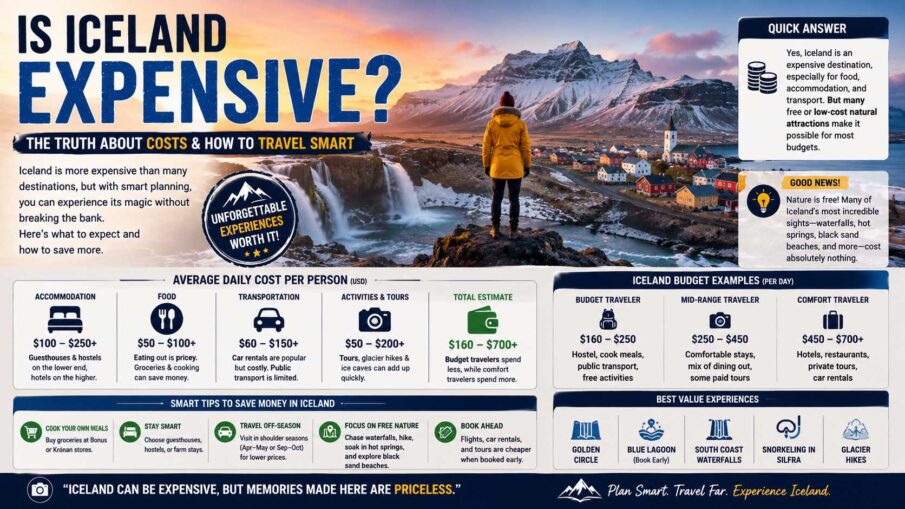
You have probably heard stories about pricey Reykjavík hotels, expensive restaurant meals, and costly rental cars, so is Iceland expensive for the average traveler? Yes, Iceland is generally a high-cost destination, especially compared with many parts of Europe. However, a trip does not have to become unaffordable. Free natural attractions, grocery shopping, careful accommodation choices, and smart transportation planning can reduce the total considerably while still giving you the Iceland experience you came for.
Why Is Iceland So Expensive?
Several factors explain Iceland’s high prices.
First, Iceland is a relatively small island nation with a limited domestic market. Many goods need to be imported, which adds transportation and distribution costs.
Meanwhile, wages and general operating expenses are relatively high. Hotels, restaurants, rental companies, tour providers, and other businesses factor those costs into their prices.
Tourism demand also matters. During popular travel periods, especially summer, accommodation and rental vehicle demand rises sharply.
However, Iceland has one major advantage for budget travelers: many of its most memorable attractions are landscapes rather than ticketed sights. Waterfalls, beaches, scenic drives, hiking areas, and viewpoints often cost little or nothing to visit.
In fact, the official Visit Iceland budget travel guide highlights grocery shopping, free natural attractions, tap water, and local swimming pools among the ways travelers can control costs.
Therefore, your trip can feel expensive in some categories while still giving you plenty of free experiences.
Is Iceland Expensive to Visit in 2026?
For most visitors, yes. Still, how expensive is Iceland depends heavily on your travel style.
A backpacker using hostels, cooking meals, and taking limited tours may spend far less than a couple staying in upscale hotels and eating in restaurants three times per day.
Likewise, a family sharing a rental vehicle and apartment may get better value per person than a solo traveler paying for everything alone.
As a general planning guide, travelers should expect Iceland to fall into these broad categories:
| Travel Style | Typical Approach | Cost Level |
|---|---|---|
| Budget | Hostel or guesthouse, groceries, free sights | High but manageable |
| Mid-range | Hotel, rental car, mixed dining | Expensive |
| Comfortable | Better hotels, restaurants, tours | Very expensive |
| Luxury | Premium hotels, private tours, fine dining | Extremely expensive |
Instead of setting one fixed daily figure, create separate budgets for accommodation, transport, food, and activities. That approach is more accurate because costs vary dramatically by season and itinerary.
Iceland Accommodation Costs Can Be High
Hotels can consume a large share of an Iceland travel budget, especially in Reykjavík and popular areas along the South Coast.
Summer generally brings stronger demand, so rooms can become noticeably more expensive. Consequently, early booking can make a meaningful difference if your dates are fixed.
Budget travelers should consider guesthouses, hostels, rooms with shared facilities, and campsites. Meanwhile, apartments with kitchen facilities can be particularly useful for couples or families because they reduce restaurant spending.
Some rural accommodations are simpler than city hotels, yet prices can still be high because there may be limited competition in remote areas.
Official tourism listings include a wide range of accommodation types, from campsites and hostels to guesthouses, cottages, apartments, and hotels. Therefore, comparing several accommodation styles can help you find a better fit for your budget.
If you are deciding trip length, knowing how many days in Iceland you genuinely need can prevent paying for extra hotel nights that add little to your itinerary.
Why Food Makes Iceland Expensive for Travelers
Eating every meal in restaurants is one of the fastest ways to make Iceland feel extremely expensive.
However, you do not need to avoid local food completely.
A practical strategy is to buy breakfast foods, snacks, drinks, and some evening meals from supermarkets while budgeting for one restaurant meal on selected days.
Apartments and guesthouses with kitchens become especially valuable here.
Meanwhile, bakeries, casual cafés, soup spots, food halls, and simple takeaway restaurants can provide alternatives to full-service dining.
Also, bring a reusable water bottle. Icelandic tap water is widely available, so routinely buying bottled water is usually unnecessary.
If you want to try local dishes, choose the foods that genuinely interest you rather than spending heavily simply because something is marketed as a must-try tourist experience.
Is Transportation Expensive in Iceland?
Transportation can be one of the biggest variables in your budget.
Getting From Keflavík Airport to Reykjavík
Keflavík International Airport is outside Reykjavík, so international travelers need to plan an airport transfer.
Airport buses provide one option for reaching Reykjavík. Taxi services and private transfers are also available, but their costs can differ significantly.
For solo travelers or couples, an airport coach can therefore be more economical than private transportation. However, always confirm current fares before traveling because prices can change.
Renting a Car
A rental car provides enormous flexibility, particularly if you want to explore the Golden Circle, South Coast, Snæfellsnes, or Ring Road.
However, the headline rental rate is only part of the cost.
You should also budget for:
- Fuel
- Insurance options
- Parking
- Possible one-way or extra-driver fees
- Road or weather-related itinerary changes
Vehicle prices vary by season, class, transmission, and demand.
A small car may be enough for a straightforward summer itinerary on paved roads. Conversely, some routes or seasons may require a different vehicle, and you must always follow road restrictions and rental-company rules.
How to Save Money on an Iceland Road Trip
The easiest way to control road-trip costs is to avoid unnecessary driving.
Instead of racing around the whole country in a few days, choose one or two regions and explore them properly.
For example, a short trip could combine Reykjavík, the Golden Circle, and South Coast rather than attempting the entire Ring Road.
This approach saves fuel, reduces accommodation changes, and gives you more time at each destination.
Meanwhile, traveling with companions lets you divide rental and fuel costs. Therefore, a self-drive trip can become more reasonable on a per-person basis for groups.
Before driving, check current road and weather conditions. Iceland’s conditions can change quickly, so route flexibility can protect both your budget and your safety.
Free Attractions Help Balance Iceland Travel Costs
This is where Iceland can balance out its high accommodation and food costs.
You can see dramatic waterfalls, volcanic scenery, black-sand beaches, mountains, coastal views, and geothermal landscapes without buying an expensive attraction ticket every day.
Popular natural stops such as waterfalls and beaches may have parking charges or other local fees, yet simply enjoying Iceland’s scenery usually costs far less than filling an itinerary with paid attractions.
This makes Iceland different from destinations where every major experience requires admission.
However, organized glacier walks, ice caves, whale watching, snowmobiling, horseback riding, geothermal spas, and other guided experiences can increase the total quickly if you book several.
Therefore, pick one or two paid experiences that matter most to you rather than booking everything.
Is Iceland Expensive in Summer?
Summer is often one of the more expensive periods because travelers are attracted by long daylight hours, relatively mild conditions, easier road access, hiking, and outdoor sightseeing.
Higher demand can raise hotel and rental-car prices. Therefore, summer travelers should book major expenses early whenever possible.
The upside is that long daylight hours allow you to fit more sightseeing into each day, which can make a shorter trip surprisingly productive.
If price and weather are both important to you, reviewing the best time to go to Iceland can help you decide whether peak summer is worth the premium.
Can Shoulder Season Make Iceland Less Expensive?
Spring and autumn can offer a better balance between cost, daylight, weather, and crowds.
However, Icelandic conditions are unpredictable, so lower prices may come with more rain, wind, cold, or limited daylight.
Spring gradually brings longer days, while autumn brings darker evenings and the possibility of northern lights.
Winter can also offer lower-cost travel opportunities on some dates, but severe weather can disrupt driving and sightseeing.
Therefore, the cheapest dates do not necessarily provide the best value if your planned activities depend on road access or long daylight hours.
Northern Lights Trips Can Fit Different Budgets
You do not necessarily need an expensive tour to see the aurora.
If conditions are favorable and you have safe transportation to a dark location, northern lights viewing itself is free.
However, tours can be useful for travelers who do not want to drive at night or who prefer guides familiar with local conditions.
If aurora viewing is a priority, research the best time to see northern lights in Iceland before choosing your dates. Dark nights matter, which means summer is generally unsuitable despite its excellent road-trip conditions.
Travelers considering other countries can also compare the best places to see northern lights before deciding whether Iceland provides the best combination of scenery, accessibility, and budget.
Packing Properly Can Save Money
Iceland is not the place to arrive without waterproof layers and then discover you need expensive outdoor gear immediately.
Weather changes quickly, while wind and rain can make mild temperatures feel much colder.
Therefore, pack:
- Waterproof outer layer
- Warm insulating layers
- Comfortable walking shoes
- Hat and gloves outside summer
- Reusable water bottle
- Small daypack
- Swimwear for geothermal pools
- Chargers and travel adapters
- Sunglasses and sunscreen
- Basic snacks for road-trip days
A dedicated Iceland packing list can help you prepare for the season and avoid expensive last-minute purchases.
At the same time, do not overpack specialized equipment that your activities do not require.
Is It Expensive to Live in Iceland?
Travelers sometimes ask is it expensive to live in Iceland when they see prices in supermarkets or restaurants.
Yes, Iceland has a high overall cost structure. However, living costs and vacation costs should not be directly compared.
Residents pay long-term housing, utilities, transportation, and everyday expenses, while tourists face short-term hotel rates, rental vehicles, restaurant meals, and sightseeing costs.
Consequently, visitor spending can appear especially high because tourists frequently purchase the most expensive categories at once.
If your concern is simply planning a holiday, focus on tourism expenses rather than general cost-of-living rankings.
A Practical Iceland Budget Strategy
A good Iceland budget begins before you book the flight.
First, calculate your accommodation total because this is often one of the least flexible expenses.
Next, decide whether you need a rental car for the full trip. If you plan to spend two days exploring Reykjavík, for example, you may not need to start paying for a vehicle immediately.
Then, set a realistic food plan. Choosing supermarket breakfasts and lunches while eating dinner out can reduce spending without making the trip feel restrictive.
After that, choose your paid activities.
For example, you might spend on a glacier tour but enjoy waterfalls, beaches, hikes, and scenic viewpoints for free on the remaining days.
Finally, keep a buffer for weather-related changes. Iceland is one destination where flexibility can protect both your safety and your budget.
Common Iceland Budget Mistakes to Avoid
The first mistake is booking a cheap flight without researching the total trip cost. Airfare may be attractive while accommodation and transportation are considerably more expensive.
Another mistake is eating every meal in heavily visited areas without checking alternatives.
Likewise, some travelers rent a larger vehicle than their route requires.
Trying to see the entire country too quickly can also cost more. Long daily drives increase fuel use while turning the trip into a race between attractions.
Finally, avoid building an itinerary with no financial buffer. Weather, road changes, parking fees, and unexpected purchases can raise your final cost.
FAQs About Iceland Travel Costs
How Expensive Is Iceland for Tourists?
Iceland is generally an expensive destination, particularly for accommodation, restaurant dining, rental cars, and guided activities. However, grocery shopping and free natural attractions can keep overall costs under control.
Can You Visit Iceland on a Budget?
Yes. Stay in guesthouses or hostels, cook some meals, travel outside peak dates, share transportation costs, and focus on free natural sights.
Is Reykjavík Expensive?
Reykjavík can feel expensive because hotels, restaurants, bars, and paid experiences add up quickly. However, walking around the city, visiting the waterfront, and exploring neighborhoods can cost very little.
Do I Need Cash in Iceland?
Card payments are widely used, so most travelers can manage everyday purchases without carrying large amounts of cash. Still, check your bank’s foreign transaction fees before traveling.
How Much Should I Budget for Iceland?
There is no reliable universal figure because season, accommodation type, rental vehicles, food habits, and tours dramatically change the total. Therefore, build your budget category by category rather than relying on a single average daily number.
Is Iceland Worth the High Cost?
For travelers who value dramatic landscapes, road trips, waterfalls, volcanic scenery, hiking, geothermal experiences, and northern lights, Iceland can offer excellent value despite high prices. However, careful planning makes the difference.
Making an Iceland Trip Worth the Money
So, is Iceland expensive? Yes, particularly when you compare hotels, restaurant meals, transportation, and guided activities with many other European destinations. Still, high prices do not mean every day of the trip has to be expensive.
Spend strategically on accommodation, transportation, and the experiences you care about most. Then, build the rest of your itinerary around Iceland’s free natural scenery, supermarket meals, scenic drives, and self-guided stops.
With realistic expectations and a well-planned route, you can enjoy Iceland without treating every travel day like a luxury vacation.