
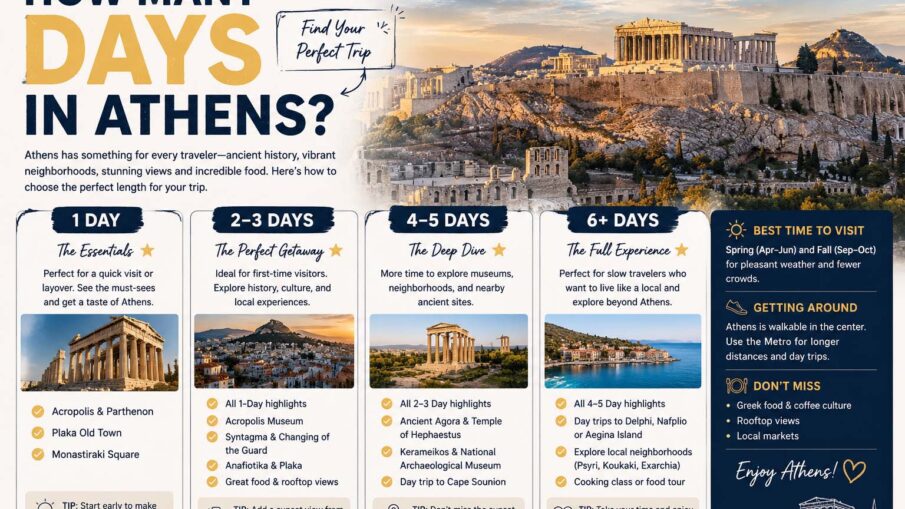
Planning a trip to Greece and wondering how many days in Athens you should spend? The short answer is that 2 to 3 days is ideal for most travelers. This gives you enough time to visit the city’s famous ancient landmarks, explore charming neighborhoods, enjoy Greek cuisine, and experience the modern side of Athens without feeling rushed.
Of course, the perfect length depends on your travel style. Some visitors only need one full day before heading to the Greek islands, while others enjoy spending four or five days discovering museums, local markets, and nearby coastal attractions.
How Many Days in Athens Is Enough?
If you’re asking how many days in Athens is enough, here’s a quick guide based on different travel styles.
| Length of Stay | Best For |
|---|---|
| 1 Day | Cruise passengers or quick stopovers |
| 2 Days | First-time visitors |
| 3 Days | Most travelers |
| 4–5 Days | History lovers and relaxed sightseeing |
| 6+ Days | Athens plus nearby day trips |
For most people, three days provides the best balance between sightseeing and enjoying the city’s atmosphere.
How Many Days Do You Need in Athens?
The answer depends on what you want from your trip.
One Day in Athens
One day allows you to see the city’s highlights.
You can comfortably visit:
- The Acropolis
- The Parthenon
- Acropolis Museum
- Plaka
- Monastiraki Square
You’ll experience Athens’ most famous attractions, although the pace will be fairly busy.
Two Days in Athens
Two days offers a much more relaxed experience.
Along with the major landmarks, you’ll have time to:
- Wander through Anafiotika
- Visit the Ancient Agora
- Enjoy rooftop restaurants
- Browse local shops
- Experience Athens after sunset
This is often the sweet spot for travelers combining Athens with the Greek islands.
Three Days in Athens
Three days lets you slow down and explore beyond the postcard attractions.
You’ll have time for:
- Museums
- Local neighborhoods
- Scenic viewpoints
- Traditional tavernas
- A half-day coastal excursion
Many experienced travelers recommend this length of stay because it provides a balanced mix of history, culture, sightseeing, and relaxation without feeling rushed.
Why Athens Deserves More Than a Stopover
Many visitors treat Athens as simply the gateway to Santorini or Mykonos.
That’s understandable, but the city has far more to offer than its airport and ferry terminals.
Athens combines:
- Ancient history
- Modern cafés
- Vibrant nightlife
- Street art
- Local markets
- Beautiful viewpoints
- Excellent food
Instead of rushing through, spending an extra day often makes your entire Greece itinerary more rewarding.
If you’re still deciding on travel dates, reading about the best time to go to greece can help you match your visit with pleasant weather, fewer crowds, or lower prices.
Suggested Itinerary Based on Your Stay
Here’s a simple overview before we explore each day in detail.
| Day | Main Focus |
| Day 1 | Ancient Athens |
| Day 2 | Neighborhoods, museums, local food |
| Day 3 | Hidden gems or coastal excursion |
| Day 4+ | Day trips beyond Athens |
This flexible approach works well whether you’re visiting independently or as part of a larger European trip.
Best Neighborhoods to Stay in Athens
Where you stay can make a big difference, especially if you’re only visiting for a couple of days.
Plaka
Plaka is the classic choice.
It’s walkable, charming, and located just below the Acropolis.
Best for:
- First-time visitors
- Families
- Sightseeing
Monastiraki
This lively neighborhood is known for markets, restaurants, and easy transportation.
It’s ideal if you enjoy nightlife and being close to major attractions.
Koukaki
Koukaki offers a quieter atmosphere while remaining within walking distance of the Acropolis.
Many travelers appreciate its local cafés and residential feel.
Syntagma
Syntagma Square serves as Athens’ transportation hub.
It’s convenient for airport transfers, shopping, and exploring the city center.
What Can You See in Two or Three Days?
Athens is surprisingly walkable once you’re in the historic center.
Within two or three days, you can easily visit:
- Acropolis
- Parthenon
- Temple of Olympian Zeus
- Ancient Agora
- Roman Agora
- Acropolis Museum
- National Garden
- Panathenaic Stadium
- Lycabettus Hill
- Plaka
- Monastiraki
Many attractions are located close together, reducing travel time between sights.
Should You Stay Longer?
Some travelers ask whether Athens deserves four or five days.
The answer is yes if you enjoy:
- Archaeology
- Museums
- Food experiences
- Photography
- Slow travel
- Local neighborhoods
Extra days also allow you to avoid rushing between attractions during the hottest hours of the afternoon.
If you enjoy comparing city-break itineraries before planning a European vacation, guides like how many days in london offer another useful perspective on balancing sightseeing with a relaxed pace.
Day Trips Worth Considering
Once you’ve covered Athens’ main attractions, several destinations are easy to reach.
Popular choices include:
- Cape Sounion
- Temple of Poseidon
- Aegina Island
- Hydra
- Delphi
- Corinth
Most can be visited in a single day, making them excellent additions to a three- or four-day itinerary.
Is Athens Family Friendly?
Absolutely.
While the city is famous for ancient ruins, families can also enjoy:
- Interactive museums
- Parks
- Open squares
- Cable car rides
- Local bakeries
- Beaches near the city
Many attractions offer family tickets, and children often enjoy climbing Lycabettus Hill or watching the changing of the guard at Syntagma Square.
With thoughtful planning, Athens works well for couples, solo travelers, families, and groups alike.
Detailed 3-Day Athens Itinerary
If you’re still wondering how many days to spend in Athens, this sample itinerary helps you make the most of three enjoyable days without feeling rushed.
Day 1: Discover Ancient Athens
Start your trip with the city’s world-famous historical sites.
Suggested schedule:
- Visit the Acropolis early in the morning.
- Explore the Parthenon and surrounding temples.
- Walk through the Acropolis Museum.
- Stop for lunch in Plaka.
- Spend the afternoon exploring the Ancient Agora.
- Finish the day with dinner at a rooftop restaurant overlooking the illuminated Acropolis.
Starting early helps you avoid both the largest crowds and the midday heat.
Day 2: Experience Modern Athens
Dedicate your second day to the city’s lively neighborhoods and local culture.
You could visit:
- Monastiraki Flea Market
- Syntagma Square
- National Garden
- Panathenaic Stadium
- Ermou shopping street
- Lycabettus Hill for sunset
This day combines history with everyday life, giving you a better feel for modern Athens.
Day 3: Explore Beyond the Historic Center
Your final day offers flexibility.
Popular options include:
- Cape Sounion and the Temple of Poseidon
- Aegina Island
- Athens Riviera beaches
- National Archaeological Museum
- Local food tour
- Street art walking tour
If your flight leaves later in the evening, you can still fit in several attractions before heading to the airport.
How Many Days in Athens Greece for Different Travelers?
The answer varies depending on your interests.
History Lovers
Plan at least three or four days.
Athens has enough archaeological sites and museums to fill several days comfortably.
Couples
Two or three days provide plenty of time for sightseeing, romantic dinners, and scenic viewpoints.
Families
Three days usually works well because it allows children to explore at a slower pace without rushing between attractions.
Solo Travelers
Athens is easy to navigate, making two or three days ideal for independent travelers.
Best Time to Visit Athens
Although Athens welcomes visitors throughout the year, spring and autumn usually offer the most comfortable weather.
| Season | Weather | Crowds | Best For |
|---|---|---|---|
| Spring | Mild | Moderate | Sightseeing |
| Summer | Hot | High | Island hopping |
| Autumn | Pleasant | Moderate | Walking tours |
| Winter | Cool | Low | Museums and lower prices |
April, May, September, and October are particularly enjoyable months for exploring the city on foot.
Budget Tips
Athens is often more affordable than many other European capitals.
You can save money by:
- Booking accommodation early.
- Purchasing attraction combination tickets.
- Using public transportation instead of taxis.
- Eating at neighborhood tavernas.
- Visiting free viewpoints instead of paid observation decks.
Traveling during the shoulder seasons can also reduce accommodation costs while offering pleasant weather.
Getting Around Athens
One of the biggest advantages of Athens is how compact the historic center is.
Most visitors can easily walk between:
- Plaka
- Monastiraki
- Acropolis
- Syntagma
- Ancient Agora
For longer journeys, the city offers:
- Metro
- Buses
- Trams
- Taxis
- Ride-sharing services
The metro provides a direct connection between Athens International Airport and the city center, making arrivals and departures simple.
Common Mistakes to Avoid
A few planning mistakes can make your visit less enjoyable.
Spending Too Little Time
Many travelers only schedule one day before heading to the islands.
While possible, this often feels rushed.
Visiting the Acropolis at Midday
Summer temperatures can become extremely high.
Arriving shortly after opening provides a much more comfortable experience.
Ignoring Comfortable Footwear
Athens features uneven stone streets and ancient pathways.
Supportive walking shoes make a noticeable difference.
Skipping Local Neighborhoods
Some visitors only see the Acropolis before leaving.
Exploring neighborhoods like Plaka, Koukaki, and Monastiraki gives you a much richer experience.
Comparing Athens with Other Popular City Breaks
If you’re planning several international trips, you may also compare itineraries for destinations such as how many days in tokyo, where modern attractions are spread across a much larger metropolitan area than Athens.
Travelers exploring Europe sometimes continue to northern Italy and ask is milan worth visiting before deciding whether to add another city to their itinerary. Others planning a slower Italian journey often wonder is venice worth visiting, especially if they’re choosing between famous cultural destinations.
Each city offers a completely different travel experience, making Athens a memorable addition to a broader international itinerary.
Frequently Asked Questions
How many days in Athens is enough?
For most visitors, two to three days is enough to see the city’s major attractions while enjoying local neighborhoods and restaurants.
How many days do you need in Athens before visiting the Greek islands?
Two full days work well for travelers heading to islands such as Santorini, Mykonos, or Crete. Three days allows for a more relaxed schedule.
Is Athens worth visiting for four or five days?
Yes. Longer stays allow time for museums, food tours, day trips, and slower exploration beyond the main tourist sites.
Can you see Athens in one day?
Yes, but you’ll need to prioritize the Acropolis, Plaka, and a few nearby attractions. It will be a busy schedule.
Is Athens expensive?
Compared with many Western European capitals, Athens offers a wide range of accommodation, dining, and transportation options to suit different budgets.
Plan Your Athens Trip with Confidence
Knowing how many days in Athens to spend makes planning much easier. While one day covers the highlights, two or three days allow you to appreciate both the city’s remarkable ancient history and its lively modern culture. If your schedule permits, adding an extra day for a nearby island or coastal excursion creates an even more rewarding experience.
Rather than trying to see everything, focus on a realistic itinerary that matches your interests. You’ll have more time to enjoy rooftop dinners, wander through historic neighborhoods, and experience the relaxed rhythm that makes Athens one of Europe’s most fascinating capitals.