
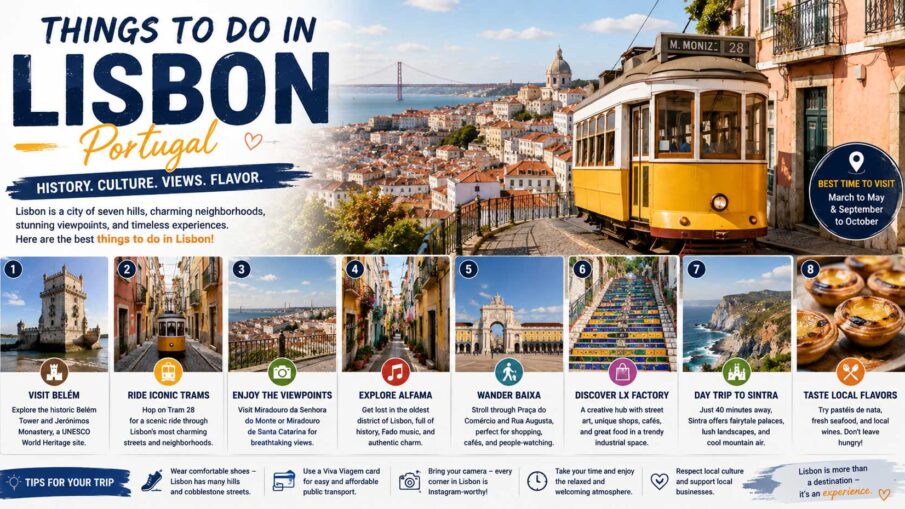
Lisbon is the kind of city where getting slightly lost can become part of the experience. One minute you are following a narrow cobbled lane through Alfama, and the next you reach a viewpoint overlooking terracotta rooftops and the Tagus River. Among the best things to do in Lisbon are exploring historic neighborhoods, visiting Belém, riding the city’s famous trams, eating pastéis de nata, and simply slowing down long enough to enjoy its viewpoints and cafés.
Portugal’s capital suits many types of travelers. History lovers have centuries-old monuments, food travelers can explore markets and neighborhood restaurants, while families and solo visitors have plenty of accessible attractions. Better still, many memorable experiences involve walking rather than expensive tickets.
Here is how to build a Lisbon trip that feels enjoyable rather than rushed.
Best Things to Do in Lisbon for Your First Trip
First-time visitors should concentrate on Lisbon itself before filling their schedule with day trips. The city’s neighborhoods are distinct enough that simply moving between them reveals a different side of the capital.
Wander Through Alfama
Alfama is Lisbon’s oldest and perhaps most atmospheric neighborhood. Its steep streets, tiled buildings, small squares, balconies, and unexpected viewpoints make it ideal for exploring on foot.
Instead of trying to follow a strict route, allow yourself time to wander. However, comfortable shoes are essential because the streets can be steep, uneven, and slippery in places.
The neighborhood is also closely associated with fado, Portugal’s traditional music. Therefore, travelers interested in local culture may want to return in the evening for a fado performance.
Lisbon deserves a place beside Europe’s other famous landmarks destinations because many of its historic sights are surrounded by neighborhoods that are enjoyable attractions in their own right.
Visit São Jorge Castle
Sitting high above central Lisbon, Castelo de São Jorge is one of the city’s most recognizable historic attractions.
The castle grounds provide broad views over Lisbon’s rooftops and the Tagus River. As a result, the attraction appeals even to travelers who are not especially interested in military history.
Go earlier in the day when possible, particularly during busy travel periods. Afterward, walk downhill through Alfama rather than immediately taking transportation elsewhere.
See Praça do Comércio
Praça do Comércio opens onto the Tagus River and provides a dramatic introduction to central Lisbon. Its large open square and distinctive architecture make it an easy addition to a walking route through Baixa.
From here, you can continue toward Rua Augusta, explore nearby streets, or walk along the waterfront.
Since the area is centrally located, it also works well as a meeting point when people in your group want to explore separately.
Explore Belém and Lisbon’s Maritime History
Several of the best things to do in Lisbon Portugal are located in this district.
See Belém Tower
Belém Tower is one of Lisbon’s signature sights. Built beside the Tagus, the historic structure reflects Portugal’s maritime past and has become one of the city’s most photographed attractions.
Even if you decide not to enter, seeing the tower from the waterfront is worthwhile.
Because Belém contains several attractions, avoid making separate journeys for each one. Instead, group them into a single morning or afternoon.
Visit Jerónimos Monastery
The Jerónimos Monastery is another major landmark in Belém. Its ornate architecture makes it especially appealing to visitors interested in Portuguese history, art, and architecture.
Queues can become long during popular travel periods. Therefore, check current ticketing arrangements and opening information before visiting.
Allow enough time to appreciate the building instead of treating it as a quick photo stop.
Eat a Pastel de Nata in Belém
You will see pastéis de nata throughout Lisbon, yet Belém has a particularly strong association with the famous Portuguese custard tart.
Enjoy one with coffee, ideally while it is still warm. Although travelers sometimes become fixated on finding the single “best” pastel de nata, trying them at several bakeries is far more fun.
Food is part of Lisbon sightseeing, so leave some space in your itinerary for spontaneous café stops.
Ride Lisbon’s Famous Trams
Lisbon’s yellow trams have become symbols of the city, and Tram 28 is especially famous because its route passes through several historic neighborhoods.
However, popularity brings crowds. Consequently, riding it during peak sightseeing hours may feel more like squeezing onto public transportation than enjoying a scenic attraction.
If Tram 28 is packed, do not treat missing it as a ruined travel experience. Lisbon has other tram routes, funiculars, metro services, buses, and plenty of walkable streets.
The tram is enjoyable, but the neighborhoods it passes through matter more than the vehicle itself.
Find Lisbon’s Best Viewpoints
Lisbon is built across hills, which means climbing is unavoidable. Fortunately, those hills create some excellent viewpoints, known locally as miradouros.
Miradouro da Senhora do Monte offers a broad city panorama, while Miradouro de Santa Luzia combines views with a particularly attractive setting. Miradouro de São Pedro de Alcântara is another convenient option when exploring central districts.
Sunset is popular, although mornings can be quieter.
Instead of trying to visit every viewpoint, choose two or three near places already on your itinerary. Otherwise, you may spend too much of the day walking uphill simply to collect similar photographs.
Top Things to Do in Lisbon for Food Lovers
Portuguese food is one of the easiest ways to make a Lisbon trip memorable without adding another formal attraction.
Seafood appears frequently on menus, while bacalhau—salted cod—is prepared in numerous ways. Grilled sardines are another well-known choice, particularly when they are in season.
Meanwhile, bifanas offer a simpler option. These pork sandwiches are convenient for a quick meal between sightseeing stops.
For dessert, pastéis de nata are the obvious starting point, but bakeries offer many other Portuguese sweets as well.
Rather than eating every meal in the busiest tourist streets, walk a few blocks away and compare menus. Also, check recent reviews because restaurant quality can change over time.
Things to Do in Lisbon at Night
Lisbon does not shut down when museums close. Instead, evenings provide a different way to experience the city.
Fado is one of the most distinctive options. Alfama and other central areas have venues offering performances, sometimes alongside dinner.
Bairro Alto is better known for bars and nightlife. However, travelers who prefer a quieter evening can walk near the river, find a relaxed wine bar, or have a late Portuguese dinner.
Since nightlife areas can become busy, use the same awareness you would in any major European city. Keep phones and wallets secure, particularly in crowded places.
Best Time to Visit Lisbon
Spring and fall are often excellent periods for sightseeing because temperatures can be comfortable while daylight remains useful for exploring.
Summer brings warm weather and long days, although popular attractions can become crowded. Therefore, advance planning becomes more valuable during peak periods.
Winter is cooler and can be wetter. On the other hand, travelers who prioritize museums, restaurants, and quieter sightseeing may appreciate visiting outside the busiest months.
| Season | Typical Experience | Best For |
|---|---|---|
| Spring | Mild to warm weather | Walking and sightseeing |
| Summer | Hotter, busier days | Long evenings and coastal trips |
| Fall | Pleasant temperatures | City breaks and food |
| Winter | Cooler with more chance of rain | Quieter sightseeing |
If Lisbon forms part of an Iberian trip, reading about the best time to visit Spain can help you choose dates that work well for both Portugal and neighboring Spanish destinations.
Weather is never guaranteed, though, so check the forecast shortly before departure.
Take a Day Trip From Lisbon
Once you have given Lisbon enough time, several nearby destinations can expand your trip.
Sintra
Sintra is the classic choice. Its palaces, gardens, wooded hills, and distinctive architecture feel dramatically different from central Lisbon.
Pena Palace receives much of the attention, but Sintra has several attractions. Therefore, trying to visit everything in one day can become exhausting.
Choose your priorities before arriving and check current ticket requirements for major sites.
Cascais
Cascais offers a different experience, with coastal scenery and a relaxed seaside atmosphere. It can be especially appealing when you want a break from museums and steep city streets.
Travelers visiting during warmer weather may naturally spend longer near the coast, while cooler-season visitors can still enjoy the town as a change of scenery.
If Portugal inspires you to continue east into Spain, researching whether is Valencia worth visiting can help when building a longer Mediterranean itinerary.
Getting Around Lisbon Without Wasting Time
Walking is one of the best ways to experience central Lisbon. However, the city’s hills can make distances feel longer than they appear on a map.
The metro is useful for longer journeys, while trams, buses, and funiculars cover other parts of the city. Ride-hailing services and taxis can also be practical when carrying luggage or returning to accommodation late at night.
A good strategy is to walk downhill while sightseeing and use transportation for some uphill journeys.
Also, group attractions geographically. For example, explore Belém in one block of time rather than traveling back and forth between Belém and Alfama.
What to Pack for Lisbon
Footwear matters more than many first-time visitors expect. Lisbon’s hills and traditional paving can become tiring, so choose shoes with good grip that you have already worn comfortably.
During warmer months, pack lightweight clothing, sun protection, and a reusable water bottle. However, evenings can sometimes feel cooler, so a light layer is useful.
For a longer European vacation, a what to pack for Europe trip checklist can help you cover essentials without filling your luggage with items you rarely use.
Try to keep luggage manageable as well. Lisbon accommodation can involve stairs, narrow entrances, or walking across uneven streets. Learning how to pack a suitcase efficiently is especially useful if you are moving between several Portuguese or European cities.
How Many Days Do You Need in Lisbon?
Three days is a comfortable starting point for first-time visitors.
On day one, explore Baixa, Alfama, São Jorge Castle, and a viewpoint. Then, spend your evening enjoying Portuguese food or fado.
On day two, head to Belém for the monastery, tower, waterfront, and pastéis de nata. Later, explore another central neighborhood at a slower pace.
On day three, either continue discovering Lisbon or take a day trip to Sintra.
Four days gives you more flexibility for Cascais, museums, shopping, food experiences, or simply taking longer breaks.
Common Mistakes to Avoid in Lisbon
The first mistake is planning too many attractions per day. Lisbon looks compact on a map, yet hills, queues, café stops, and transportation can quickly slow your schedule.
Another mistake is wearing unsuitable shoes. Attractive but slippery or uncomfortable footwear can make cobbled streets frustrating after a few hours.
Likewise, do not spend your entire trip chasing Instagram viewpoints. The streets between attractions are often just as memorable.
Finally, watch your belongings in busy tourist areas and on crowded public transportation. Lisbon is a major city, so ordinary urban precautions remain sensible.
FAQs About Visiting Lisbon
What are the best things to do in Lisbon for first-time visitors?
Start with Alfama, São Jorge Castle, Praça do Comércio, Belém Tower, Jerónimos Monastery, a scenic viewpoint, and at least one traditional Portuguese meal.
Is Lisbon expensive to visit?
Lisbon can suit different budgets, although accommodation and attraction costs vary by season and location. Travelers can control spending by using public transportation, walking, eating at casual local restaurants, and mixing paid attractions with free viewpoints and neighborhoods.
Is Lisbon walkable?
Yes, many central areas are walkable. However, steep hills and uneven paving can make relatively short distances tiring. Combining walking with public transportation often works best.
What are the best things to do in Lisbon Portugal with kids?
Families can enjoy the trams, waterfront areas, parks, viewpoints, and interactive attractions. However, parents with strollers should prepare for hills and cobbled streets.
Is three days enough for Lisbon?
Three days is enough to see many highlights at a reasonable pace. However, four or five days work better if you want day trips to Sintra or Cascais without sacrificing time in Lisbon itself.
Plan Lisbon Around Experiences, Not a Checklist
There are enough things to do in Lisbon to fill a week, yet seeing more does not automatically create a better trip. For most visitors, three or four days provide enough time to experience historic neighborhoods, Belém, viewpoints, Portuguese food, trams, and at least one slower evening.
Most of all, leave some room between attractions. Lisbon is at its best when you have time to stop at a bakery, follow an interesting side street, sit beside the Tagus, or stay at a viewpoint longer than planned.