
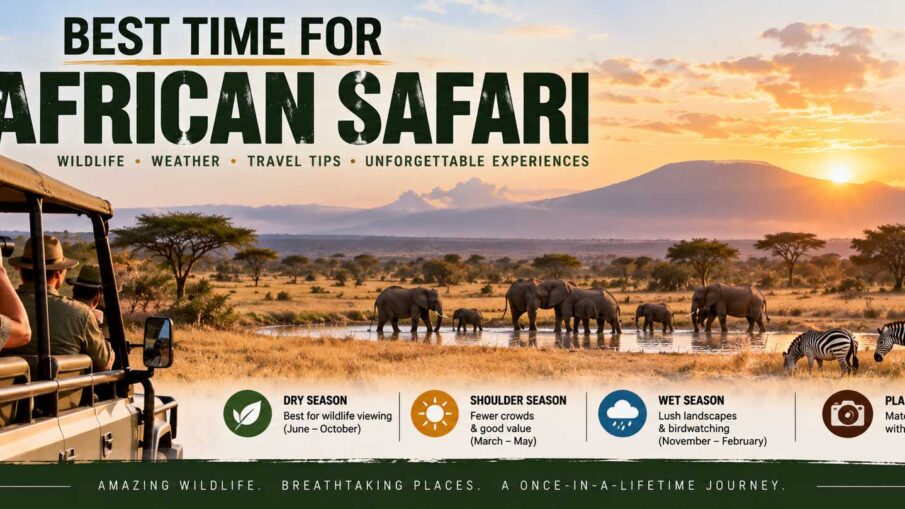
The best time for African safari travel depends on what you want to see, where you plan to go, and how much you want to spend. For classic wildlife viewing in destinations such as Kenya, Tanzania, Botswana, Zambia, and Zimbabwe, the dry season is often the easiest time to spot animals. However, green-season safaris can offer lush landscapes, newborn wildlife, excellent birding, fewer visitors, and sometimes better prices.
Africa is enormous, so there is no single perfect safari month for the entire continent. Instead, choosing the right season means matching your dates with a specific destination and experience, whether that is the Great Migration, gorilla trekking, big-cat sightings, family travel, or a quieter lodge stay.
When Is the Best Time for African Safari?
For many of East and Southern Africa’s major safari destinations, June through October is a strong overall period. During these drier months, vegetation often becomes thinner, while wildlife tends to gather around rivers and permanent water sources. As a result, animals can be easier to find.
However, that does not mean the rest of the year should be avoided. From roughly November through May, many safari regions become greener as seasonal rains arrive. Consequently, landscapes look fresh, birdlife increases, and some animals give birth.
The best choice therefore depends on your priorities.
| Season | General Conditions | Best For |
|---|---|---|
| June–October | Mostly dry in many major safari areas | Wildlife viewing, first safaris |
| November–December | Seasonal rains in many areas | Green scenery, fewer crowds |
| January–March | Warm, green conditions | Calving, predators, photography |
| April–May | Heavier rain in some regions | Lower rates, quiet parks, landscapes |
Because weather patterns differ across countries, use this only as a starting point. Then, check the seasonal conditions for the exact parks on your itinerary.
Travelers who enjoy comparing climate-driven destinations may notice a similar planning principle when researching the best time to visit costa rica: seasonal weather matters, but the activities you value matter just as much.
Best Time of Year for African Safari Wildlife Viewing
The dry season is popular because animals often become more concentrated.
As natural water sources shrink, elephants, antelope, buffalo, and other wildlife may gather around rivers, lakes, and waterholes. Meanwhile, predators often follow prey into these areas.
Vegetation may also become less dense. Therefore, spotting animals through bushes and tall grass can be easier than during wetter months.
Still, wildlife never follows a guaranteed schedule. A dry-season safari can include quiet game drives, while a green-season safari can produce spectacular sightings.
For most first-time safari travelers, June through October offers a useful balance of wildlife visibility and generally favorable conditions across many well-known destinations.
Best Time for an African Safari in Tanzania
The best time for African safari Tanzania trips depends heavily on which parks you plan to visit and whether the Great Migration is a priority.
Tanzania offers year-round safari opportunities in areas such as Serengeti National Park, Ngorongoro Conservation Area, Tarangire National Park, and Nyerere National Park. However, seasons can change the experience significantly.
January to March: Calving Season
From roughly January through March, large numbers of wildebeest gather in the southern Serengeti and nearby Ndutu region during the migration’s calving period.
Thousands of young animals are born during this broader season. Consequently, predators such as lions, cheetahs, and hyenas are also active around the herds.
For wildlife photographers, this can be one of Tanzania’s most dramatic periods.
June to October: Dry-Season Safari
June through October is another excellent window. Roads are generally easier to navigate, vegetation becomes less dense in many areas, and wildlife viewing can be productive.
Meanwhile, migrating herds move through different parts of the Serengeti as the season develops.
Travelers hoping for famous river crossings often focus on roughly July through October in the northern Serengeti. However, migration timing varies each year because rainfall influences herd movements.
Kenya: When to Plan Your Safari
Kenya is also a strong year-round destination, although July through October is particularly popular.
During this period, large migrating herds may reach the Maasai Mara from Tanzania. Therefore, travelers hoping to witness migration activity often choose late July, August, September, or October.
Yet the Maasai Mara has resident wildlife throughout the year. Lions, elephants, giraffes, cheetahs, and many other species do not disappear when the migrating herds leave.
January and February can also offer rewarding game viewing, while greener periods provide attractive landscapes and fewer safari vehicles in some areas.
If avoiding crowds matters more than chasing famous migration scenes, consider shoulder-season dates rather than automatically choosing August.
Best Travel Time for African Safari in Southern Africa
Southern Africa follows somewhat different patterns, although May through October is generally a popular dry-season period in many safari areas.
Botswana
Botswana is especially interesting because the Okavango Delta’s flood cycle does not simply follow local rainfall.
During the dry winter months, floodwaters arriving from Angola can spread through parts of the delta. As a result, areas that receive little local rain may still contain abundant waterways.
June through October is particularly popular for wildlife viewing, although prices can be high during peak season.
South Africa
South Africa works especially well for travelers who want to combine safari with cities, coastlines, food, and road trips.
Kruger National Park and surrounding private reserves are popular during the dry months from roughly May through September. At this time, cooler conditions and thinner vegetation can make game viewing comfortable.
However, summer brings greener scenery and many young animals. Therefore, there is no need to dismiss a December or January safari if those dates fit your trip.
Zambia and Zimbabwe
The dry months are often excellent for wildlife viewing in Zambia and Zimbabwe. As water becomes scarce, animals concentrate near rivers and permanent water sources.
Walking safaris are especially associated with Zambia, while destinations such as South Luangwa can offer excellent predator viewing.
Meanwhile, Zimbabwe combines wildlife destinations such as Hwange National Park with Victoria Falls, making seasonal planning particularly useful if you want both experiences.
What About the African Green Season?
The green season is often overlooked by first-time visitors.
After rains arrive, dusty landscapes can transform into green plains and woodlands. Meanwhile, dramatic skies create beautiful conditions for photography.
Birding can also be exceptional because migratory species arrive in many regions. Likewise, young antelope and other newborn animals may attract predators.
Another advantage is cost. Some camps and lodges offer lower seasonal rates, while popular areas may feel much less crowded.
However, rain can make some roads difficult. Certain remote camps may even close temporarily, depending on the destination.
Therefore, green-season travel suits visitors who value scenery, photography, birds, quieter parks, and possible savings more than consistently dry conditions.
Cheapest Time for an African Safari
Safari prices vary dramatically by country, park, accommodation style, and season.
Peak dry-season dates are usually among the most expensive, especially in famous wildlife areas. Luxury camps can charge premium rates when demand is highest.
By contrast, green and shoulder seasons can provide better value.
April and May may offer substantial savings in some East African destinations, although rain can be heavy. Likewise, November can provide attractive rates in certain areas before holiday demand increases.
Rather than looking only for the cheapest month, compare value. A slightly more expensive shoulder-season trip with better road conditions may be more enjoyable than the lowest-priced week of the year.
Flight costs matter as well. If you have flexibility, tracking fares early and comparing several departure dates can reduce the overall trip budget.
How Weather Changes the Safari Experience
Weather affects much more than whether you need a rain jacket.
During cooler dry-season mornings, open safari vehicles can feel surprisingly cold before sunrise. However, afternoon temperatures may become warm enough for lightweight clothing.
During wetter months, humidity can increase while afternoon storms may interrupt activities. Still, rainfall often arrives in bursts rather than lasting continuously all day.
Dust is another factor during the dry season. Therefore, travelers with sensitive eyes or camera equipment may want protective cases and cleaning supplies.
If you are planning other climate-dependent trips in the same year, guides such as the best time to visit peru can help you see how dry and wet seasons influence outdoor travel in very different regions.
What to Pack for an African Safari
Packing lightly is usually better than bringing a huge wardrobe, especially if your itinerary includes small aircraft with stricter baggage limits.
Choose neutral, comfortable clothing that you can layer. Early-morning game drives can be chilly, while midday temperatures may be much warmer.
A light jacket, long trousers, breathable shirts, comfortable closed shoes, sun protection, insect repellent, and a wide-brimmed hat are useful on many itineraries.
Meanwhile, binoculars can dramatically improve wildlife viewing. A small pair is especially helpful when animals remain far from the road.
Camera users should bring spare batteries and sufficient memory cards. Likewise, a portable charger can be useful at camps where electricity is limited to certain hours.
Before packing, learning how to pack a suitcase efficiently can help you reduce unnecessary clothing and leave space for essential safari gear.
Safety and Health Planning
A well-organized safari is generally structured around trained guides, established lodges, and clear park rules. Still, travelers must remember that safari animals are wild.
Never leave a vehicle unless your guide says it is safe. Likewise, avoid approaching animals for photographs, feeding wildlife, or walking around an unfenced camp without understanding its procedures.
At some lodges, staff escort guests between rooms and common areas after dark because wildlife can move through camp.
Health preparation also deserves attention. Depending on the countries and regions you visit, you may need to discuss vaccinations, malaria prevention, medications, or other precautions with a qualified travel-health professional before departure.
For broader trip preparation, understanding what is the safest way to travel can also help you build sensible habits around transportation, documents, money, and personal security.
Choosing the Right Safari Month for Your Travel Style
Instead of asking for one universally perfect month, start by identifying your main goal.
Choose the dry season if this is your first safari and your priority is straightforward wildlife viewing. Meanwhile, consider the green season if you prefer fewer visitors, lush scenery, birds, newborn animals, and possible savings.
For the Great Migration, choose your region carefully because the herds move throughout the year rather than staying in one location.
Photographers may appreciate both seasons. Dry conditions can create dramatic wildlife concentrations, while green months offer richer backgrounds, stormy skies, and softer landscapes.
Families should consider school schedules as well as climate. Although July and August fit many school holidays, these months can also bring higher prices and greater demand.
Common Safari Planning Mistakes
One common mistake is assuming every African safari destination has the same seasons. Africa covers an enormous geographic area, so conditions in Botswana may differ greatly from Tanzania during the same month.
Another mistake is planning an entire trip around one wildlife event. Migration crossings, predator hunts, and animal movements are natural events, so nobody can guarantee a specific sighting.
Travelers also underestimate driving distances. Safari maps can make parks look close together even when road journeys take several hours.
Likewise, booking too many destinations can leave you spending more time transferring between camps than watching wildlife.
If your broader itinerary includes South America as well, researching the best time to visit machu picchu separately makes sense because seasonal conditions there have no direct connection with African safari weather.
Frequently Asked Questions About the Best Time for African Safari
What Is the Best Month to Go on an African Safari?
There is no single best month for every destination. However, July through September is a strong general period for many popular East and Southern African safari areas because it falls within the dry season in several regions.
What Is the Best Time to Travel for African Safari Trips for Beginners?
June through October is often easiest for first-time visitors because wildlife can be easier to spot in many major parks. However, destination-specific conditions should guide the final decision.
Is December a Good Month to Go on an African Safari?
Yes, depending on the destination. December can bring green landscapes, young animals, birds, and warm weather. However, some regions experience seasonal rain, so road and wildlife-viewing conditions may differ from the dry season.
When is the Great Migration best to see?
The Great Migration occurs throughout the year as wildebeest and other animals move through the Serengeti-Mara ecosystem. July through October is popular for northern Serengeti and Maasai Mara viewing, while roughly January through March is associated with calving in the southern Serengeti ecosystem. Exact movements vary with rainfall.
Is the rainy season bad for safari?
Not necessarily. Rainy periods can offer greener landscapes, excellent birding, newborn wildlife, fewer tourists, and lower rates. However, some roads become difficult and certain camps may close.
How far ahead should I book a safari?
For popular camps during peak migration and dry-season dates, booking many months ahead is wise. If you want a specific luxury camp or travel during school holidays, planning around 9–12 months ahead can provide more choice.
Match the Season to the Safari You Want
The best time for African safari travel is the period that matches your destination and priorities rather than one fixed month on the calendar. For classic game viewing, June through October is an excellent starting point across many popular regions. Meanwhile, green-season travel can reward flexible visitors with dramatic landscapes, fewer crowds, active birdlife, young animals, and better-value accommodation.
First, decide which animals and destinations matter most. Then, compare local dry and wet seasons, migration patterns, lodge prices, and expected crowd levels.
Once those pieces line up, you will have something much more useful than the “perfect” safari month: the right season for the African safari you actually want.