
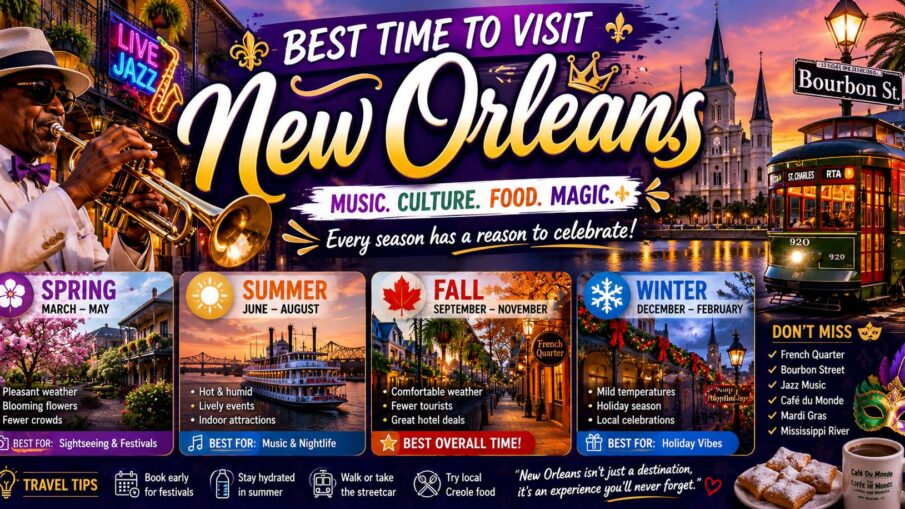
New Orleans is a city that never feels ordinary. One day you might be listening to live jazz in the French Quarter, and the next you’re enjoying fresh beignets, exploring historic neighborhoods, or joining a colorful festival. Every season offers a different experience, so choosing the right time to visit can make your trip even better. For most travelers, the best time to visit New Orleans is from February through May. During these months, the weather is comfortable, festivals fill the city with energy, and outdoor attractions are at their best.
However, that doesn’t mean other seasons should be overlooked. Summer attracts travelers looking for lower hotel prices, while fall offers pleasant temperatures and fewer crowds. Winter can also be a great choice if you prefer quieter sightseeing outside major holiday events.
Therefore, this guide covers everything you need to know, including weather, monthly travel tips, costs, and the best season based on your travel style.
Quick Answer
| Travel Goal | Best Time |
|---|---|
| Best overall experience | February–May |
| Best weather | March–April |
| Cheapest time | June–September |
| Smallest crowds | August–September |
| Festivals | February–May |
| Food lovers | Year-round |
| Family vacations | Spring and early winter |
Why Timing Matters in New Orleans
Unlike many destinations, New Orleans changes dramatically throughout the year.
For example, weather affects outdoor activities, festivals influence hotel prices, and hurricane season can impact travel plans during late summer.
Choosing the Right Season Helps You
- Comfortable temperatures
- Better hotel availability
- Festival experiences
- Lower travel costs
- Outdoor sightseeing
- Live music events
Moreover, travelers deciding where to travel in winter may appreciate New Orleans’ relatively mild conditions.
Best Time of Year to Visit New Orleans
Many travelers agree that spring offers the perfect balance of weather and entertainment.
From February through May, temperatures are mild, flowers bloom across the city, and some of the biggest annual celebrations take place.
Benefits of visiting during spring include:
- Pleasant walking weather
- Outdoor dining
- Riverfront activities
- Beautiful parks
- Active nightlife
- Numerous festivals
Because this is peak travel season, booking flights and hotels several months in advance is recommended.
Seasonal Guide
Spring (February to May)
Spring is widely considered the best time of year to visit New Orleans,
Average temperatures range from comfortable mornings to warm afternoons, making it easy to spend hours exploring neighborhoods on foot.
Highlights include:
- Mardi Gras season
- French Quarter walks
- Garden District tours
- Outdoor concerts
- Mississippi River cruises
- Café dining
However, hotel prices can be higher during major festivals, especially around Mardi Gras.
Summer (June to August)
Summer brings high humidity and warm temperatures.
For example, daytime highs often reach the upper 80s and 90s°F (around 31–35°C), making afternoons feel quite hot.
Advantages include:
- Lower accommodation prices
- Fewer tourists
- Restaurant availability
- Summer promotions
However, keep in mind that afternoon rain showers are common.
Therefore, plan outdoor sightseeing early in the morning or later in the evening.
Fall (September to November)
Fall is another excellent season for visiting.
As the season progresses, temperatures begin cooling, humidity gradually decreases, and crowds become smaller than spring.
Many travelers enjoy:
- Walking tours
- Food festivals
- Historic attractions
- Local markets
- Live jazz performances
In particular, October is popular because the weather becomes much more comfortable.
Winter (December to January)
Winter remains relatively mild compared to many parts of the United States.
Although occasional cool days occur, snow is extremely rare.
Additionally, holiday decorations, seasonal events, and fewer crowds outside Christmas and New Year’s make winter appealing for many visitors.
Monthly Breakdown
January
- Mild weather
- Smaller crowds
- Good hotel availability
February
One of the busiest months thanks to Mardi Gras celebrations.
Therefore, book accommodations well in advance.
March
Excellent temperatures and lively city atmosphere.
Overall, ideal for first-time visitors.
April
Comfortable weather and beautiful gardens make April one of the most enjoyable months.
May
Warm but still pleasant.
Meanwhile, festival season continues before summer heat arrives.
June
Humidity increases.
As a result, good travel deals become easier to find.
July
Very warm with frequent afternoon rain.
Therefore, indoor attractions become popular during the hottest hours.
August
One of the quietest months.
For this reason, budget travelers often find attractive hotel prices.
September
Temperatures slowly improve.
However, travelers should still monitor weather forecasts during hurricane season.
October
A favorite month for sightseeing.
As a result, cooler weather makes walking tours much more enjoyable.
November
Comfortable temperatures return with fewer crowds.
In addition, excellent choice for food lovers.
December
Holiday lights, seasonal events, and mild weather create a festive atmosphere.
Best Time to Visit New Orleans Weather
If your priority is comfortable sightseeing, the best time to visit New Orleans weather is usually March, April, October, or November.
These months offer:
- Comfortable temperatures
- Lower humidity
- Pleasant evenings
- Great walking conditions
- Outdoor dining opportunities
However, summer weather can still be enjoyable if you’re prepared for heat and occasional storms.
When Is the Best Time to Visit New Orleans for Festivals?
The city is famous for celebrations throughout the year.
Popular events include:
Mardi Gras
The city’s most famous festival.
For example, colorful parades, music, costumes, and celebrations attract visitors from around the world.
French Quarter Festival
Features local music, food, and culture.
Moreover, many performances are free to attend.
Jazz & Heritage Festival
A favorite for music fans.
In particular, showcases jazz, blues, gospel, Cajun music, and local cuisine.
Therefore, if festivals are your priority, spring is clearly the New Orleans best time to visit.
Cheapest Time to Visit
Travelers looking to save money should consider:
- June
- July
- August
- Early September
During these months, you’ll often find:
- Lower hotel rates
- Flight discounts
- Fewer crowds
- Restaurant specials
However, the trade-off is warmer weather and a greater chance of rain.
Sample Three-Day Itinerary
| Day | Activities |
|---|---|
| Day 1 | French Quarter, Jackson Square, Bourbon Street, beignets |
| Day 2 | Garden District, streetcar ride, cemetery tour, live jazz |
| Day 3 | Mississippi River cruise, City Park, local museums, evening dining |
If you have extra time, consider nearby swamp tours or plantation visits.
For example, the city’s famous landmarks can easily fill several days of sightseeing.
Transportation Tips
New Orleans is easy to explore without renting a car.
Popular transportation options include:
- Historic streetcars
- Walking
- Rideshare services
- Public buses
- Bicycle rentals
In particular, the French Quarter is especially pedestrian-friendly.
Additionally, if staying downtown, many attractions are within walking distance.
Where to Stay
Different neighborhoods offer different experiences.
French Quarter
Best for:
- First-time visitors
- Nightlife
- Historic atmosphere
Garden District
Perfect for:
- Quiet streets
- Historic homes
- Boutique hotels
Central Business District
Offers:
- Modern hotels
- Convenient transportation
- Easy access to attractions
What to Eat
Food is one of New Orleans’ biggest attractions.
Don’t miss:
- Gumbo
- Jambalaya
- Po’boys
- Beignets
- Crawfish (seasonal)
- Muffuletta sandwiches
- Red beans and rice
In fact, trying local restaurants is one of the highlights of any visit.
Budget Guide
| Travel Style | Estimated Daily Budget |
|---|---|
| Budget | $120–180 |
| Mid-range | $220–350 |
| Luxury | $450+ |
Your total cost depends on:
- Hotel choice
- Festival season
- Dining preferences
- Tours
- Transportation
Generally, traveling outside major festivals reduces expenses significantly.
Packing Checklist
Pack according to the season.
Essentials include:
- Comfortable walking shoes
- Lightweight clothing
- Rain jacket
- Sunglasses
- Sunscreen
- Reusable water bottle
- Portable phone charger
- Small umbrella
- Light sweater for cooler evenings
Additionally, summer visitors should prepare for high humidity.
Moreover, knowing how to pack a suitcase efficiently can help keep these essentials organized.
Safety Tips
New Orleans welcomes millions of visitors each year.
Simple precautions include:
- Stay aware of your surroundings.
- Keep valuables secure.
- Use licensed transportation.
- Avoid poorly lit areas late at night.
These basic habits are also useful when considering what is the safest way to travel.
As a result, these basic habits help make your trip more enjoyable.
Common Travel Mistakes
Avoid these common errors:
- Booking too late during Mardi Gras.
- Underestimating summer humidity.
- Packing uncomfortable shoes.
- Skipping reservations at popular restaurants.
- Ignoring weather forecasts during hurricane season.
- Trying to fit too many attractions into one day.
Therefore, a relaxed schedule lets you enjoy the city’s unique atmosphere.
Frequently Asked Questions
What is the best time to visit New Orleans?
Most travelers recommend February through May because of pleasant weather and exciting festivals.
When is the best time to visit New Orleans?
March and April are excellent months for sightseeing thanks to comfortable temperatures and outdoor activities.
What is the best time of year to visit New Orleans?
Spring offers the best combination of weather, festivals, and attractions, while fall provides fewer crowds and comfortable conditions.
What is the best time to visit New Orleans weather-wise?
March, April, October, and November usually provide the most comfortable weather for walking and sightseeing.
Is summer a good time to visit?
Yes, especially for budget travelers. However, expect warm temperatures, higher humidity, and occasional afternoon rain.
How many days should I spend in New Orleans?
Generally, three to four days gives enough time to explore the French Quarter, enjoy local food, experience live music, and visit nearby attractions.
Plan Your New Orleans Adventure
The best time to visit New Orleans depends on what kind of trip you want. Spring is perfect for festivals, mild weather, and lively streets. Fall offers a more relaxed atmosphere with comfortable temperatures, while summer rewards flexible travelers with lower prices. No matter when you visit, New Orleans delivers unforgettable music, incredible food, rich history, and a culture unlike anywhere else. Planning around your budget, preferred weather, and must-see events will help you make the most of your stay.