
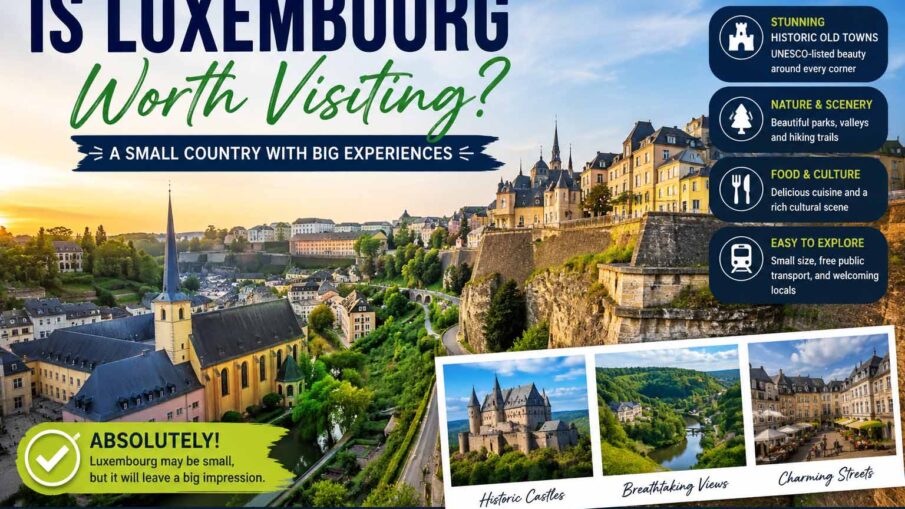
If Luxembourg has appeared on your European itinerary, you may be wondering: is Luxembourg worth visiting when larger destinations such as France, Germany, Belgium, and the Netherlands are so close? For travelers who enjoy historic cities, castles, scenic countryside, easy public transportation, and destinations that can be explored without rushing, the answer is generally yes.
Luxembourg is small, but that is part of its appeal. You can spend the morning walking through Luxembourg City’s historic center and then head into the countryside for castles, forests, or quiet villages. However, travelers looking mainly for huge nightlife districts, endless major attractions, or a low-cost European getaway may find other destinations better suited to their priorities.
So, is it worth visiting Luxembourg? The best answer depends on your travel style, budget, and how much time you have. Here is what to consider before adding it to your itinerary.
Why Is Luxembourg Worth Visiting?
Luxembourg offers a combination that can be difficult to find elsewhere in Europe: a compact capital, dramatic landscapes, centuries of history, multilingual culture, and very manageable distances.
Luxembourg City itself is built across plateaus and deep river valleys. As a result, even a short walk can take you from modern European institutions to medieval fortifications and leafy neighborhoods in the lower town, all within a relatively small area.
The country’s location also gives it a distinctive cultural character. Luxembourg sits between Belgium, France, and Germany, while Luxembourgish, French, and German influences can all be noticed in daily life.
For travelers planning a longer European vacation, the country’s central location makes it relatively easy to combine with neighboring destinations. Before leaving home, a practical what to pack for europe trip checklist can also help because Luxembourg’s changeable weather often makes layers more useful than packing for only one type of condition.
Is Luxembourg City Worth Visiting?
For most first-time travelers, Luxembourg City is the natural starting point. Although it is one of Europe’s smaller capitals, its unusual geography gives it far more character than its size might suggest.
The historic center and old fortifications are recognized as a UNESCO World Heritage Site. Meanwhile, bridges connect different levels of the city above the Alzette and Pétrusse valleys.
Walk Through the Old Town
Start around the historic center, where narrow streets, squares, government buildings, shops, and cafés are easy to explore on foot.
Place d’Armes and Place Guillaume II make convenient central reference points. From there, you can walk toward the Grand Ducal Palace and continue toward viewpoints overlooking the lower parts of the city.
Rather than trying to check off attractions quickly, leave time to wander. Luxembourg City’s strongest appeal often comes from the combination of architecture, elevation changes, and unexpected viewpoints.
See the Chemin de la Corniche
The Chemin de la Corniche follows part of the city’s old fortifications and offers sweeping views across the Alzette valley and Grund district.
It is one of the easiest places to understand why Luxembourg City looks different from many other European capitals. Historic walls sit high above houses, church towers, and greenery below.
Travelers who enjoy photographing famous landmarks will find several recognizable Luxembourg scenes around this area, particularly near the old fortifications and valley viewpoints.
Explore the Bock Casemates
Luxembourg’s defensive history is closely tied to its extensive fortifications. The Bock promontory and casemates are among the city’s best-known historic attractions.
These underground defensive passages help explain Luxembourg’s strategic importance in European history. However, opening conditions and access can change, so check current visitor information before planning your day around them.
Beyond the Capital: Luxembourg Has More to Offer
A common mistake is treating Luxembourg as if the capital were the entire country.
Because distances are short, exploring beyond Luxembourg City can add much more variety to a trip.
Vianden
Vianden is one of the country’s most appealing destinations for castle lovers. Its hilltop castle rises above the town and surrounding landscape, creating one of Luxembourg’s classic views.
The town itself is compact, so it works well as a day trip. However, staying overnight can provide a quieter experience once many daytime visitors leave.
Mullerthal
Travelers interested in walking and nature should consider the Mullerthal region, often associated with rocky formations, woodland trails, streams, and green landscapes.
The area offers a very different experience from Luxembourg City. Therefore, combining the two can make a short Luxembourg trip feel much more varied.
Echternach
Echternach, near the German border, is Luxembourg’s oldest town and another useful base for exploring the Mullerthal region.
Its historic center and relaxed pace make it a pleasant stop for travelers who prefer smaller European towns over busy capitals.
Best Time to Visit Luxembourg
Luxembourg is a year-round destination, although each season changes the experience considerably.
| Season | Typical Experience | Best For |
|---|---|---|
| Spring | Mild weather, fresh greenery | Walking and sightseeing |
| Summer | Warmest weather, long days | Outdoor activities |
| Autumn | Cooler temperatures, colorful scenery | Hiking and photography |
| Winter | Cold, short days, seasonal atmosphere | City breaks and festive travel |
Spring: March to May
Spring can be an excellent time for sightseeing because landscapes become greener while temperatures gradually become milder.
March can still feel chilly. However, April and May generally become more comfortable for walking and outdoor sightseeing.
Rain remains possible, so a light waterproof layer is useful.
Summer: June to August
Summer provides long daylight hours and generally the warmest conditions. Therefore, it works particularly well if you want to combine city sightseeing with hiking and countryside trips.
This period can also bring more visitors. Still, Luxembourg generally feels less overwhelmed by tourism than some of Europe’s biggest destinations.
If you are combining Luxembourg with Alpine destinations, comparing your dates with the best time to visit switzerland can help you plan a multi-country trip around suitable weather and outdoor conditions.
Autumn: September to November
Early autumn can offer an attractive balance of pleasant temperatures and changing foliage.
September often remains comfortable for outdoor activities. Meanwhile, October brings stronger autumn colors, particularly in wooded areas.
By November, days become shorter and the weather can feel noticeably colder.
Winter: December to February
Winter is cold, and daylight hours are limited. However, the season can still suit travelers who enjoy quieter city breaks and festive European atmosphere.
December is particularly appealing for seasonal markets and decorations. Meanwhile, January and February generally offer a calmer experience.
How Many Days Do You Need in Luxembourg?
For Luxembourg City alone, one full day can cover many of the main sights. However, two days provide a more relaxed experience and leave room for museums, neighborhoods, and longer meals.
If you want to see both the capital and countryside, three days is a more comfortable starting point.
A simple itinerary might look like this:
Explore Luxembourg City, including the Old Town, viewpoints, Grund, and historic fortifications.
Take a day trip to Vianden or explore another castle and nearby town.
Visit Mullerthal and Echternach, particularly if you enjoy hiking or nature.
Compared with larger capitals, Luxembourg requires relatively little time to experience its highlights. Travelers planning several compact northern European destinations may also find a guide on how many days in copenhagen useful when deciding how to divide limited vacation days between smaller capitals.
Getting Around Luxembourg
One of Luxembourg’s strongest practical advantages is its public transportation system.
Domestic public transport on buses, trams, and second-class trains is generally free, making it unusually easy for visitors to move around without repeatedly purchasing local tickets. Certain exceptions, such as first-class train travel and cross-border journeys, can still involve charges.
Within Luxembourg City, walking is often the best way to explore the historic areas. However, the city’s hills and different elevations can make routes look shorter on a map than they feel on foot.
Trams and buses are useful when you want to cover longer distances or give your legs a break.
For countryside trips, trains and buses reach many destinations. Still, always check current schedules, especially on weekends or when visiting smaller villages.
Is Luxembourg Expensive to Visit?
Luxembourg has a reputation for being expensive, and accommodation can certainly cost more than budget travelers expect.
Hotels in central Luxembourg City may take up the largest share of your daily budget. Therefore, booking early can help, particularly during busy dates or major events.
Dining can also be relatively expensive compared with some other European destinations. However, bakeries, supermarkets, casual cafés, and lunch menus can help keep food spending manageable.
Free domestic public transport provides a meaningful saving. Likewise, many of the city’s best experiences involve walking through historic neighborhoods, parks, viewpoints, and public spaces.
As a result, Luxembourg does not have to be a luxury-only destination. Your accommodation and dining choices will make the biggest difference.
What to Eat in Luxembourg
Luxembourg’s food reflects influences from neighboring France, Germany, and Belgium while maintaining its own local traditions.
Traditional dishes can be hearty, often featuring potatoes, meat, sausages, or freshwater fish. You may also find regional pastries, cheeses, wines, and desserts.
The Moselle region is particularly associated with wine production. Therefore, travelers interested in local food and drink may want to include the eastern part of the country in their itinerary.
Meanwhile, Luxembourg City’s international population means you can find far more than traditional cuisine. Restaurants represent a wide range of European and international cooking styles.
Luxembourg as Part of a Larger European Trip
Luxembourg works especially well as part of a multi-country itinerary because Belgium, France, and Germany are all nearby.
For example, you could combine Luxembourg with Brussels, Strasbourg, Trier, or parts of northeastern France and western Germany.
If your trip includes northern Italy and you are deciding where to allocate extra days, researching is milan worth visiting can help you compare a large, energetic city break with Luxembourg’s smaller and slower-paced experience.
However, avoid adding Luxembourg purely to increase the number of countries on your itinerary. Giving it at least a full day allows you to appreciate the destination rather than treating it as a border-crossing exercise.
Who Will Enjoy Luxembourg Most?
Luxembourg is particularly appealing to travelers who enjoy history, architecture, castles, walking, photography, and nature.
Couples may appreciate the scenic viewpoints and relaxed pace. Meanwhile, solo travelers can benefit from manageable transportation and a compact capital that is relatively straightforward to navigate.
Families can combine castles and outdoor activities with city sightseeing. However, the steep streets and elevation changes in some parts of Luxembourg City may require extra planning with very young children or strollers.
Common Mistakes to Avoid
Do not assume Luxembourg can only be visited as a day trip. While one day is enough for the capital’s highlights, staying longer allows you to see how different the countryside feels.
Likewise, do not underestimate the weather. Conditions can change, so layers and a compact rain jacket are useful during much of the year.
Another mistake is spending the entire visit around the upper Old Town. Walk down into Grund and explore different elevations to appreciate the city’s unusual layout.
Finally, check attraction hours and transportation schedules before setting out. Luxembourg is easy to navigate, yet smaller towns and attractions may operate on more limited schedules than major European tourist centers.
FAQs About Visiting Luxembourg
Is It Worth Visiting Luxembourg for One Day?
Yes. One day can work well if you focus on Luxembourg City. You can walk through the historic center, visit major viewpoints, explore Grund, and see several important attractions without needing a car.
However, staying two or three days gives you time to explore beyond the capital.
Is Luxembourg City Worth Visiting Compared With Other European Capitals?
Yes, particularly if you prefer smaller, walkable capitals with history and scenic surroundings. However, it offers fewer major attractions than cities such as Paris, Rome, or London.
Its appeal comes from atmosphere, landscape, history, and convenience rather than sheer quantity of sights.
Is Luxembourg Good for a Weekend Trip?
Yes. A weekend provides enough time to explore Luxembourg City at a relaxed pace and potentially include one nearby destination.
Three days are even better if you want to visit castles or hike in the countryside.
Do You Need a Car in Luxembourg?
Not necessarily. Public transportation makes many parts of the country accessible without driving.
A car can provide extra flexibility for remote countryside locations, but most first-time visitors can build a satisfying itinerary around trains, buses, trams, and walking.
So, Should Luxembourg Be on Your Europe Itinerary?
For travelers who appreciate compact historic cities, dramatic viewpoints, castles, forests, and easy transportation, Luxembourg can be a rewarding stop. It is especially attractive when you want a destination that feels manageable rather than overwhelming.
So, is Luxembourg worth visiting? Yes, for most travelers who give it enough time to experience more than a quick stop at the train station. Spend at least a day exploring Luxembourg City, or stay two to three days if you want to see the countryside as well.
Rather than expecting a smaller version of Paris or another major European capital, visit Luxembourg for what it does particularly well: beautiful scenery, layered history, easy exploration, and the chance to experience a small country with a surprisingly varied landscape.