
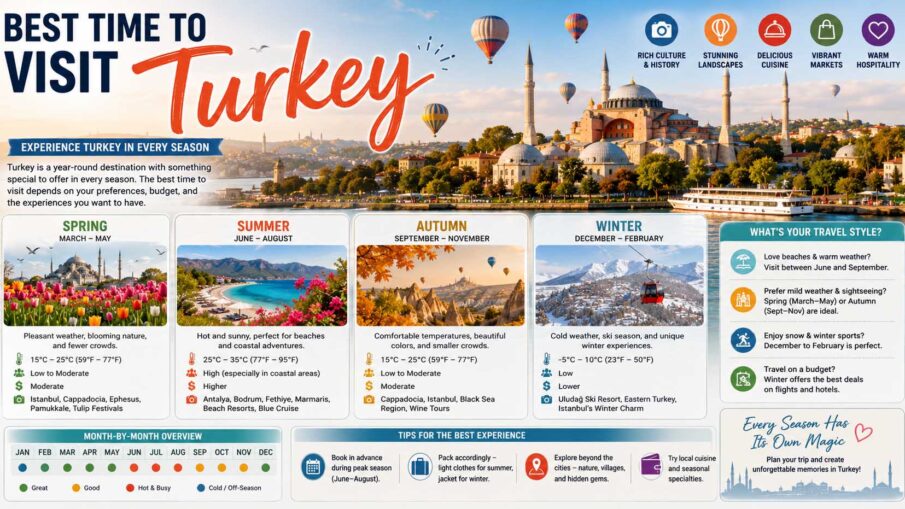
Choosing the best time to visit Turkey depends on what you want from your trip. For comfortable sightseeing in Istanbul, Cappadocia, Ephesus, and other historic areas, spring and fall are often excellent choices. Meanwhile, summer suits travelers planning a Mediterranean or Aegean beach vacation, while winter can appeal to visitors who prefer cooler weather, fewer tourists in some destinations, and seasonal experiences. Since Turkey is a large country with varied climates, the ideal month can change depending on where you plan to go.
For many first-time visitors who want to combine cities, historic sites, and outdoor attractions, April to May and September to October provide an appealing balance. However, beach travelers may prefer June through September, while winter visitors can enjoy a completely different side of the country.
When Is the Best Time to Visit Turkey?
So, when is the best time to visit Turkey for the widest variety of activities? Generally, spring and fall work well for travelers planning a multi-destination itinerary.
During spring, temperatures become more comfortable across many popular areas. Flowers and green landscapes can also make outdoor sightseeing especially enjoyable. However, conditions vary by region, and rain remains possible.
Fall offers another attractive window. Summer heat begins to ease, yet coastal areas can remain pleasant. Therefore, September and October can work particularly well for travelers who want to combine Istanbul, Cappadocia, archaeological sites, and coastal destinations.
Summer is hotter and often busier in major vacation areas. Still, it remains one of the most appealing periods for travelers who mainly want beaches, swimming, resorts, and long sunny days.
Winter, by contrast, brings colder weather and a greater chance of rain or snow depending on the region. Yet lower seasonal demand in some destinations can make it worthwhile for flexible travelers.
Best Time of Year to Visit Turkey at a Glance
Turkey’s regional differences mean there is no perfect season for everyone. However, this quick guide can help you narrow down your dates.
| Season | General Conditions | Best For | Main Consideration |
|---|---|---|---|
| Spring | Mild to warm, variable rain | Sightseeing, cities, Cappadocia | Weather can change quickly |
| Summer | Hot, dry in many tourist areas | Beaches, resorts, coastal trips | Heat and higher demand |
| Fall | Warm to mild | Mixed itineraries, sightseeing | Days gradually get shorter |
| Winter | Cool to cold | City breaks, winter scenery | Rain, snow, shorter daylight |
Travelers comparing Mediterranean destinations may notice similar seasonal patterns when researching the best time to go to greece, although local climates and regional conditions differ.
Therefore, choose your dates according to your actual itinerary rather than relying only on a countrywide weather average.
Spring in Turkey: March to May
Spring brings major changes across Turkey, although March can still feel quite cool in many places.
March
March sits between winter and spring. Istanbul can be chilly and rainy, while inland destinations such as Cappadocia may still experience cold conditions.
However, travelers who pack properly can enjoy sightseeing without peak summer heat.
Because weather can be unpredictable, layers and a water-resistant outer layer are useful.
April
April is often a pleasant month for city sightseeing. Istanbul becomes more colorful during spring, while daytime conditions can be comfortable for exploring historic neighborhoods and outdoor attractions.
Cappadocia also becomes increasingly appealing, although mornings and evenings can remain cold.
As a result, April is a strong option for travelers interested in culture and sightseeing rather than swimming.
May
May is one of the easiest months for combining different parts of Turkey.
Temperatures generally become warmer, yet the intense summer heat has not fully arrived in many areas. Meanwhile, coastal destinations start feeling increasingly suitable for warm-weather vacations.
Consequently, May works well for itineraries combining Istanbul, Cappadocia, Ephesus, Pamukkale, and the Aegean or Mediterranean coast.
Summer in Turkey: June to August
Summer transforms Turkey into a prime beach destination, especially along its western and southern coastlines.
June
June can offer an appealing transition into peak summer.
Coastal weather becomes increasingly suited to swimming and beach activities, while early summer may feel more comfortable for sightseeing than the hottest part of July or August.
However, demand can rise as school holidays and summer vacations begin.
July and August
July and August are excellent for travelers who love hot weather and coastal vacations.
Resort destinations around Antalya, Bodrum, Marmaris, and other coastal areas become particularly lively. Meanwhile, long daylight hours provide plenty of time for beaches, boat trips, restaurants, and evening activities.
However, sightseeing in exposed archaeological sites can become tiring during very hot periods. Therefore, start outdoor visits early in the morning and save indoor attractions or relaxed meals for the hottest hours.
Travelers comparing European summer trips may also find the best time to visit spain useful because both destinations can involve balancing hot summer weather with beach-season appeal.
Fall in Turkey: September to November
For many travelers, fall competes closely with spring as the best time of year to visit Turkey.
September
September can be especially versatile.
Coastal destinations often retain a strong summer feel, while conditions gradually become easier for sightseeing elsewhere. As a result, travelers can combine beaches with historic attractions without planning everything around peak midday heat.
September can still be popular, though, so do not assume accommodation will automatically be inexpensive.
October
October often suits travelers focused on Istanbul, Cappadocia, cultural attractions, and road-trip-style itineraries.
Temperatures generally become milder, although evenings may require an extra layer. Coastal weather can remain pleasant as well, particularly earlier in the month.
Because conditions differ from one region to another, check forecasts for each stop rather than packing for Turkey as though it had one climate.
November
November moves Turkey closer to winter.
Tourist areas may become quieter, while cooler temperatures can make city exploration comfortable for travelers who do not mind variable weather.
However, beach conditions become less reliable, and daylight hours decrease.
If your trip focuses on museums, food, neighborhoods, architecture, and historic sites rather than swimming, November can still be worth considering.
Winter in Turkey: December to February
Winter is often overlooked, yet it can offer memorable travel experiences.
Istanbul becomes cooler and wetter, while snow is possible. Cappadocia can become dramatically beautiful when snow covers its rock formations, although winter weather may affect outdoor activities and transportation.
Meanwhile, eastern and central parts of Turkey can experience much colder conditions than coastal regions.
Winter can suit travelers who enjoy seasonal atmosphere and are comfortable adjusting plans around the weather.
It may also provide better accommodation value in some destinations, though prices always depend on specific dates, holidays, demand, and property type.
Travelers considering other southern European destinations during cooler months can compare conditions with the best time to visit italy before deciding which climate and itinerary suit them better.
Best Time to Visit Istanbul, Turkey
The best time to visit Istanbul Turkey is often spring or fall if comfortable sightseeing is your main goal.
Istanbul rewards walking. Historic districts, waterfront areas, markets, mosques, palaces, museums, cafés, and neighborhoods can fill several days.
Therefore, mild temperatures make exploring easier.
April and May can provide attractive spring conditions, while September and October are strong fall alternatives.
Summer remains perfectly possible, but hot days and heavy tourist traffic can make major attractions feel busier. Meanwhile, winter brings cooler temperatures, rain, and occasional snow but can create a more atmospheric city break for travelers who pack accordingly.
No matter when you visit, bring comfortable walking shoes. Istanbul’s hills, cobblestones, and large sightseeing areas can make footwear more valuable than almost any other packing decision.
When Should You Visit Cappadocia?
Cappadocia has a more continental climate than Turkey’s Mediterranean coast.
Spring and fall are especially attractive because daytime temperatures can be suitable for exploring valleys, viewpoints, underground cities, and other attractions.
However, mornings can be cold even when afternoons feel comfortable.
Hot-air balloon flights are one of Cappadocia’s best-known experiences, yet flights depend on weather and operational conditions. Therefore, never build a very short itinerary around the assumption that a balloon flight will definitely operate on a particular morning.
If the experience is a priority, consider spending several nights in the region. That gives you more flexibility if conditions disrupt your original plan.
Summer can be hot during daytime hikes, while winter brings cold weather and possible snow.
Best Months for Turkey’s Beaches
Travelers planning around the Aegean and Mediterranean coasts have different priorities from visitors touring Istanbul and Cappadocia.
June through September generally aligns well with a beach-focused trip, although exact sea and air conditions vary by destination and year.
July and August deliver the strongest summer atmosphere but can also bring intense heat and higher demand.
June can be a good choice if you want warm conditions without necessarily targeting the busiest part of summer.
Likewise, September can be attractive because the sea may remain warm while the season begins transitioning toward fall.
Travelers comparing Mediterranean beach vacations can also check the best month to visit italy, since choosing between late spring, midsummer, and early fall often involves similar questions about heat and crowds.
Cheapest Time to Visit Turkey
The cheapest period is not fixed because airfare and accommodation rates respond to demand, holidays, events, and booking patterns.
However, travelers may find better value outside major peak travel periods.
Winter can bring lower accommodation prices in some tourism-focused destinations, although Istanbul remains a major year-round city. Late fall and early spring may also provide useful opportunities depending on your route.
Instead of searching only for the cheapest month, compare complete trip costs.
For example, a cheaper hotel during cold weather may not feel like good value if the activities you want are unavailable. Likewise, paying slightly more during spring could be worthwhile if comfortable weather allows you to spend full days sightseeing.
This same approach is useful when researching the cheapest time to visit italy or other destinations where seasonality affects both prices and the travel experience.
How Weather Changes Across Turkey
One of the biggest planning mistakes is treating Turkey as though every destination has the same weather.
Istanbul has a climate shaped by its position between the Black Sea and Sea of Marmara. Therefore, rain and changing conditions are possible across the year.
The Mediterranean coast around Antalya has hotter, drier summers and milder winters.
Cappadocia sits inland at elevation, so nights can become considerably colder than coastal destinations.
Meanwhile, eastern Turkey experiences more severe winters in many areas.
As a result, a traveler visiting Istanbul, Cappadocia, and Antalya on one trip may need clothing for several different conditions.
What to Pack by Season
Spring and fall travelers should prioritize layers.
Bring comfortable walking shoes, light tops, a warmer layer for mornings and evenings, and something suitable for rain.
During summer, lightweight clothing, sun protection, a hat, and comfortable footwear make outdoor sightseeing easier. However, carry appropriate clothing for visiting religious sites where more coverage may be expected.
Winter requires a warmer coat, especially for inland destinations. Waterproof footwear can also be useful where rain or snow is possible.
Regardless of season, avoid overpacking. Turkey has plenty of shops, while moving between cities becomes much easier with manageable luggage.
A Practical 7-Day Turkey Itinerary by Season
A one-week trip works best when you avoid trying to see the entire country.
For spring or fall, you might spend three days in Istanbul, two or three days in Cappadocia, and use the remaining time for another destination depending on flight and transfer schedules.
During summer, consider combining Istanbul with a coastal area instead. That gives you cultural sightseeing followed by a few relaxed beach days.
In winter, Istanbul and Cappadocia can create a distinctive seasonal trip, although you should leave flexibility for weather.
For a longer 10- to 14-day vacation, adding Ephesus, Pamukkale, Antalya, or another coastal destination becomes much more practical.
Mistakes to Avoid When Choosing Your Dates
First, do not choose July simply because you assume summer is automatically the best season. If your itinerary involves long days walking around ancient sites, spring or fall may be more comfortable.
Likewise, do not book Cappadocia for only one night if a balloon flight is your main reason for visiting. Weather disruptions can happen in any season.
Also, check religious holidays, national holidays, major events, and local operating schedules before finalizing your itinerary. They may influence transportation, opening hours, crowds, and accommodation demand.
Finally, avoid planning according to temperature alone. Rain, wind, daylight hours, crowds, and regional differences all influence how a trip feels.
FAQs About When to Visit Turkey
What is the best month to visit Turkey?
May, September, and October are often strong choices for multi-destination sightseeing because they can provide a useful balance of weather and seasonal conditions. However, your ideal month depends on your route.
Is April a good time to visit Turkey?
Yes, April can be appealing for sightseeing, particularly in Istanbul. However, temperatures and rainfall vary, so pack layers and prepare for changing conditions.
Is Turkey too hot in July and August?
Some parts can become very hot, especially inland and along parts of the coast. Beach travelers may enjoy the heat, while sightseeing-focused visitors may prefer spring or fall.
What is the best time for Cappadocia?
Spring and fall are popular for outdoor sightseeing because temperatures can be more comfortable. However, balloon operations always depend on suitable weather conditions.
What is the best season for Istanbul?
Spring and fall are excellent for walking and sightseeing. Still, Istanbul is a year-round destination, so winter and summer can also work depending on your preferences.
Is September a good time to visit Turkey?
Yes. September can combine warm coastal conditions with increasingly comfortable sightseeing weather, making it especially useful for mixed itineraries.
Turkey best time to visit for beaches?
June through September generally works well for beach-focused trips along the Aegean and Mediterranean coasts. July and August bring peak summer heat, while June and September may suit travelers who prefer slightly less intense conditions.
Choose Your Turkey Dates Around Your Trip Style
For most first-time visitors, the best time to visit Turkey is spring or fall, particularly if the itinerary combines Istanbul, Cappadocia, historic sites, and outdoor sightseeing. May, September, and October are especially practical months to investigate when planning a varied trip.
However, summer makes more sense for travelers who want beaches and resorts, while winter offers a quieter, colder experience with the possibility of memorable snowy landscapes in inland regions.
Start with the places you most want to see, then check the seasonal conditions for each one. Once your route, weather preferences, budget, and preferred activities line up, choosing your travel dates becomes much easier.