
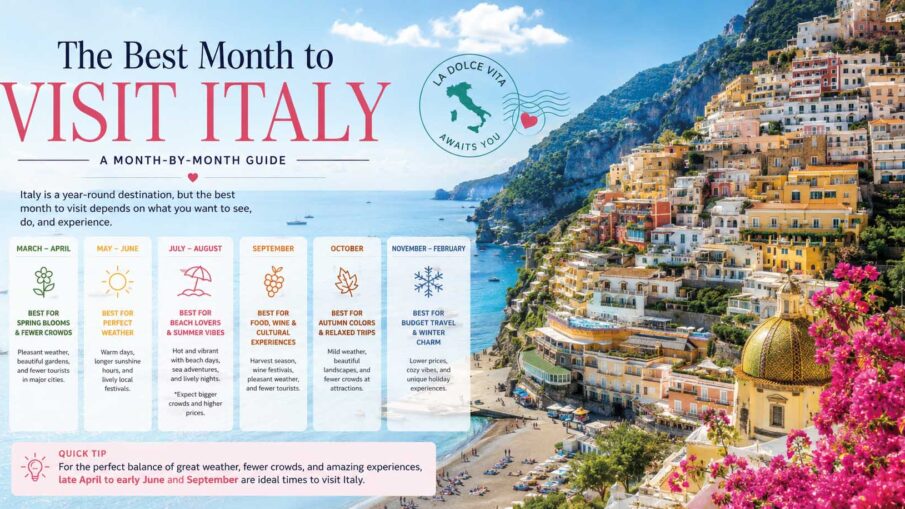
Choosing the best month to visit Italy depends on the type of vacation you’re planning. Some travelers dream of sunny beaches along the Amalfi Coast, while others want cooler weather for exploring Rome, Florence, and Venice. Italy offers something special every month, but the experience changes significantly with the seasons.
Whether you’re planning your first Italian adventure or returning to discover new regions, understanding the weather, crowds, and seasonal events will help you choose the perfect travel dates. This guide explains what each season offers and highlights the best months for sightseeing, food, outdoor activities, and budget-friendly travel.
Why Timing Makes a Difference
Italy is one of Europe’s most visited countries, so the time of year affects almost every part of your trip.
Travel dates influence:
- Weather
- Accommodation prices
- Attraction wait times
- Local festivals
- Transportation availability
- Beach conditions
- Hiking opportunities
Choosing the right month can make your vacation more comfortable while helping you avoid unnecessary crowds or extreme temperatures.
Best Month to Visit Italy by Season
If you’re asking what is the best month to visit Italy, it’s helpful to compare the seasons before selecting a specific month.
Spring (March to May)
Spring is one of Italy’s most pleasant travel seasons.
Flowers bloom across gardens and vineyards, temperatures become comfortable, and many popular destinations are busy without reaching peak summer crowds.
March
March marks the transition from winter.
You’ll find:
- Cooler temperatures
- Fewer visitors
- Lower hotel prices
- Early spring blossoms in southern regions
It’s a good option for travelers who prioritize museums and historic cities over beach vacations.
April
April offers mild weather throughout much of the country.
Highlights include:
- Comfortable sightseeing
- Outdoor cafés reopening
- Beautiful gardens
- Easter celebrations in many cities
Many travelers consider April one of the best months for exploring cultural landmarks.
May
May is widely regarded as one of the strongest months to visit Italy.
Benefits include:
- Pleasant temperatures
- Longer daylight hours
- Green countryside
- Active outdoor dining
- Comfortable walking conditions
If you’re comparing travel seasons, you’ll notice many similarities between the best time to visit Italy and other European destinations that shine during late spring.
Best For
- City sightseeing
- Tuscany road trips
- Wine regions
- Outdoor photography
Summer (June to August)
Summer is Italy’s busiest travel season.
Warm temperatures attract visitors from around the world.
June
June combines excellent weather with slightly smaller crowds than July and August.
Advantages include:
- Warm but manageable temperatures
- Long daylight hours
- Open coastal resorts
- Outdoor festivals
Many experienced travelers believe June offers the ideal balance between weather and visitor numbers.
July
July brings peak tourist activity.
Expect:
- Busy attractions
- Hot afternoons
- Lively beaches
- Extended attraction hours
Advance reservations become especially important during this period.
August
August remains popular, although many Italians also take summer holidays.
Visitors enjoy:
- Beach vacations
- Coastal towns
- Island travel
- Warm Mediterranean waters
However, inland cities like Rome and Florence can become quite hot during the afternoon.
Seasonal Comparison
| Season | Weather | Crowds | Prices | Best For |
|---|---|---|---|---|
| Spring | Mild | Moderate | Moderate | Sightseeing |
| Summer | Hot | High | High | Beaches and festivals |
| Autumn | Pleasant | Moderate | Moderate | Food and wine |
| Winter | Cool to cold | Low | Lower | Museums and skiing |
This comparison offers a quick overview before choosing your travel dates.
Which Month Matches Your Travel Style?
The best month depends on your priorities.
Best for Sightseeing
Choose:
- April
- May
- September
- October
Comfortable temperatures make walking through historic city centers much more enjoyable.
Best for Beaches
June through early September offers warm weather for:
- Amalfi Coast
- Sicily
- Sardinia
- Cinque Terre
Sea temperatures are also ideal during these months.
Best for Food Lovers
Autumn brings harvest season.
Many regions celebrate:
- Wine festivals
- Olive harvests
- Truffle fairs
- Seasonal markets
Food-focused travelers often prefer September and October.
Best for Families
Families usually enjoy:
- June
- Early July
School vacations align with warm weather while avoiding some of August’s extreme heat.
If your itinerary includes Tuscany or central Italy, deciding how many days in Florence will help you balance museum visits with nearby countryside excursions.
Weather Across Italy
Italy stretches from the Alps to the Mediterranean, so regional weather varies.
Northern Italy experiences:
- Cooler winters
- Pleasant summers
- Occasional snow
Central Italy enjoys:
- Four distinct seasons
- Warm summers
- Mild spring and autumn
Southern Italy generally offers:
- Hot summers
- Mild winters
- Longer beach season
Checking regional forecasts before departure helps you pack appropriately.
Is May the Best Month?
Many travel experts would answer yes.
May combines nearly everything travelers hope for:
- Comfortable temperatures
- Blooming landscapes
- Outdoor cafés
- Moderate crowds
- Excellent sightseeing conditions
For travelers wondering best month to visit Italy 2026, May remains one of the safest choices because its advantages remain consistent year after year.
Best Month to Visit Rome Italy
The best month to visit Rome Italy is usually April, May, September, or October.
During these months, you’ll enjoy:
- Comfortable walking weather
- Outdoor dining
- Easier sightseeing
- Lower temperatures than midsummer
Since Rome involves extensive walking between historic sites, avoiding the hottest weeks of summer can make the experience much more enjoyable.
Autumn: An Underrated Favorite
September through November offers another excellent travel window.
Advantages include:
- Pleasant temperatures
- Beautiful vineyards
- Harvest festivals
- Smaller crowds after summer
Many visitors also enjoy combining city breaks with countryside stays during autumn.
If Venice is part of your itinerary, you may also want to ask is Venice worth visiting during the shoulder seasons, when the canals and historic streets are often less crowded than in midsummer.
Cheapest Time to Visit Italy
If you’re hoping to reduce travel costs, the low season offers the best opportunities.
Generally, the most affordable months are:
- January
- February
- Early March
- November (outside holiday periods)
During these months, travelers may find:
- Lower hotel rates
- Better airfare deals
- Shorter lines at major attractions
- More accommodation choices
The trade-off is cooler weather and shorter daylight hours. Some coastal resorts and seasonal businesses also reduce their operating hours.
Regional Travel Tips by Season
Italy offers a wide variety of landscapes, and the ideal travel month can differ depending on where you’re going.
Northern Italy
Cities such as Milan, Verona, and Turin are pleasant in spring and autumn.
Winter is also popular for travelers heading to nearby ski resorts in the Alps.
Central Italy
Rome, Florence, and Tuscany are excellent throughout April, May, September, and October, when sightseeing is more comfortable.
Southern Italy
Regions including Puglia, Sicily, and the Amalfi Coast enjoy a longer warm season.
Late spring and early autumn often provide beach-friendly weather without the busiest summer crowds.
How Long Should You Stay?
Italy rewards slow travel.
Instead of trying to see everything in one trip, consider spending several days in each destination.
If Florence is on your itinerary, planning how many days in Florence ahead of time can help you balance museums, historic landmarks, and day trips through Tuscany without feeling rushed.
Likewise, travelers exploring northern Italy often benefit from deciding how many days in Milan they need before adding nearby destinations such as Lake Como or Verona.
Transportation Around Italy
Italy has one of Europe’s most extensive transportation networks.
Popular options include:
- High-speed trains
- Regional trains
- Rental cars
- Domestic flights
- Ferries
- Public buses
For many visitors, trains are the easiest way to travel between major cities such as Rome, Florence, Venice, and Milan.
A rental car becomes more useful if you plan to explore rural Tuscany, the Dolomites, or smaller villages where public transportation is less frequent.
Packing Tips
Packing for Italy depends on both the season and your itinerary.
Spring and Autumn
Bring:
- Lightweight jacket
- Comfortable walking shoes
- Layered clothing
- Small umbrella
Summer
Pack:
- Breathable clothing
- Sunglasses
- Sunscreen
- Reusable water bottle
- Hat
Winter
Include:
- Warm coat
- Sweaters
- Waterproof shoes
- Gloves and scarf if visiting northern Italy
Comfortable footwear is especially important because many historic city centers have cobblestone streets.
Budgeting Your Trip
Your daily costs vary depending on the season and destination.
Large cities and famous coastal towns usually cost more than smaller inland communities.
To stretch your budget:
- Book accommodation early for peak months.
- Travel during shoulder season when possible.
- Use regional trains for shorter journeys.
- Visit museums on discounted admission days where available.
- Enjoy local cafés and neighborhood restaurants instead of tourist hotspots.
Even small planning decisions can make a noticeable difference to your overall travel budget.
Common Travel Mistakes
Avoiding these mistakes can make your Italian vacation smoother.
Visiting Only During Peak Summer
July and August offer beautiful weather, but they also bring larger crowds and higher prices.
Shoulder seasons often provide a more relaxed experience.
Underestimating Walking
Italian cities are best explored on foot.
Comfortable shoes quickly become one of the most valuable items you pack.
Trying to Visit Too Many Cities
It’s tempting to include Rome, Florence, Venice, Milan, Naples, and the Amalfi Coast in one trip.
However, spending more time in fewer destinations usually creates a better travel experience.
If Venice is part of your plans, deciding how many days in Venice before booking transportation helps prevent an overly rushed itinerary.
Frequently Asked Questions
What is the best month to visit Italy?
For many travelers, May offers the best combination of pleasant weather, blooming landscapes, moderate crowds, and excellent sightseeing conditions.
What’s the best month to visit Italy for sightseeing?
April, May, September, and October are ideal because temperatures remain comfortable for walking through historic cities.
Is August a good time to visit Italy?
Yes, especially for beach destinations. However, inland cities can become very hot, and tourist crowds are at their highest.
What is the cheapest month to visit Italy?
January and February generally offer the lowest accommodation prices, although some coastal destinations operate on reduced schedules.
Is spring better than autumn?
Both seasons are excellent.
Spring offers colorful gardens and fresh landscapes, while autumn brings harvest festivals, pleasant weather, and excellent regional food.
Planning the Perfect Italian Getaway
Choosing the best month to visit Italy comes down to the experiences you value most. May stands out as one of the most balanced options thanks to its mild weather, comfortable sightseeing conditions, and lively atmosphere before the busiest summer crowds arrive. September and October are equally appealing for travelers who enjoy food festivals, vineyard visits, and slightly quieter cities, while June remains an excellent choice for those combining cultural attractions with coastal escapes.
Before booking your flights, decide whether your priority is historic landmarks, countryside scenery, Mediterranean beaches, or regional cuisine. Matching your itinerary to the season will help you enjoy Italy at its best, creating a trip that feels relaxed, memorable, and perfectly suited to your travel style.