
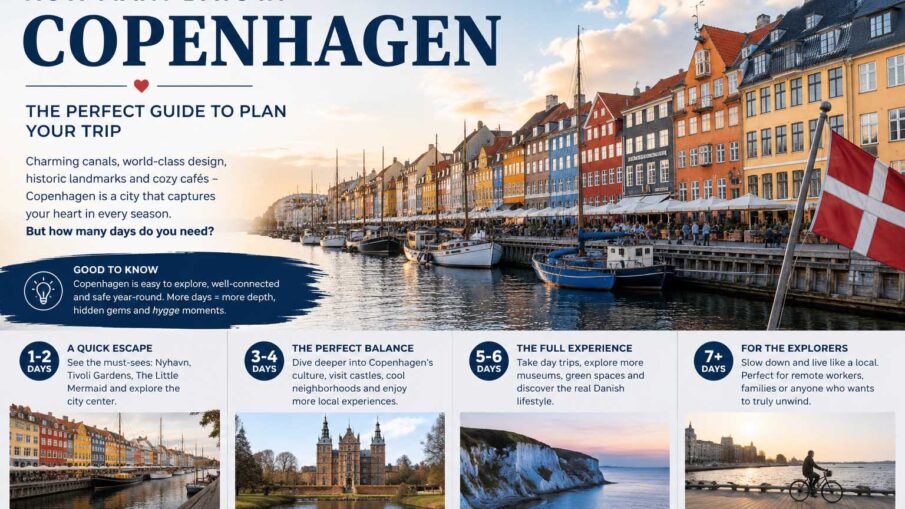
If you’re wondering how many days in Copenhagen you should plan, the short answer is 3 to 4 days. That gives you enough time to explore the city’s famous attractions, experience its food scene, enjoy waterfront neighborhoods, and even take a short day trip if your schedule allows.
Of course, the ideal length depends on your travel style. Some visitors only have a weekend, while others include Copenhagen as part of a larger Scandinavian adventure. This guide will help you decide exactly how long to stay, what you can see each day, and how to make the most of your visit.
How Many Days in Copenhagen Is Enough?
For most travelers, how many days in Copenhagen is enough comes down to what you want from the trip.
Here’s a quick guide:
| Trip Length | Best For |
|---|---|
| 1 Day | Cruise passengers or quick stopovers |
| 2 Days | Major landmarks and city highlights |
| 3 Days | Best balance of sightseeing and relaxation |
| 4 Days | Museums, neighborhoods, and a day trip |
| 5+ Days | Slow travel and exploring beyond the city |
Three days is the sweet spot for first-time visitors. You’ll have time to see the city’s famous sights without rushing from one attraction to another.
If you’re comparing European city breaks, you’ll notice Copenhagen deserves a similar amount of time as how many days in london, especially if you enjoy museums, local neighborhoods, and food experiences.
Why Three Days Works So Well
Copenhagen is compact, walkable, and easy to navigate.
Many of the city’s top attractions sit within a relatively small area, making it possible to explore several neighborhoods in a single day.
You’ll have enough time to:
- Visit Nyhavn
- See The Little Mermaid
- Explore Tivoli Gardens
- Walk through Strøget
- Visit Rosenborg Castle
- Enjoy Danish cafés
- Take a canal cruise
- Experience local neighborhoods
Instead of spending hours commuting, you’ll spend more time actually enjoying the city.
A Perfect 3-Day Copenhagen Itinerary
Day 1: Explore the Historic Center
Start your trip in Nyhavn, Copenhagen’s iconic waterfront lined with colorful buildings and restaurants.
Continue toward:
- Amalienborg Palace
- Frederik’s Church
- The Little Mermaid
- Kastellet Fortress
During the afternoon, stroll along Strøget, one of Europe’s longest pedestrian shopping streets.
Finish the evening with dinner beside the canals.
Day 2: Culture and Local Neighborhoods
Dedicate your second day to museums and city culture.
Popular choices include:
- Rosenborg Castle
- National Museum of Denmark
- Designmuseum Danmark
Later, visit neighborhoods like Nørrebro or Vesterbro, where you’ll find independent cafés, boutiques, and excellent bakeries.
Renting a bicycle is one of the best ways to experience daily life in Copenhagen.
Day 3: Parks, Food, and Tivoli
Spend your final full day at a slower pace.
Visit:
- Botanical Garden
- King’s Garden
- Torvehallerne Food Market
In the afternoon, enjoy a canal tour before ending the trip at Tivoli Gardens.
Even travelers who don’t enjoy amusement parks appreciate Tivoli’s historic atmosphere, beautiful landscaping, and evening lights.
How Many Days to Spend in Copenhagen If You Have Extra Time
If your schedule allows four or five days, Copenhagen becomes even more rewarding.
Extra time lets you:
- Visit Louisiana Museum of Modern Art
- Explore Christianshavn
- Take a harbor swim during summer
- Visit Reffen Street Food Market
- Enjoy a slower pace without rushing
A fourth day also gives you flexibility if the weather changes unexpectedly.
Day Trips Worth Adding
One of the biggest advantages of staying longer is the opportunity to leave the city for a day.
Popular options include:
Kronborg Castle
Known as Shakespeare’s Hamlet castle, Kronborg sits in Helsingør about 45 minutes away by train.
Roskilde
Visit the Viking Ship Museum and Roskilde Cathedral while exploring one of Denmark’s oldest cities.
Malmö, Sweden
Cross the impressive Øresund Bridge and spend a day in Sweden.
This makes Copenhagen an excellent base for multi-country travel.
Best Time to Visit Copenhagen
The city welcomes visitors year-round, although each season feels different.
Spring (March to May)
Spring brings blooming parks and comfortable sightseeing weather.
Expect fewer crowds than summer.
Summer (June to August)
Summer is the busiest season.
Benefits include:
- Long daylight hours
- Outdoor dining
- Festivals
- Harbor swimming
- Pleasant temperatures
Hotel prices are highest during these months.
Autumn (September to November)
Fall offers colorful parks and smaller crowds.
Many travelers enjoy this quieter atmosphere while still experiencing mild weather.
Winter (December to February)
Winter transforms Copenhagen into one of Europe’s coziest destinations.
Christmas markets, festive decorations, and warm cafés create a memorable atmosphere despite shorter days.
Transportation Around the City
One reason travelers love Copenhagen is how easy it is to get around.
Options include:
- Walking
- Metro
- Buses
- Trains
- Bicycle rentals
Cycling is especially popular.
Dedicated bike lanes cover nearly every neighborhood, making it one of the world’s most bike-friendly cities.
Budgeting Your Trip
Copenhagen is among Europe’s more expensive capitals.
Typical daily budgets include:
| Travel Style | Daily Budget |
| Budget | €90–140 |
| Mid-range | €180–280 |
| Luxury | €350+ |
Accommodation represents the biggest expense.
Saving money is possible by:
- Booking hotels early
- Using public transportation
- Eating lunch specials
- Purchasing city attraction passes
- Traveling during shoulder seasons
Where to Stay
Different neighborhoods suit different travel styles.
Indre By
Perfect for first-time visitors.
You’ll be within walking distance of many famous attractions.
Vesterbro
Great for restaurants, nightlife, and trendy cafés.
Nørrebro
Ideal for travelers looking for local culture and creative neighborhoods.
Østerbro
Quiet, family-friendly, and close to parks.
Food You Shouldn’t Miss
Trying Danish cuisine is part of the experience.
Popular dishes include:
- Smørrebrød
- Danish pastries
- Frikadeller
- Fresh seafood
- Cinnamon rolls
- Open-faced sandwiches
Torvehallerne Market offers an excellent introduction to local flavors without requiring reservations.
Packing Tips
Weather changes quickly in Denmark.
Pack:
- Comfortable walking shoes
- Waterproof jacket
- Sweater
- Layered clothing
- Portable umbrella
- Universal power adapter
If you’re combining several European cities on one vacation, reading what to pack for europe trip can help you avoid overpacking while staying prepared for changing conditions.
Family and Solo Travel
Copenhagen works well for nearly every type of traveler.
Families appreciate:
- Safe public spaces
- Tivoli Gardens
- Interactive museums
- Parks and playgrounds
Solo travelers often enjoy:
- Walkable neighborhoods
- Friendly locals
- Excellent public transport
- Comfortable cafés
- High safety standards
Common Mistakes to Avoid
Avoid these common mistakes:
- Underestimating walking distances
- Visiting only Nyhavn
- Skipping neighborhood cafés
- Forgetting to reserve popular restaurants
- Packing only light summer clothing
Even during warmer months, evenings can become surprisingly cool.
How Many Days in Copenhagen and Stockholm?
Many travelers combine Denmark and Sweden on the same vacation.
If you’re asking how many days in Copenhagen and Stockholm, a great starting point is:
- Copenhagen: 3 days
- Stockholm: 3 to 4 days
This schedule provides enough time to experience the highlights of both Scandinavian capitals without feeling rushed.
Comparing Copenhagen With Other European City Breaks
Every European destination deserves a different amount of time.
For example, travelers often compare their itinerary with how many days in barcelona because both cities are compact and packed with attractions.
Meanwhile, history lovers planning Italy frequently research how many days in venice before deciding how to divide their vacation across multiple cities.
If you’re creating a longer European itinerary, you’ll also come across guides like how many days in madrid or how many days in milan, which can help balance your overall schedule based on your interests.
Frequently Asked Questions
Is two days enough for Copenhagen?
Still, three days provides a much more relaxed experience.
Is four days too long?
Not at all. Four days let you explore neighborhoods, museums, local food markets, and nearby destinations without rushing.
What is the best month to visit Copenhagen?
May, June, and September offer pleasant weather, long days, and manageable crowds.
December is ideal for travelers looking for Christmas markets and festive decorations.
Is Copenhagen expensive?
Yes, compared with many European cities. Booking accommodations early and using public transportation can help reduce costs.
Can you explore Copenhagen without renting a car?
Absolutely. Walking, cycling, and public transportation are all excellent ways to get around.
Making the Most of Your Copenhagen Adventure
For most visitors, three days strikes the perfect balance between sightseeing and relaxation. You’ll have enough time to experience iconic landmarks, sample Danish cuisine, explore charming neighborhoods, and enjoy the city’s famous cycling culture without feeling rushed.
If you can extend your visit to four or five days, you’ll discover an even deeper side of Copenhagen through day trips, local markets, museums, and quieter districts that many visitors never see. No matter how long you stay, careful planning will help you enjoy one of Europe’s most welcoming and easy-to-explore capitals.