
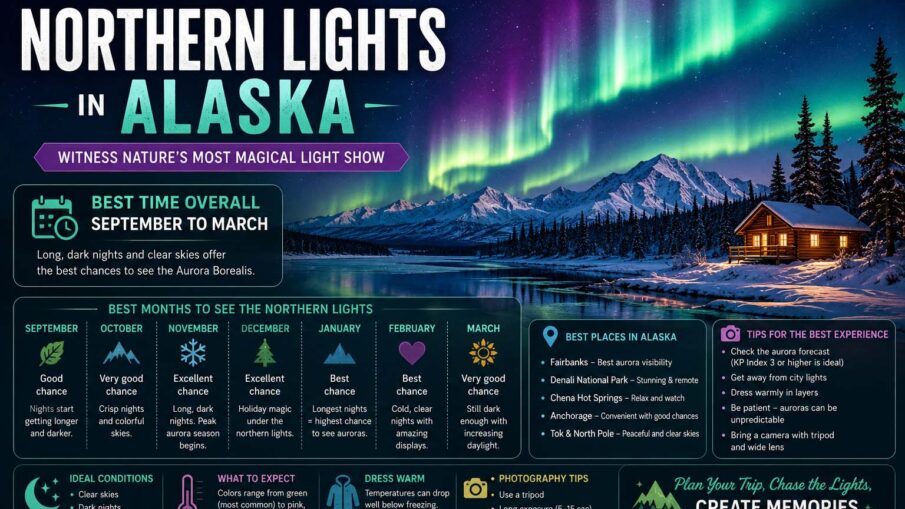
Watching the northern lights dance across Alaska’s night sky is a bucket-list experience for many travelers. Green waves ripple overhead, purple streaks appear without warning, and the sky seems to come alive. However, timing makes a significant difference. The best time to see the northern lights Alaska has to offer is generally from late August through mid-April, when nights are dark enough for aurora viewing. September and March are popular choices because they combine long nights with opportunities to enjoy Alaska’s seasonal scenery.
This guide explains the best months to visit, top viewing locations, weather conditions, travel costs, and practical tips to help you plan your trip.
Quick Answer: Best Time for Northern Lights in Alaska
| Travel goal | Best time |
|---|---|
| Best overall balance | September and March |
| Longest nights | December and January |
| Milder temperatures | September and early October |
| Snow-covered scenery | February and March |
| Potentially lower accommodation costs | Late September and November, depending on location |
| Aurora photography | September through March |
Alaska’s aurora season extends from late summer into spring. Nevertheless, no month guarantees a sighting because clouds, local weather, and solar activity all affect visibility.
Why Alaska Is Ideal for Northern Lights Viewing
Alaska lies beneath the auroral oval, a region around the Earth’s magnetic poles where auroras occur frequently. Its remote landscapes, limited light pollution, and long winter nights create favorable viewing conditions.
The state also offers several advantages:
- Large areas with dark, open skies
- Scenic mountains and wilderness landscapes
- Guided aurora tours and heated viewing facilities
- Winter activities to enjoy during daylight
- Established visitor services around Fairbanks
Interior Alaska, particularly the Fairbanks area, is a popular destination for aurora travelers. If you’re comparing international options, explore these best places to see northern lights before choosing your destination.
Best Months to See Northern Lights in Alaska
Two conditions matter most when planning your trip: darkness and clear skies. Although auroras can occur throughout the year, Alaska’s bright summer nights make them difficult or impossible to see.
Late August typically marks the beginning of the viewing season as darkness returns. The season continues through winter and into April, although increasingly long spring days gradually reduce the available viewing hours.
For the best experience, choose a trip that gives you several nights to watch the sky. That way, you have more opportunities to find clear weather and favorable aurora activity.
August: The Beginning of Aurora Season
Late August marks the beginning of aurora viewing in many parts of Alaska.
Advantages include:
- Relatively mild temperatures
- Less severe winter conditions
- Opportunities to enjoy late-summer scenery
However, nights are shorter than in winter, and early August is generally too bright for reliable viewing.
September: Mild Weather and Dark Skies
September is an attractive choice for travelers who want dark skies without the harshest winter temperatures.
You can enjoy colorful autumn scenery, cooler evenings, and growing periods of darkness. However, weather varies by location, so check local forecasts before planning outdoor excursions.
October: Longer Nights and Colder Weather
October brings longer nights and colder temperatures. Snow may begin to accumulate in some areas, creating a different landscape for nighttime photography.
Meanwhile, travelers should prepare for changing weather and potentially slippery roads.
November: Extended Darkness
November offers extended darkness and fewer daylight hours. These conditions provide plenty of time for nighttime aurora hunting.
However, temperatures drop significantly, and cloud cover can interfere with visibility. Pack suitable winter clothing and plan flexible evening activities.
December: Maximum Winter Darkness
December provides some of the longest nights of the year.
Advantages include:
- Extended darkness
- Seasonal winter activities
- Festive holiday scenery
On the other hand, temperatures can become extremely cold, and limited daylight reduces the time available for sightseeing.
January: Excellent Winter Viewing Opportunities
January remains a strong option for aurora travelers because nights are still long. Daylight gradually increases after the winter solstice, but darkness remains plentiful.
Plan indoor activities for the daytime and keep your evenings flexible in case the sky clears.
February: Snowy Landscapes and Long Nights
February offers a useful balance between winter scenery and increasing daylight. Visitors can enjoy snow-covered landscapes, winter sports, and long nighttime viewing opportunities.
Dress in warm layers, particularly if you expect to spend several hours outdoors.
March: A Popular Month for Aurora Trips
March is one of the most appealing months for an Alaska aurora trip. Days become longer, while nights remain dark enough for viewing. Winter activities also remain available in many destinations.
However, clear skies are never guaranteed. Check weather forecasts and allow enough time to adjust your plans.
April: The End of the Main Viewing Season
Early April can still offer worthwhile viewing opportunities, especially in northern and interior areas. As the month progresses, increasing daylight shortens the window for nighttime observation.
If you visit in April, prioritize locations with sufficiently dark skies and check sunset times before heading out.
Choosing the Right Season for Your Alaska Trip
The ideal travel period depends on the experience you want beyond the aurora itself.
Best Time for Milder Weather
Choose September or early October. These months generally offer more comfortable outdoor conditions than midwinter, although evenings can still become cold.
Best Months for Winter Activities
Visit in February or March if you want to combine aurora viewing with activities such as:
- Dog sledding
- Snowmobiling
- Ice fishing
- Snowshoeing
- Visiting hot springs
Check seasonal operating schedules before booking specific excursions.
When to Visit for the Longest Nights
December and January offer particularly long nights. They suit travelers who want extended opportunities to watch the sky, provided they prepare for severe cold and limited daylight.
Travelers comparing winter destinations can also explore where to travel in winter for more seasonal inspiration.
Best Places to See Northern Lights in Alaska
Fairbanks: A Convenient Aurora Base
Fairbanks is a leading choice for aurora viewing in Alaska. Its location in Interior Alaska, dark surroundings outside the city, and established tourism services make it a practical base.
You can book guided excursions or drive to a suitable viewing location away from artificial lights.
Chena Hot Springs: Relaxation and Aurora Viewing
Chena Hot Springs combines a hot-springs experience with opportunities to watch the aurora when conditions cooperate.
However, a sighting is never guaranteed. Check the forecast and plan enough time to enjoy the destination even if clouds obscure the sky.
Denali Area: Mountain Scenery and Dark Skies
Areas outside developed locations near Denali can provide dark skies and impressive mountain scenery. Conditions vary with the season, and winter access and services may be limited.
Before traveling, confirm road conditions, accommodation availability, and the operating schedules of local attractions.
Coldfoot: A Remote Northern Destination
Coldfoot, farther north along the Dalton Highway, appeals to adventurous travelers seeking remote surroundings and dark skies.
Because services are limited in remote areas, plan fuel stops, accommodation, weather contingencies, and road travel carefully.
Weather Conditions for Northern Lights Viewing
Strong aurora activity alone does not guarantee a good view. Thick clouds can hide the display, while bright surroundings reduce contrast.
For better viewing conditions:
- Choose a location with a clear view of the sky.
- Move away from streetlights and brightly lit buildings.
- Check local cloud forecasts before leaving.
- Monitor aurora predictions for your destination.
- Allow several nights for possible sightings.
For scientific updates on aurora activity and geomagnetic conditions, consult the NOAA Space Weather Prediction Center.
Remember that forecasts can help you plan, but they cannot guarantee a display at a particular time.
Planning Your Northern Lights Trip in 2026
The seasonal pattern remains broadly similar from year to year because nighttime darkness depends on Alaska’s position relative to the Sun. Therefore, late August through early April remains a useful general window for travelers planning a 2026 visit.
Solar activity also affects aurora displays, so check updated forecasts shortly before your trip. Meanwhile, choose accommodation that allows flexible evening outings, and avoid relying on a single night for the entire experience.
Sample Four-Day Alaska Aurora Itinerary
| Day | Suggested activities |
|---|---|
| Day 1 | Arrive in Fairbanks, settle into your accommodation, and explore downtown. |
| Day 2 | Visit local museums and join an evening aurora excursion. |
| Day 3 | Visit Chena Hot Springs and watch the sky after dark if conditions permit. |
| Day 4 | Enjoy a dog-sledding or snowmobile excursion before departure, depending on availability. |
This itinerary balances daytime sightseeing with multiple nighttime viewing opportunities. Adjust the schedule for weather, transportation, and seasonal operating hours.
Budget Planning for Your Alaska Visit
Travel expenses depend on accommodation, transportation, tour choices, and the time of year.
| Budget level | Illustrative daily budget |
|---|---|
| Budget | $150–$220 |
| Mid-range | $250–$450 |
| Luxury | $500+ |
These figures are rough planning estimates, not verified current prices. Your actual costs may fall outside these ranges, especially during holidays or when booking remote lodges and guided excursions.
Compare accommodation and tour prices before booking. In addition, reserving popular winter activities early can help you secure your preferred dates.
What to Pack for Northern Lights Viewing
Alaska’s nighttime temperatures can become extremely cold, particularly in winter. Wear layers that allow you to stay warm while standing outdoors.
Your packing list should include:
- Insulated winter coat
- Thermal base layers
- Warm mid-layers
- Insulated, waterproof boots
- Winter gloves and spare hand warmers
- Wool socks and a warm hat
- Camera tripod and suitable lens
- Extra camera batteries
- Headlamp or flashlight
Cold temperatures can drain camera batteries faster. Keep spare batteries in an inside pocket to help maintain their charge.
Photography Tips for Capturing the Aurora
Aurora photography works best when you prepare your equipment before heading outside.
- Use a tripod to keep the camera steady.
- Choose a wide-angle lens if you want to capture more of the sky.
- Use manual controls to adjust exposure and focus.
- Begin with a test exposure and adjust settings to match the display.
- Turn off the flash, which generally will not illuminate the distant aurora.
- Use a timer or remote shutter to reduce camera shake.
Because aurora brightness changes, review your images and adjust the exposure as conditions evolve.
Other Activities to Enjoy During Your Trip
Aurora viewing often involves waiting, so daytime activities help make the trip worthwhile even when clouds appear.
Depending on the destination and season, consider:
- Visiting museums and ice attractions
- Watching local wildlife
- Snowshoeing or cross-country skiing
- Booking a dog-sledding excursion
- Exploring local restaurants
- Attending seasonal ice-sculpting events
Check opening hours and seasonal availability before arranging your itinerary.
Practical Tips for a Successful Aurora Trip
A few practical decisions can improve your comfort and viewing opportunities.
- Stay for at least three nights. More nights give you additional chances to find clear skies.
- Remain flexible. Change your evening plans when weather conditions improve.
- Choose dark locations. Reduce light pollution whenever possible.
- Dress for the conditions. Prepare for long periods outside in cold weather.
- Monitor forecasts. Check both cloud cover and aurora activity.
- Arrange safe transportation. Winter roads and remote driving conditions require extra care.
These precautions can also help travelers researching what is the safest way to travel in challenging winter conditions.
Auroras can appear at different hours throughout the night. Although some travelers prefer watching after midnight, you should not assume that the display will follow a fixed schedule.
Common Mistakes to Avoid When Chasing the Aurora
First-time visitors can improve their experience by avoiding a few common planning errors.
- Visiting during the bright summer months and expecting regular sightings
- Staying only one night
- Ignoring cloud forecasts
- Wearing inadequate winter clothing
- Expecting bright colors every night
- Giving up after a short wait
Sometimes the aurora appears only after several hours of darkness. Patience and flexibility are therefore valuable parts of any viewing plan.
Frequently Asked Questions About Northern Lights in Alaska
What is the best month to see the northern lights in Alaska?
March is a popular choice because it combines long nights with increasing daylight for daytime activities. September is another attractive option for travelers who prefer milder conditions. Actual viewing opportunities depend on clouds and aurora activity.
Can you see the northern lights every night in Alaska?
No. Auroras do not appear as a guaranteed nightly spectacle. Solar activity, darkness, and cloud cover all influence whether you can see them.
Which place in Alaska is best for northern lights?
Fairbanks is a popular starting point because of its location beneath the auroral oval and access to viewing tours. Remote areas with dark skies can also provide good opportunities when conditions cooperate.
Do I need an aurora tour?
No. Independent travelers can watch the aurora from suitable dark locations. However, guided tours can help with transportation, local knowledge, and access to viewing areas, particularly in winter.
Is Alaska better than Iceland for northern lights?
Both destinations offer opportunities to see the aurora. Alaska provides extensive wilderness and varied winter activities, while Iceland combines aurora viewing with waterfalls, glaciers, and volcanic scenery. Your choice depends on budget, travel preferences, and the experiences you want.
For a seasonal comparison, see this guide to the best time to see northern lights in Iceland.
How many nights should I stay in Alaska?
Aim for at least three or four nights if your schedule allows. A longer stay gives you more opportunities to find clear skies if clouds or weak aurora activity prevent a sighting on one evening.
Final Tips for Seeing Northern Lights in Alaska
The most useful general window for seeing Alaska’s northern lights runs from late August through mid-April. September and March are particularly appealing for travelers who want a balance of darkness, seasonal scenery, and outdoor activities.
For the best chance of seeing the aurora, spend several nights in or around Fairbanks, monitor weather and space-weather forecasts, and remain flexible about when you go outside. With careful preparation, you can enjoy Alaska’s remarkable landscapes and give yourself several opportunities to witness one of nature’s most memorable displays.