
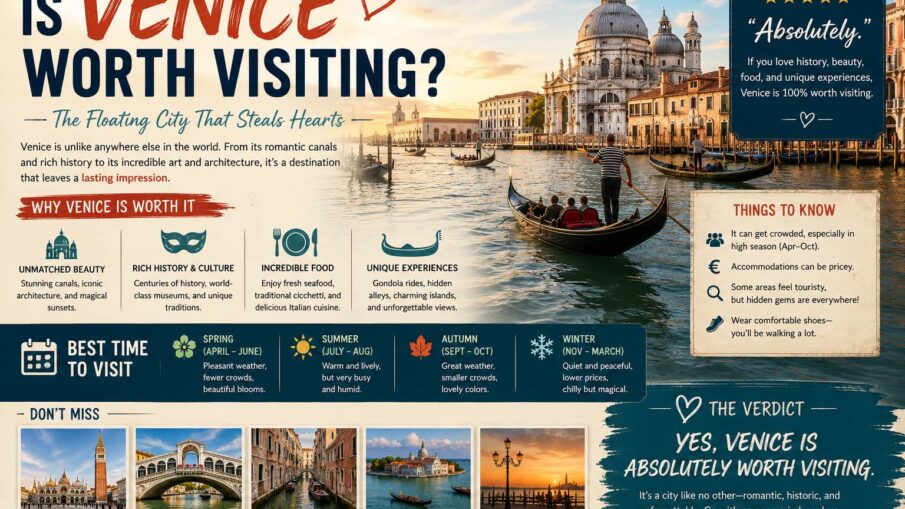
Few cities in the world are as recognizable as Venice. Floating on more than 100 small islands connected by canals and historic bridges, it’s a destination that appears on countless travel bucket lists. Yet many travelers still wonder, is Venice worth visiting, especially with concerns about crowds, prices, and overtourism.
The answer is yes. Venice offers an experience you simply can’t find anywhere else. Instead of roads filled with cars, you’ll walk through narrow alleyways, cross picturesque bridges, and travel by boat along centuries-old canals. Every neighborhood has its own character, from lively public squares to quiet residential streets where daily life continues much as it has for generations.
Whether you’re planning your first trip to Italy or adding another stop to a European vacation, Venice remains one of the continent’s most memorable destinations.
Why Visit Venice?
Venice combines remarkable history, world-famous architecture, incredible art, and unique transportation into one compact city.
Unlike many destinations, simply wandering through Venice is part of the attraction. Around almost every corner you’ll discover hidden canals, elegant churches, charming cafés, and beautiful views that don’t appear in guidebooks.
Visitors come to Venice for many reasons:
- Historic canals
- Gondola rides
- St. Mark’s Square
- Venetian architecture
- World-famous museums
- Authentic Italian cuisine
- Romantic atmosphere
- Photography opportunities
If you’re deciding between destinations in northern Italy, comparing is milan worth visiting can also help since the two cities offer completely different travel experiences.
Is Venice Italy Worth Visiting?
If you’re asking is Venice Italy worth visiting, think about what kind of trip you want.
Venice isn’t a destination for fast-paced sightseeing or road trips. It’s best enjoyed slowly.
Walking through quiet neighborhoods early in the morning, watching boats move along the canals, and relaxing in small cafés are experiences that define the city.
Unlike other European cities, Venice has:
- No regular cars in the historic center
- Hundreds of canals instead of streets
- Historic buildings dating back centuries
- One of the world’s most recognizable skylines
- A unique atmosphere that’s difficult to match anywhere else
For travelers interested in history, architecture, photography, food, and culture, Venice offers outstanding value despite its reputation for being expensive.
Top Things to Do in Venice
Visit St. Mark’s Square
Piazza San Marco is the heart of Venice.
Here you’ll find several famous attractions within a short walk, including:
- St. Mark’s Basilica
- Doge’s Palace
- Campanile Bell Tower
- Historic cafés
Early morning is one of the best times to visit before large tour groups arrive.
Ride a Gondola
A gondola ride is one of Venice’s signature experiences.
Although it’s one of the more expensive activities, many visitors feel it’s worth doing at least once, especially if you’re celebrating a special occasion.
For a quieter ride, choose smaller canals rather than the busy Grand Canal.
Walk Across Rialto Bridge
The Rialto Bridge is one of Venice’s oldest and most famous landmarks.
From the top, you’ll enjoy excellent views of the Grand Canal while watching boats travel beneath one of the city’s most photographed bridges.
Nearby streets are filled with restaurants, cafés, and souvenir shops.
Explore the Grand Canal
The Grand Canal serves as Venice’s main waterway.
Instead of taking a gondola, many travelers save money by riding a Vaporetto (water bus), which offers similar scenic views for a fraction of the cost.
Visit the Islands
If you have extra time, take a short boat ride to nearby islands.
Popular choices include:
- Murano for glassmaking
- Burano for colorful houses
- Torcello for history and quiet scenery
These islands provide a welcome break from the busiest parts of Venice.
Is Venice Still Worth Visiting?
Many travelers wonder whether overtourism has changed the city too much.
The truth is that Venice can feel crowded around St. Mark’s Square and the Rialto Bridge during peak season.
However, those famous areas represent only a small part of the city.
Walk just ten minutes away from the busiest attractions and you’ll often discover peaceful canals, quiet neighborhoods, local bakeries, and beautiful residential streets.
Because of this, is Venice still worth visiting remains an easy question to answer. Yes, as long as you plan your visit wisely and spend time exploring beyond the most famous landmarks.
Best Time to Visit Venice
Venice welcomes visitors throughout the year, but each season creates a different experience.
Travelers planning a longer Italian vacation often compare the best time to visit italy before deciding when Venice fits best into their itinerary.
Spring (March to May)
Spring is one of the most pleasant seasons.
Expect:
- Mild temperatures
- Blooming gardens
- Comfortable walking weather
- Moderate crowds
April and May are especially popular because the weather is ideal for sightseeing.
Summer (June to August)
Summer brings warm temperatures and the largest number of visitors.
You’ll enjoy:
- Long daylight hours
- Outdoor dining
- Festivals
- Evening walks
On the downside, hotel prices are higher and major attractions become crowded.
Autumn (September to November)
Many experienced travelers prefer autumn.
The weather stays comfortable while visitor numbers gradually decrease after summer.
September and October offer an excellent balance between pleasant temperatures and manageable crowds.
Winter (December to February)
Winter feels completely different.
The city becomes quieter, accommodation prices often fall, and Christmas decorations create a charming atmosphere.
You may also experience occasional flooding known as acqua alta, though elevated walkways are commonly installed when needed.
Seasonal Overview
| Season | Weather | Crowds | Best For |
|---|---|---|---|
| Spring | Mild | Moderate | Sightseeing and walking |
| Summer | Warm to hot | High | Festivals and long evenings |
| Autumn | Mild and cool | Moderate | Photography and fewer crowds |
| Winter | Cool | Low | Budget travel and Christmas markets |
How Many Days Do You Need?
Venice is compact enough to explore in a relatively short visit.
| Trip Length | Suggested Experience |
|---|---|
| 1 Day | St. Mark’s Square, Rialto Bridge, Grand Canal |
| 2 Days | Add Murano or Burano plus museums |
| 3 Days | Explore quieter neighborhoods and hidden canals at a relaxed pace |
Two full days provide enough time for most first-time visitors without feeling rushed.
Getting Around Venice
Transportation in Venice is unlike anywhere else.
Instead of buses and taxis, you’ll mainly travel by:
- Walking
- Vaporetto (public water buses)
- Water taxis
- Gondolas
Walking remains the best way to discover hidden streets and unexpected views.
The city is surprisingly compact, although you’ll cross dozens of bridges during a typical day.
Comfortable footwear makes exploring much easier.
Where to Stay in Venice
Choosing the right neighborhood can make a big difference, especially if you’re visiting for the first time.
San Marco
San Marco is the city’s most famous district and puts you close to major attractions like St. Mark’s Basilica and Doge’s Palace.
It’s ideal if you want to walk to the city’s highlights, though hotels here are often the most expensive.
Cannaregio
Cannaregio offers a quieter atmosphere with excellent restaurants, local cafés, and a more authentic feel.
Many travelers enjoy staying here because it combines convenience with lower accommodation costs than San Marco.
Dorsoduro
Known for its art galleries, museums, and canals, Dorsoduro is a great choice for couples and travelers looking for a relaxed neighborhood.
Castello
Castello has fewer crowds while still being within walking distance of Venice’s main attractions.
It’s an excellent option for visitors who prefer a slower pace.
How Much Does Venice Cost?
Venice has a reputation for being expensive, but careful planning can help you stay within your budget.
| Travel Style | Estimated Daily Budget |
|---|---|
| Budget | €90–€140 |
| Mid-range | €180–€280 |
| Luxury | €400+ |
Typical daily expenses include:
- Hotel or apartment
- Meals
- Vaporetto tickets
- Attraction entry fees
- Snacks and coffee
Traveling outside the busiest summer months often results in better hotel prices and fewer crowds.
What to Eat in Venice
Venice is famous for seafood, traditional Venetian recipes, and classic Italian desserts.
Some local dishes worth trying include:
Cicchetti
These small bites are similar to Spanish tapas and are served in traditional wine bars throughout the city.
Risotto al Nero di Seppia
This creamy risotto is prepared with cuttlefish and squid ink, giving it a distinctive black color and rich seafood flavor.
Sarde in Saor
A classic Venetian appetizer made with sardines, onions, vinegar, raisins, and pine nuts.
Tiramisu
Although enjoyed across Italy, Venice is one of the places often associated with this famous dessert.
Packing Tips for Venice
Venice’s historic streets and numerous bridges make packing differently than for many European cities.
Some useful items include:
- Comfortable walking shoes
- Lightweight rain jacket
- Reusable water bottle
- Sunglasses
- Power adapter
- Small backpack
- Portable phone charger
Since you’ll spend much of the day on foot, comfortable footwear is far more valuable than formal shoes.
How to Pack for Venice Efficiently
Because Venice has countless bridges and narrow walkways, rolling heavy luggage across the city can become tiring.
Learning how to pack a suitcase efficiently makes moving between train stations, hotels, and water transportation much easier.
Packing lighter also helps when boarding Vaporetto water buses or walking through busy tourist areas.
Is Venice Good for Families?
Yes. Venice is surprisingly family-friendly.
Children often enjoy:
- Watching gondolas pass by
- Riding Vaporetto boats
- Feeding birds in open squares
- Visiting Murano glass workshops
- Exploring colorful Burano
Parents should remember that many bridges have stairs, so lightweight strollers are easier to manage than larger models.
Is Venice Safe?
Venice is considered one of Italy’s safer tourist destinations.
Violent crime is uncommon, but petty theft can happen in crowded locations.
Simple precautions include:
- Keep valuables secure.
- Watch your belongings around major attractions.
- Avoid displaying expensive jewelry unnecessarily.
- Use official transportation services.
Walking through Venice at night generally feels safe in busy areas, though quieter streets should still be approached with normal travel awareness.
If you’re building a longer European itinerary, you may also be comparing city breaks across different countries. Travelers who enjoyed researching best day trips from london often appreciate Venice as another destination where exploring beyond the main attractions leads to unforgettable experiences.
Common Mistakes First-Time Visitors Make
Many travelers can improve their experience by avoiding a few common mistakes.
Visiting Only During the Middle of the Day
The busiest crowds usually arrive between late morning and mid-afternoon.
Early mornings and evenings offer a much quieter atmosphere.
Staying for Only a Few Hours
Venice deserves more than a quick stop from a cruise ship.
Spending at least two days allows you to experience neighborhoods beyond the main tourist routes.
Eating Beside Major Attractions
Restaurants immediately around St. Mark’s Square often charge premium prices.
Walking a few streets away usually provides better value and more authentic meals.
Packing Too Much
Large suitcases quickly become inconvenient when crossing dozens of bridges.
Traveling light makes exploring the city much easier.
Is Venice Beach Worth Visiting?
Some travelers searching online accidentally compare Venice, Italy, with Venice Beach in California.
If you’re wondering is Venice beach worth visiting, remember that these are completely different destinations.
Venice Beach is famous for surfing, street performers, and beachfront culture, while Venice, Italy, is known for canals, Renaissance architecture, historic churches, and centuries of history.
Sample Two-Day Venice Itinerary
| Day | Suggested Activities |
|---|---|
| Day 1 | St. Mark’s Square, Doge’s Palace, Rialto Bridge, Grand Canal sunset walk |
| Day 2 | Murano or Burano, Cannaregio, local restaurants, evening gondola ride |
This itinerary balances famous attractions with quieter parts of the city.
Frequently Asked Questions
Is Venice worth visiting?
Yes. Venice offers a one-of-a-kind combination of canals, historic architecture, art, and Italian culture that few destinations can match.
Is Venice Italy worth visiting for first-time travelers?
Absolutely. Its compact layout, famous landmarks, and unique transportation make it an excellent destination for first-time visitors to Italy.
Is Venice worth visiting 2026?
Yes. Is Venice worth visiting 2026 remains an easy question to answer because the city’s history, architecture, museums, and canals continue to attract travelers from around the world. Planning ahead and visiting outside peak periods can make the experience even more enjoyable.
Is Venice still worth visiting despite the crowds?
Yes. While famous areas become busy during peak season, much of Venice remains peaceful if you explore beyond the main tourist routes.
How many days should I spend in Venice?
This allows enough time to enjoy major attractions, local neighborhoods, and nearby islands without rushing.
Is Venice expensive?
It can be, especially during summer. Traveling in spring, autumn, or winter and booking accommodation early can help reduce costs.
Planning Your Venice Adventure
Venice is one of those rare destinations that feels just as memorable in person as it does in photographs. The canals, historic buildings, quiet backstreets, and waterfront views create an atmosphere unlike anywhere else in the world.
Whether you’re visiting Italy for the first time or returning to discover another side of the country, Venice deserves more than a quick stop. Give yourself enough time to wander beyond the famous landmarks, enjoy local food, and experience the slower rhythm of daily life.
With thoughtful planning, comfortable walking shoes, and a little curiosity, Venice is likely to become one of the most unforgettable destinations on your European journey.