
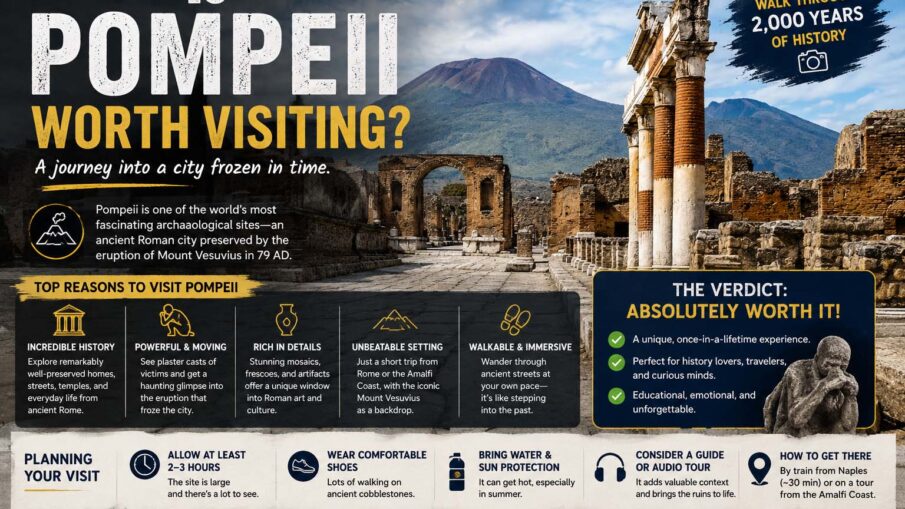
If you’re asking is Pompeii worth visiting, the answer is an easy yes for most travelers. Pompeii is one of the world’s most remarkable archaeological sites, offering an extraordinary glimpse into everyday life in ancient Rome. Preserved beneath volcanic ash after the eruption of Mount Vesuvius in AD 79, the city allows visitors to walk along original streets, enter ancient homes, and imagine life nearly 2,000 years ago.
Whether you’re passionate about history or simply looking for an unforgettable day trip in southern Italy, Pompeii combines education, culture, and stunning scenery into one experience that’s difficult to find anywhere else.
Is Pompeii Worth Visiting for Modern Travelers?
For many visitors, Pompeii becomes one of the highlights of an Italian vacation because it offers something completely different from cities filled with modern buildings and museums.
Instead of looking at artifacts behind glass, you’re walking through an entire ancient city.
You can explore:
- Roman streets
- Villas with preserved frescoes
- Public baths
- Bakeries
- Amphitheaters
- Temples
- Markets
- Gardens
Few historical sites provide such a complete picture of everyday life in the Roman Empire.
If you’re already planning southern Italy, it’s also worth reading is naples worth visiting, since Naples is the main gateway to Pompeii and offers excellent food, museums, and waterfront views.
Is Pompeii Italy Worth Visiting? What Makes It Special?
Many ancient ruins around the world consist of scattered columns or foundations. Pompeii feels entirely different.
When Mount Vesuvius erupted, volcanic ash buried the city quickly enough to preserve buildings, artwork, streets, and even everyday objects.
Today, visitors can still see:
- Original road markings
- Public fountains
- Ancient graffiti
- Colorful wall paintings
- Courtyards
- Temples
- Shops and workshops
This remarkable preservation makes Pompeii one of the world’s most famous archaeological attractions and one of Italy’s most impressive famous landmarks.
Top Things to See in Pompeii
The archaeological park is enormous, so planning ahead helps you make the most of your visit.
The Forum
The Forum served as the city’s political, religious, and commercial center.
Standing here with Mount Vesuvius rising in the distance creates one of Pompeii’s most memorable views.
House of the Faun
This luxurious Roman villa features elegant mosaics and spacious courtyards that demonstrate how wealthy families once lived.
Amphitheater
Built around 70 BC, Pompeii’s amphitheater is among the oldest surviving Roman amphitheaters in the world.
Villa of the Mysteries
Located just outside the main city walls, this villa is famous for its remarkably preserved frescoes depicting mysterious ceremonial scenes.
Plaster Casts
Perhaps the most emotional part of any visit is seeing the plaster casts of victims preserved in the positions where they lost their lives during the eruption.
These displays provide a powerful reminder that Pompeii was once a thriving community.
Is Visiting Pompeii Worth It for Families?
Yes, although younger children may become tired because the site covers a large area.
Families often enjoy:
- Walking ancient streets
- Learning Roman history together
- Seeing preserved homes
- Visiting open spaces instead of crowded museums
Comfortable shoes, water, sunscreen, and regular breaks make the experience much more enjoyable.
Older children interested in history usually find Pompeii fascinating.
How Long Should You Spend in Pompeii?
Most visitors spend between four and six hours exploring.
Here’s a simple guide:
| Time Available | What You Can See |
|---|---|
| 2 hours | Main streets and Forum |
| 4 hours | Major attractions and several villas |
| Full day | Comprehensive visit with quieter sections |
Because the archaeological park is much larger than many first-time visitors expect, rushing through it often leads to fatigue.
Best Time to Visit Pompeii
Spring and autumn generally provide the most comfortable weather for walking outdoors.
If you’re planning a wider Italian vacation, our guide on best time to visit italy can help you decide when to travel based on weather, crowds, and seasonal events.
Spring (March to May)
Spring offers mild temperatures and blooming landscapes.
This is one of the best times for sightseeing.
Summer (June to August)
Summer brings long sunny days but also intense heat.
Temperatures often exceed 30°C (86°F), and much of the archaeological site offers little shade.
Arrive early in the morning if visiting during summer.
Autumn (September to November)
Autumn combines pleasant weather with fewer crowds than peak summer.
The warm temperatures make walking around the ruins much more comfortable.
Winter (December to February)
Winter is quieter and cooler.
Although rain is possible, you’ll usually enjoy smaller crowds and easier access to popular attractions.
How Much Does It Cost to Visit?
Prices vary depending on ticket type and any combined passes.
Typical expenses include:
- Entrance ticket
- Audio guide (optional)
- Guided tour (optional)
- Transportation from Naples or Sorrento
- Food and drinks
Booking tickets online before your visit can help save time during busy periods.
Getting to Pompeii
Pompeii is easy to reach from several popular Italian destinations.
From Naples
The train journey takes about 35–40 minutes, making Pompeii one of Italy’s most popular day trips.
From Sorrento
Regional trains connect Sorrento and Pompeii in roughly 30 minutes.
By Car
Driving offers flexibility, although parking fees apply near the archaeological park.
Public transportation is often the simplest option.
What Should You Pack?
Since you’ll spend several hours outdoors, packing appropriately makes a noticeable difference.
Bring:
- Comfortable walking shoes
- Refillable water bottle
- Sunscreen
- Sunglasses
- Hat
- Camera
- Lightweight backpack
- Portable phone charger
Uneven stone streets make supportive footwear much more comfortable than sandals.
Is It Worth Visiting Pompeii Without a Guide?
Yes, but a guide can add valuable historical context.
You have several options:
- Self-guided visit
- Audio guide
- Group tour
- Private guide
If you enjoy learning historical details, guided tours often provide a richer experience by explaining how buildings were used and what daily life looked like before the eruption.
Nearby Places Worth Visiting
Pompeii pairs well with several nearby attractions.
Popular additions include:
- Mount Vesuvius
- Naples
- Herculaneum
- Sorrento
- Amalfi Coast
Many travelers combine Pompeii and Mount Vesuvius in a single day.
Common Mistakes Visitors Make
Arriving During Midday in Summer
Heat can become exhausting.
Morning visits are much more comfortable.
Underestimating the Site’s Size
Pompeii covers approximately 66 hectares, and exploring it requires plenty of walking.
Allow enough time and pace yourself.
Wearing the Wrong Shoes
Ancient stone roads can be uneven and slippery.
Comfortable walking shoes are one of the most valuable items you can bring.
Skipping Water
Hydration becomes especially important during warmer months.
Carry a refillable bottle whenever possible.
Pompeii Compared with Other Italian Destinations
Every Italian destination offers something unique.
Pompeii stands out because it delivers an experience you simply can’t replicate elsewhere.
Travelers comparing northern Italian cities may also enjoy reading is milan worth visiting, especially if they’re deciding between history, fashion, and modern attractions.
Meanwhile, anyone planning a classic Italian itinerary often includes Venice alongside southern Italy. If that’s part of your trip, our guide on is venice worth visiting explains what to expect from one of the country’s most iconic canal cities.
Frequently Asked Questions
Is Pompeii worth visiting?
Yes. Pompeii offers one of the world’s best-preserved archaeological sites and provides an unforgettable look into ancient Roman life.
Pompeii is it worth visiting if you’re not interested in history?
Surprisingly, yes. Even visitors without a strong interest in history often appreciate the scale, atmosphere, architecture, and dramatic setting beneath Mount Vesuvius.
Is it worth visiting Pompeii on a day trip?
Absolutely. Pompeii is one of the easiest and most rewarding day trips from Naples or Sorrento.
Can you visit Pompeii and Mount Vesuvius in one day?
Yes. Many organized tours combine both attractions, although it will be a full day with plenty of walking.
Is Pompeii suitable for children?
Yes, especially for older children interested in history. Families should bring snacks, water, and sun protection because much of the site is outdoors.
Do you need to book tickets in advance?
Booking ahead is recommended during peak travel months to avoid long ticket lines and secure your preferred entry time.
Why Pompeii Deserves a Spot on Your Italy Itinerary
If you’re still wondering is Pompeii worth visiting, it’s hard to find a reason to skip it. Few places allow you to walk through an entire ancient city where homes, streets, public buildings, and artwork have survived for nearly two millennia. The combination of fascinating history, remarkable preservation, and easy access from Naples makes Pompeii one of Italy’s most rewarding destinations.
Plan to spend at least half a day exploring, wear comfortable shoes, and arrive early if you’re visiting during summer. With a little preparation, your visit to Pompeii is likely to become one of the most memorable experiences of your trip to Italy.