
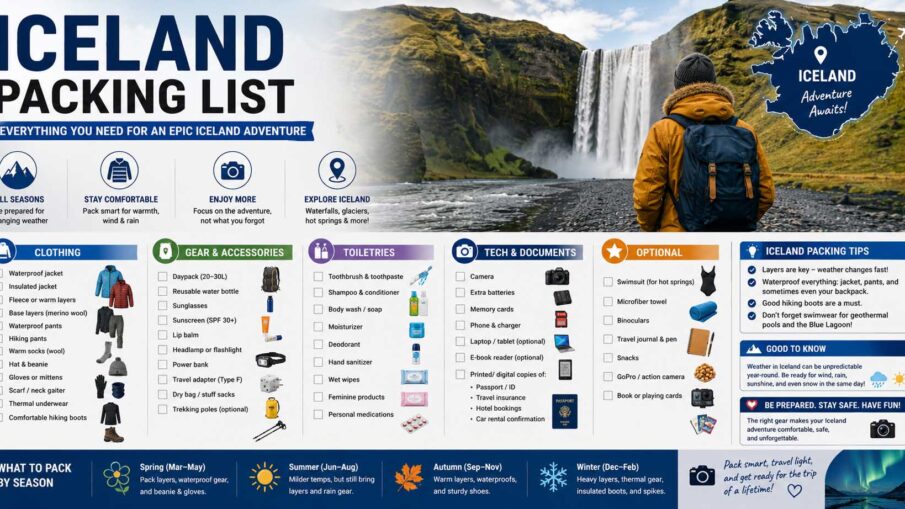
Packing for Iceland is less about bringing a huge wardrobe and more about choosing clothing that works together. A good Iceland packing list should prepare you for wind, rain, cool temperatures, outdoor adventures, and surprisingly quick weather changes. Even during summer, a sunny morning can turn into a chilly, wet afternoon.
Fortunately, you do not need specialist expedition equipment for a typical Iceland vacation. Instead, waterproof outerwear, practical footwear, warm layers, and a few useful accessories will cover most trips.
Your exact luggage will depend on when you visit and what you plan to do. Therefore, a summer road trip needs a slightly different setup from a winter Northern Lights vacation. This guide breaks everything down so you can pack comfortably without filling your suitcase with things you never use.
Iceland Packing List: The Essential Items
Start with a small collection of versatile essentials rather than planning a separate outfit for every day. Since Iceland’s weather can shift quickly, layers give you much more flexibility.
For most travelers, a basic packing list for Iceland should include:
- Waterproof and wind-resistant jacket
- Waterproof or water-resistant pants
- Warm mid-layer or fleece
- Thermal or moisture-wicking base layers
- Comfortable hiking or walking pants
- Waterproof hiking shoes or boots
- Warm socks
- Hat or beanie
- Gloves
- Comfortable casual clothing
- Swimsuit
- Quick-drying towel if needed
- Small daypack
- Reusable water bottle
- Sunglasses
- Sunscreen
- Lip balm and moisturizer
- Phone charger and power bank
- Travel adapter if required
- Personal medications
- Basic toiletries
- Camera or smartphone
Although Iceland is in Europe, its outdoor-focused travel style requires more weather protection than many city vacations. So, travelers researching what to pack for Europe trip should adjust their normal European checklist by prioritizing waterproof clothing, sturdy shoes, and insulating layers for Iceland.
Understanding Iceland’s Weather Before You Pack
Iceland’s climate can be unpredictable, which is why checking only the expected temperature does not tell the whole story. Wind and rain can make conditions feel much colder.
Coastal weather also changes quickly. As a result, you might experience sunshine, clouds, showers, and strong wind during the same sightseeing day.
Summer generally offers milder conditions and very long daylight hours. Winter, by comparison, brings colder temperatures, shorter days, and a greater chance of snow or icy surfaces.
Spring and autumn sit somewhere between those extremes. However, both seasons can still produce cold, wet, and windy conditions.
If you have not decided when to travel yet, researching the best time to go to Iceland can help you match your clothing needs with the activities and weather conditions you prefer.
Why Layering Works So Well
Rather than relying on one extremely heavy coat, use three basic layers.
First, wear a breathable base layer close to your skin. Next, add a fleece, wool sweater, or lightweight insulated jacket for warmth. Finally, protect everything with a waterproof and wind-resistant outer shell.
This system works especially well during road trips because you can remove layers while driving and put them back on before exploring waterfalls, beaches, glaciers, or hiking trails.
Iceland Packing List Summer Essentials
An Iceland packing list summer travelers can rely on should still contain warm and waterproof clothing. June, July, and August are milder, but Iceland does not suddenly become a hot-weather destination.
Therefore, avoid packing only T-shirts, shorts, and lightweight shoes.
Your Iceland summer packing list should include a waterproof shell, fleece or sweater, comfortable pants, moisture-wicking tops, good walking shoes, and several pairs of quality socks. Meanwhile, a light insulated jacket can provide extra warmth during cool mornings and evenings.
Sunglasses and sunscreen are useful too. Because summer daylight lasts for many hours, travelers can spend much longer outside than they might expect.
An eye mask can also be surprisingly valuable. During the brightest part of summer, darkness is limited, so travelers who need a dark bedroom may sleep better with one.
What to Wear on Summer Road Trips
Comfort matters on long driving days. Therefore, choose flexible trousers or leggings, breathable tops, and a fleece that you can easily remove inside the car.
Keep your rain jacket accessible rather than buried under luggage. When you stop unexpectedly at a viewpoint or waterfall, you can grab it immediately.
Also, think about trip length before packing extra outfits. Travelers planning how many days in Iceland should consider laundry access, their route, and how frequently they will change accommodation. Rewearing outer layers makes it easy to keep luggage manageable even on longer trips.
Iceland Packing List Winter Essentials
An Iceland packing list winter travelers can use requires stronger insulation, especially if you expect to spend long periods outside.
Start with thermal base layers for both your upper and lower body. Then, add a warm fleece or wool layer before finishing with an insulated, weather-resistant outer layer.
Winter essentials commonly include:
- Thermal tops and bottoms
- Insulated waterproof jacket
- Warm mid-layers
- Waterproof trousers
- Wool or thermal socks
- Waterproof boots with good traction
- Warm hat
- Insulated gloves
- Neck warmer or scarf
- Hand warmers for long outdoor activities
Good footwear deserves special attention. Ice, slush, rain, and snow can make ordinary fashion shoes uncomfortable or unsafe. Therefore, choose footwear with solid grip and enough space for warm socks.
Depending on your itinerary and current conditions, traction aids may also be useful. However, always follow local guidance and activity-provider recommendations rather than assuming the same equipment works everywhere.
Packing for the Northern Lights
Northern Lights trips involve a different challenge: waiting outside at night.
You may stand in one location for a long time while hoping for clear skies and aurora activity. Consequently, clothing that feels warm during an active daytime walk may feel inadequate when you are standing still.
Wear thermal layers, warm socks, gloves, a hat, insulated outerwear, and weather-resistant footwear. Meanwhile, a small thermos can be handy when allowed on your tour or road trip.
Photographers should bring spare batteries because cold conditions can reduce battery performance. A tripod is also useful for longer exposures and steady night photographs.
Timing matters as much as clothing. If seeing the aurora is a major reason for your trip, check the best time to see northern lights in Iceland before finalizing your dates and packing strategy.
What Shoes Should You Take to Iceland?
For many trips, one pair of waterproof hiking shoes or boots plus one comfortable casual pair is enough.
Your main shoes should have reliable grip and already feel comfortable before departure. Iceland is not a good destination for breaking in brand-new hiking boots.
Waterproof footwear becomes especially useful around waterfalls, muddy paths, wet viewpoints, and winter streets. However, your exact choice should match your activities. A Reykjavík-focused weekend does not require the same footwear as a hiking-heavy Ring Road adventure.
Also, pack more socks than you think you will need. Dry socks can make a major difference after an unexpectedly wet day.
What to Pack for Waterfalls, Hot Springs, and Outdoor Activities
Iceland’s famous landscapes create a few unusual packing needs.
Near major waterfalls, spray can soak clothing surprisingly quickly. Therefore, a waterproof jacket is far more practical than an umbrella, especially when wind is strong.
For geothermal pools, lagoons, and swimming pools, pack a swimsuit even during winter. A small waterproof bag can also separate wet clothing from everything else afterward.
If hiking is part of your itinerary, bring a lightweight backpack with room for water, snacks, an extra layer, and rain protection. Meanwhile, avoid carrying an unnecessarily large bag on short trails.
Specialized activities such as glacier hiking usually involve equipment supplied or specified by the operator. So, read your booking information carefully before purchasing equipment you may not need.
How to Pack Without Overloading Your Suitcase
The easiest mistake is packing too many bulky clothes.
Instead, build several outfits from the same base and mid-layers. Neutral, reusable clothing works particularly well because your waterproof jacket and outer layers will often cover most of your outfit anyway.
Packing cubes can separate base layers, socks, casual clothing, and outdoor gear. Meanwhile, wearing your heaviest boots and jacket during travel can free valuable luggage space.
Learning how to pack a suitcase efficiently is especially helpful for Iceland because warm layers can consume space quickly. Rolling or neatly folding lighter garments while compressing bulky items can keep your luggage organized.
However, do not compress everything so tightly that accessing a rain jacket becomes difficult. Keep frequently used items near the top.
Electronics and Travel Gear Worth Bringing
A smartphone covers navigation, photography, bookings, and communication for many travelers. Still, a portable power bank is useful during long sightseeing days.
Bring the correct plug adapter for your devices if necessary. Iceland uses European-style electrical outlets, so travelers arriving from countries with different plugs will need an adapter.
Photographers may want spare memory cards, batteries, lens-cleaning supplies, and weather protection for camera equipment.
If you are renting a car, a phone mount can also be convenient for navigation. However, download useful maps or travel information before remote drives in case connectivity becomes limited.
Toiletries, Skincare, and Small Comfort Items
Cold air and wind can be rough on exposed skin. Therefore, lip balm and moisturizer deserve a place in your toiletry bag.
Sunscreen is useful year-round, although it becomes particularly relevant when you spend long hours outdoors. Sunglasses can also help during bright summer days and around reflective snow.
Bring enough prescription medication for your entire trip, plus a sensible buffer when appropriate.
A reusable water bottle is another easy addition. Icelandic tap water is generally excellent, so carrying a refillable bottle can reduce unnecessary purchases and plastic waste.
Common Iceland Packing Mistakes
One common mistake is treating Iceland like a standard European city break. While Reykjavík has plenty of restaurants, museums, shops, and nightlife, many visitors spend much of their vacation outdoors.
Another mistake is choosing style over weather protection. A fashionable coat may look great in photographs, but it becomes frustrating if wind and rain pass straight through it.
Likewise, avoid depending on an umbrella as your primary rain solution. Strong wind can make an umbrella inconvenient, while a waterproof jacket leaves your hands free.
Overpacking is another problem. Instead of bringing several heavy sweaters, pack one or two reliable mid-layers and rotate lighter base layers underneath.
Finally, do not rely on a forecast you checked days before departure. Check conditions shortly before your trip and continue monitoring local weather while traveling.
Quick Iceland Packing Checklist Before Departure
A few days before leaving, check your itinerary alongside your luggage.
Confirm that you have appropriate footwear for your planned activities. Next, make sure your outer jacket actually handles wind and rain rather than simply providing warmth.
Then, review activity bookings for equipment requirements. Glacier tours, horseback riding, hiking excursions, and other adventures may have specific clothing recommendations.
You should also check luggage restrictions for your airline, particularly if you plan to travel with only carry-on baggage.
Finally, look at the latest weather and road information before setting out each day. Iceland’s conditions can change, so flexibility is often more useful than a perfectly fixed itinerary.
FAQs About an Iceland Packing List
Do I need a heavy coat in Iceland during summer?
Usually, flexible layers are more practical than one very heavy winter coat. However, you should still bring a warm mid-layer and a waterproof, wind-resistant outer jacket because summer conditions can feel cold.
Do I need waterproof pants?
They are highly useful if you plan to hike, visit waterfalls, travel during wetter weather, or spend long periods outdoors. Even lightweight waterproof over-trousers can make rainy sightseeing much more comfortable.
Should I bring hiking boots to Iceland?
For outdoor-heavy itineraries, waterproof hiking shoes or boots with good grip are a smart choice. However, travelers mainly staying in Reykjavík may be comfortable with sturdy waterproof walking shoes.
Do I need a swimsuit in winter?
Yes, if you plan to visit geothermal pools, public swimming pools, hot springs, or lagoons. Swimming and geothermal bathing are popular throughout the year.
Can I pack light for Iceland?
Yes. In fact, packing light works well when you use a layering system. Focus on versatile clothing, repeat outer layers, and avoid packing separate bulky outfits for every day.
Pack for the Weather, Not Just the Season
The best Iceland packing strategy is simple: prepare for change. A sunny forecast does not mean you can leave your waterproof layer behind, while a summer trip does not guarantee warm weather all day.
Instead, bring dependable outerwear, comfortable waterproof footwear, flexible layers, and a few practical accessories. Then adjust your final Iceland packing list according to your season, itinerary, and planned activities.
With the right gear in your suitcase, you can spend less time worrying about cold rain or strong wind and more time enjoying waterfalls, black-sand beaches, geothermal pools, mountains, glaciers, and the landscapes that made you book Iceland in the first place.