
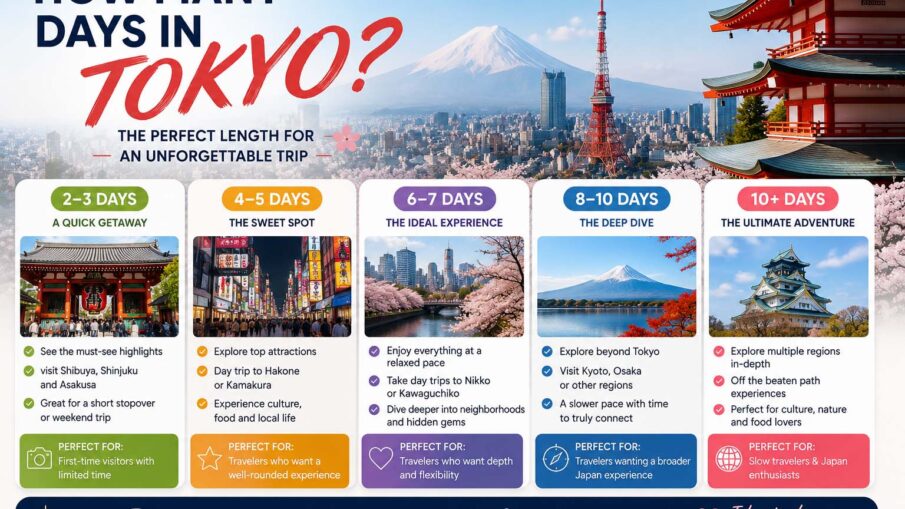
If you’re wondering how many days in Tokyo you should plan, the good news is there’s no wrong answer. Japan’s capital offers something for every type of traveler, from ancient temples and peaceful gardens to futuristic neighborhoods, Michelin-starred restaurants, and lively nightlife. For most visitors, 4 to 5 days provides the right balance between sightseeing and enjoying the city’s unique atmosphere without feeling rushed.
Tokyo is enormous, yet its excellent transportation system makes exploring surprisingly easy. Whether you’re visiting Japan for the first time or returning to discover more neighborhoods, choosing the right trip length will help you make the most of your time.
How Many Days in Tokyo Is Enough?
The ideal number of days depends on your travel style, budget, and whether Tokyo is your only destination.
Here’s a quick guide.
| Trip Length | Best For | What You Can See |
|---|---|---|
| 2 Days | Weekend stopover | Major highlights only |
| 3 Days | First-time visitors | Famous districts and top attractions |
| 4 Days | Most travelers | Relaxed sightseeing plus local experiences |
| 5 Days | Culture lovers | Museums, shopping, food, and hidden gems |
| 6–7 Days | Slow travel | Day trips and deeper exploration |
If you’re asking how many days do you need in Tokyo, four or five days works well for most people. You’ll have enough time to explore different neighborhoods without spending every day rushing between attractions.
Why Four to Five Days Works Best
Tokyo isn’t a city you experience in a single neighborhood.
Each district has its own personality. Shibuya feels energetic, Asakusa reflects old Tokyo, Ginza is polished and upscale, while Akihabara is famous for anime, gaming, and electronics.
With four or five days, you can enjoy a slower pace and still visit many of the city’s highlights.
You’ll have time to:
- Visit iconic landmarks
- Explore traditional temples
- Experience modern shopping districts
- Try local food markets
- Enjoy rooftop viewpoints
- Discover quieter neighborhoods
If you’re still planning your overall Japan itinerary, reading about the best time to travel to japan can help you match your trip length with the ideal season.
Sample Tokyo Itineraries
3 Days in Tokyo
A three-day itinerary covers the essentials.
- Asakusa
- Sensō-ji Temple
- Tokyo Skytree
- Sumida River area
- Shibuya Crossing
- Meiji Jingu Shrine
- Harajuku
- Omotesando
- Tsukiji Outer Market
- Ginza
- Imperial Palace gardens
- Tokyo Tower or Shibuya Sky
This schedule works well if you’re wondering how many days should I spend in Tokyo during your first visit.
4 Days in Tokyo
Add another day to explore beyond the highlights.
Popular additions include:
- Ueno Park
- Ueno museums
- Akihabara
- Odaiba waterfront
- TeamLab exhibition
The extra day makes the trip feel much more relaxed.
5 Days in Tokyo
Five days lets you slow down.
You can:
- Spend longer in local neighborhoods
- Enjoy shopping without rushing
- Visit more museums
- Experience Tokyo’s café culture
- Take a food tour
- Explore quieter gardens
Many travelers consider five days the perfect balance.
Best Time to Visit Tokyo
Tokyo is a year-round destination, but every season offers a different experience.
Spring (March to May)
Spring is famous for cherry blossoms.
Parks become filled with locals enjoying hanami picnics, while temperatures stay pleasant for walking.
Because it’s one of Japan’s busiest seasons, hotels often sell out well in advance.
Summer (June to August)
Summer brings:
- Festivals
- Fireworks
- Green parks
- Longer daylight hours
It also brings heat and humidity, especially during July and August.
Early morning sightseeing is often more comfortable.
Autumn (September to November)
Many experienced travelers consider autumn one of Tokyo’s best seasons.
Comfortable temperatures combine with colorful parks and fewer crowds after the summer holidays.
If colorful scenery is one of your priorities, don’t miss our guide to the best places to see autumn leaves japan, which highlights spectacular destinations across the country.
Winter (December to February)
Winter offers clear skies, seasonal illuminations, and lower hotel prices outside the New Year holiday period.
Although temperatures are cool, snow is uncommon in central Tokyo.
Weather Overview by Season
| Season | Temperature | Travel Experience |
| Spring | Mild | Cherry blossoms and busy attractions |
| Summer | Hot & humid | Festivals and long days |
| Autumn | Comfortable | Autumn colors and pleasant weather |
| Winter | Cool | Illuminations and smaller crowds |
Tokyo Travel Costs
Tokyo has a reputation for being expensive, but it suits a wide range of budgets.
Here’s a general estimate per person per day.
| Budget | Daily Cost |
| Budget | $90–140 |
| Mid-range | $180–300 |
| Luxury | $450+ |
Your biggest expenses will usually be accommodation and dining, although transportation remains relatively affordable.
Convenience stores and casual restaurants make it easy to enjoy excellent meals without overspending.
Where to Stay
Choosing the right neighborhood saves both time and money.
Shinjuku
Perfect for first-time visitors.
You’ll find excellent transport connections, shopping, nightlife, and hotels for every budget.
Shibuya
Ideal if you enjoy restaurants, cafés, and energetic city life.
Most major attractions are easily accessible from here.
Asakusa
A quieter option with a more traditional atmosphere.
It’s especially popular with families and travelers who enjoy history.
Ginza
Best for luxury shopping, upscale hotels, and elegant dining.
Getting Around Tokyo
Tokyo’s public transportation system is one of the world’s best.
You can travel almost everywhere using:
- JR trains
- Tokyo Metro
- Toei Subway
- Local buses
Buying an IC card such as Suica or PASMO makes transportation simple.
Although the rail map looks overwhelming at first, navigation apps make moving around the city straightforward.
What to Eat in Tokyo
Tokyo is one of the world’s great food cities.
Don’t miss:
- Sushi
- Ramen
- Tempura
- Yakitori
- Tonkatsu
- Udon
- Japanese curry
- Matcha desserts
Many outstanding restaurants are surprisingly affordable.
Department store food halls are also excellent places to sample local specialties.
Family-Friendly Activities
Tokyo is very welcoming for families.
Children often love:
- Ueno Zoo
- Tokyo Disneyland
- Tokyo DisneySea
- Odaiba
- TeamLab exhibitions
- Sunshine Aquarium
Parks and public transport are generally clean, safe, and easy to use with children.
Solo Travel in Tokyo
Tokyo consistently ranks among the safest large cities in the world.
Solo travelers appreciate:
- Reliable transportation
- Friendly locals
- Clean streets
- Excellent signage
- Plenty of capsule hotels and business hotels
Dining alone is completely normal, especially at ramen shops and casual restaurants.
Day Trips from Tokyo
If you’re staying longer, consider spending a day outside the city.
Popular destinations include:
- Hakone
- Nikko
- Kamakura
- Yokohama
- Mount Fuji area
If you’re continuing your journey through Japan, you may also wonder is osaka worth visiting. For many travelers, combining Tokyo with Osaka creates a well-rounded introduction to the country’s different regional cultures.
Packing Tips
Tokyo involves more walking than many visitors expect.
Pack:
- Comfortable walking shoes
- Lightweight layers
- Portable charger
- Compact umbrella
- Reusable water bottle
- Universal power adapter
Weather can change quickly during spring and autumn, so it’s best to wear layers instead of heavy clothing.
Common Mistakes to Avoid
A few small adjustments can make your trip much smoother.
Avoid:
- Trying to visit too many neighborhoods in one day
- Skipping restaurant reservations for popular spots
- Traveling during rush hour with large luggage
- Ignoring the last train schedule
- Underestimating walking distances inside train stations
Giving yourself extra time between activities makes the experience much more enjoyable.
Is Tokyo Expensive Compared to Other Destinations?
Tokyo often surprises visitors because it offers excellent value.
Hotels can be pricey during peak travel seasons, yet transportation is efficient, many attractions are free, and dining options suit almost every budget.
If you’re planning a seasonal getaway elsewhere after Japan, exploring ideas about where to travel in winter can help you compare destinations with different climates and travel costs.
Frequently Asked Questions
Is 3 days enough in Tokyo?
Yes. Three days allows you to experience the city’s most famous neighborhoods and attractions, although you’ll need a fairly busy schedule.
How many days to spend in Tokyo for a first visit?
Four to five days is ideal. It gives you enough time to balance sightseeing, shopping, dining, and relaxing.
How many days to stay in Tokyo before visiting other cities?
Many travelers spend four days in Tokyo before continuing to Kyoto, Osaka, or other regions of Japan.
Is one week in Tokyo too long?
Not at all. Seven days allows you to explore at a slower pace, enjoy day trips, and discover neighborhoods that many visitors never see.
Can Tokyo be explored without speaking Japanese?
Yes. English signs are common in train stations, tourist attractions, and many restaurants. Translation apps also make communication much easier than in the past.
Plan a Tokyo Trip That Matches Your Travel Style
There’s no perfect answer to how many days in Tokyo, but most travelers leave wishing they had planned just a little more time. Four or five days gives you the freedom to experience both the city’s famous landmarks and its quieter corners without feeling like you’re constantly racing from one attraction to the next.
Whether your interests lean toward food, culture, shopping, history, or modern architecture, Tokyo rewards curious travelers who leave room for spontaneous discoveries. Plan a realistic itinerary, use the city’s excellent public transport, and don’t be afraid to slow down between attractions. Some of Tokyo’s best memories come from wandering a side street, finding a tiny café, or watching everyday life unfold in one of the world’s most fascinating cities.